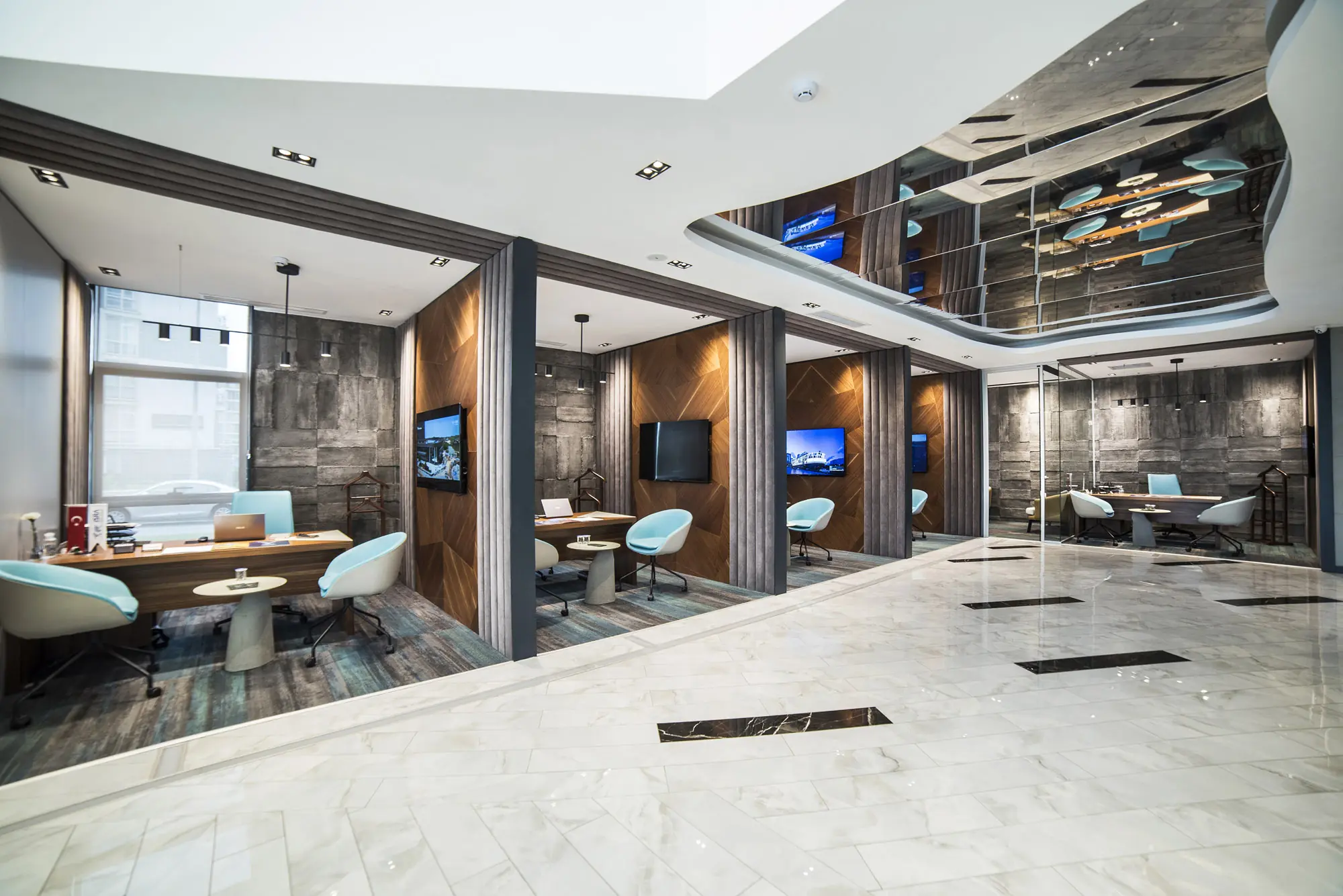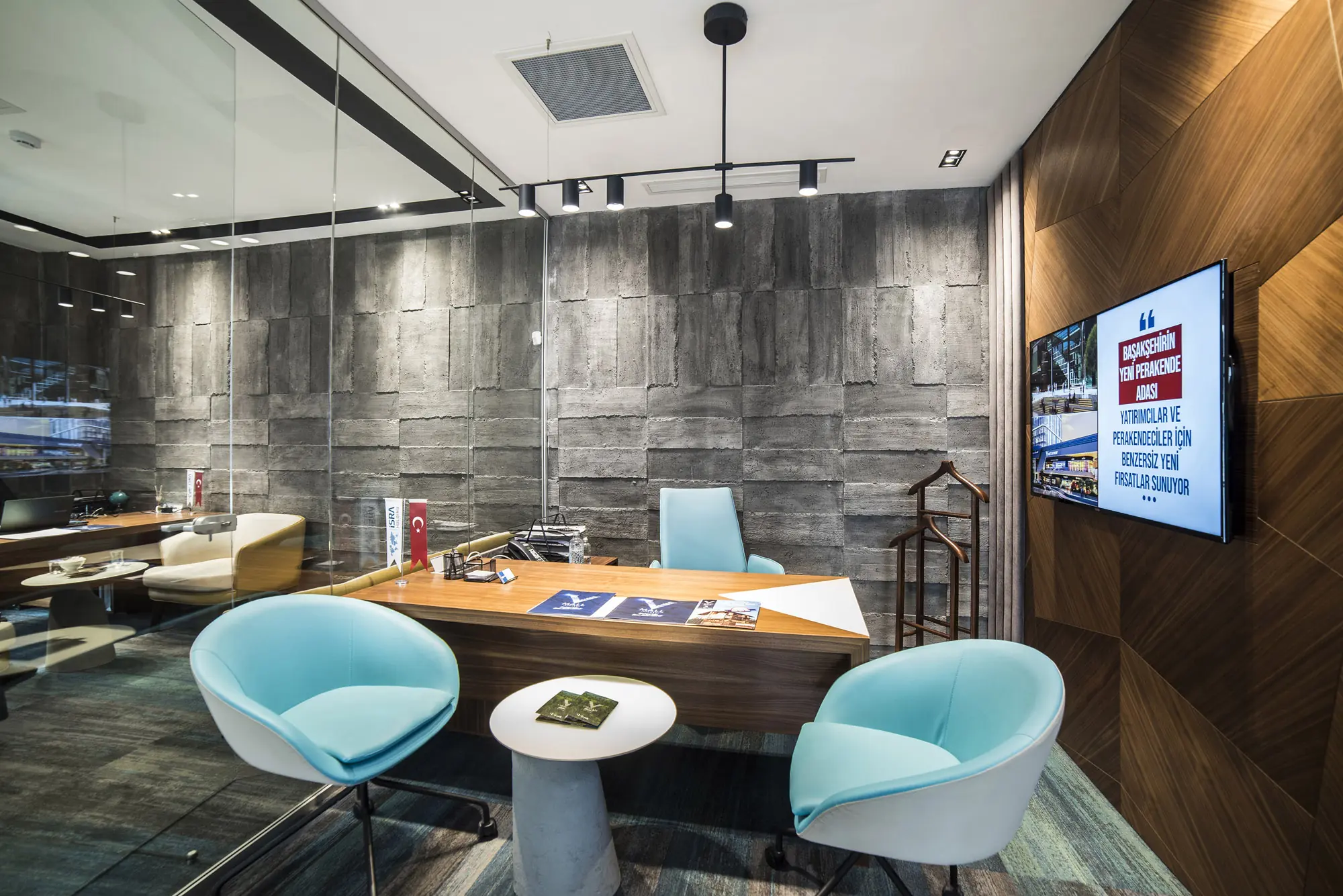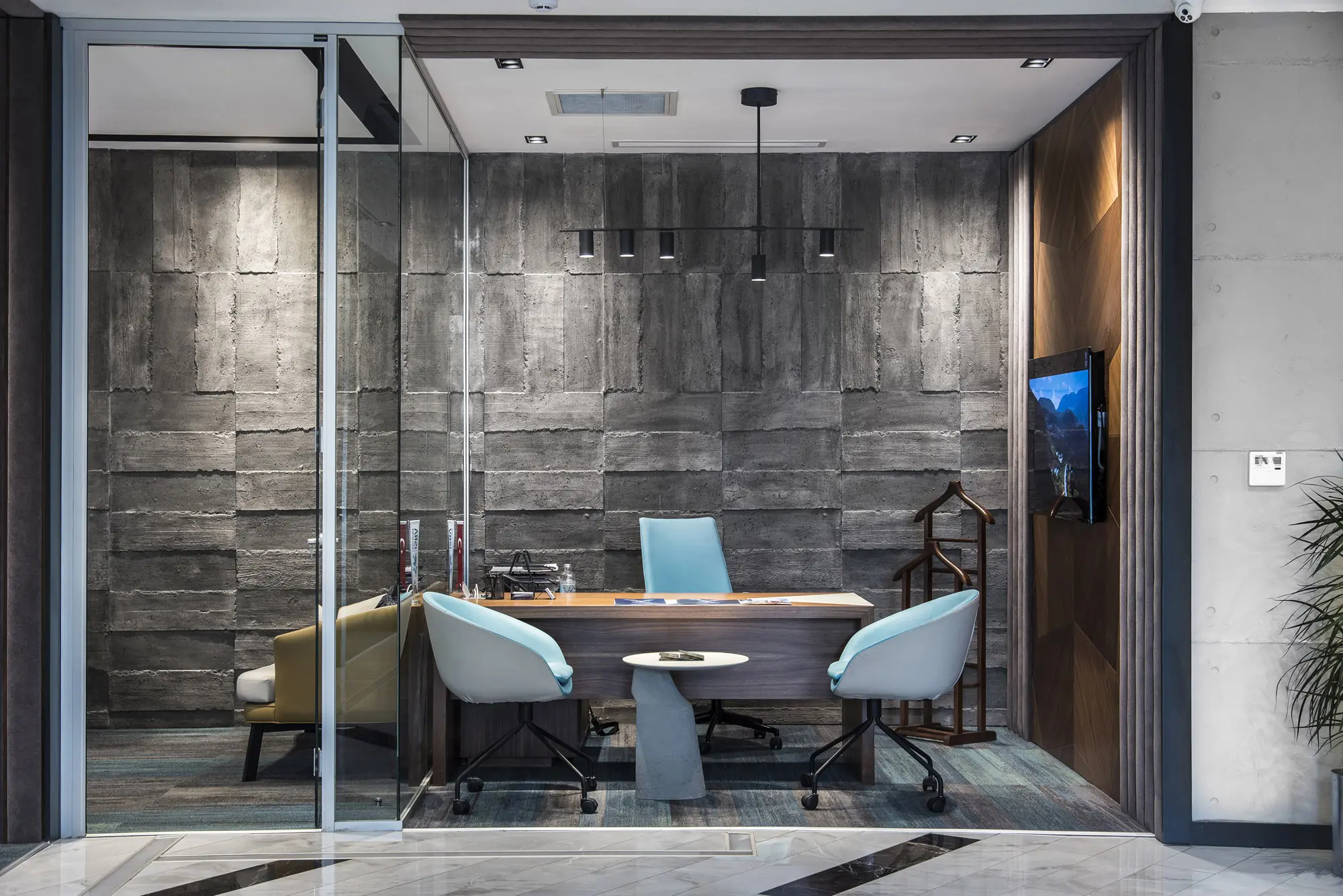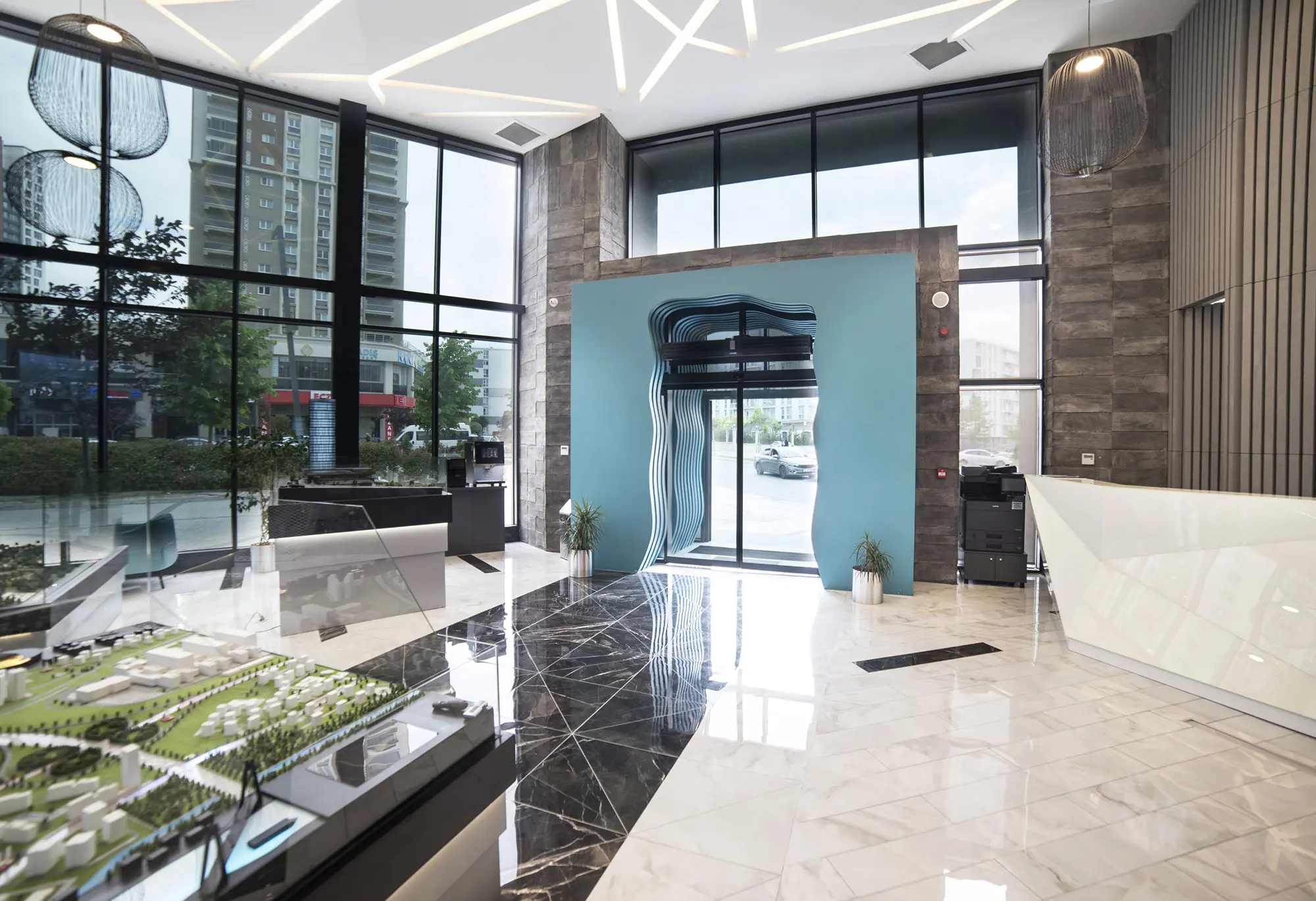
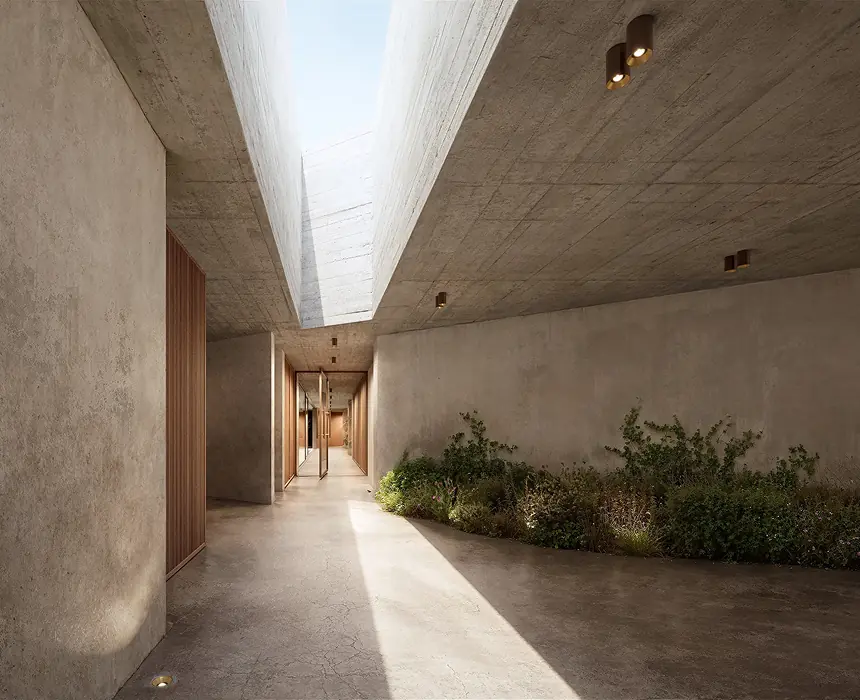
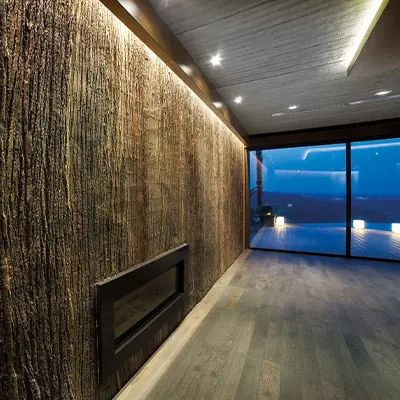
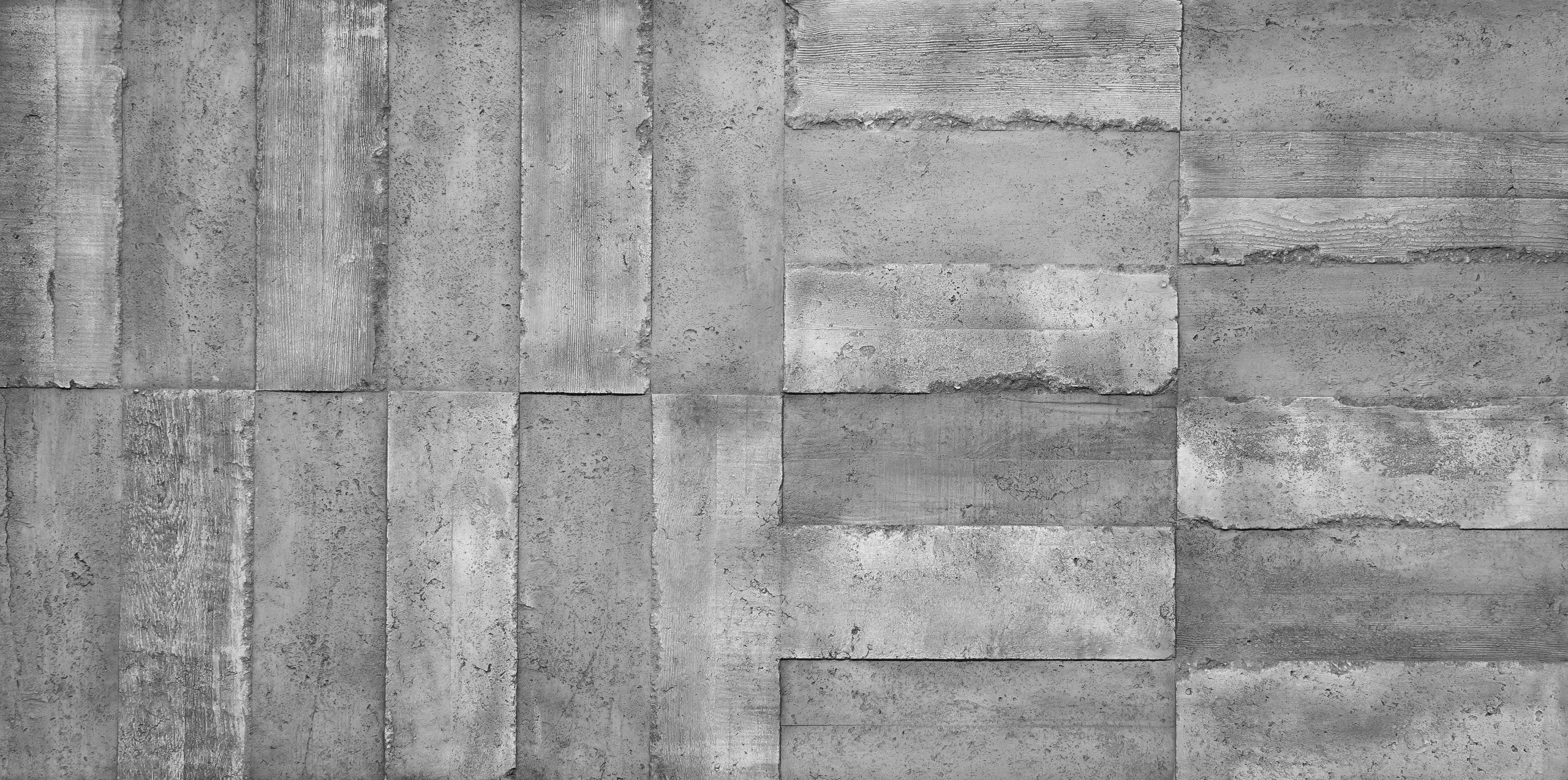
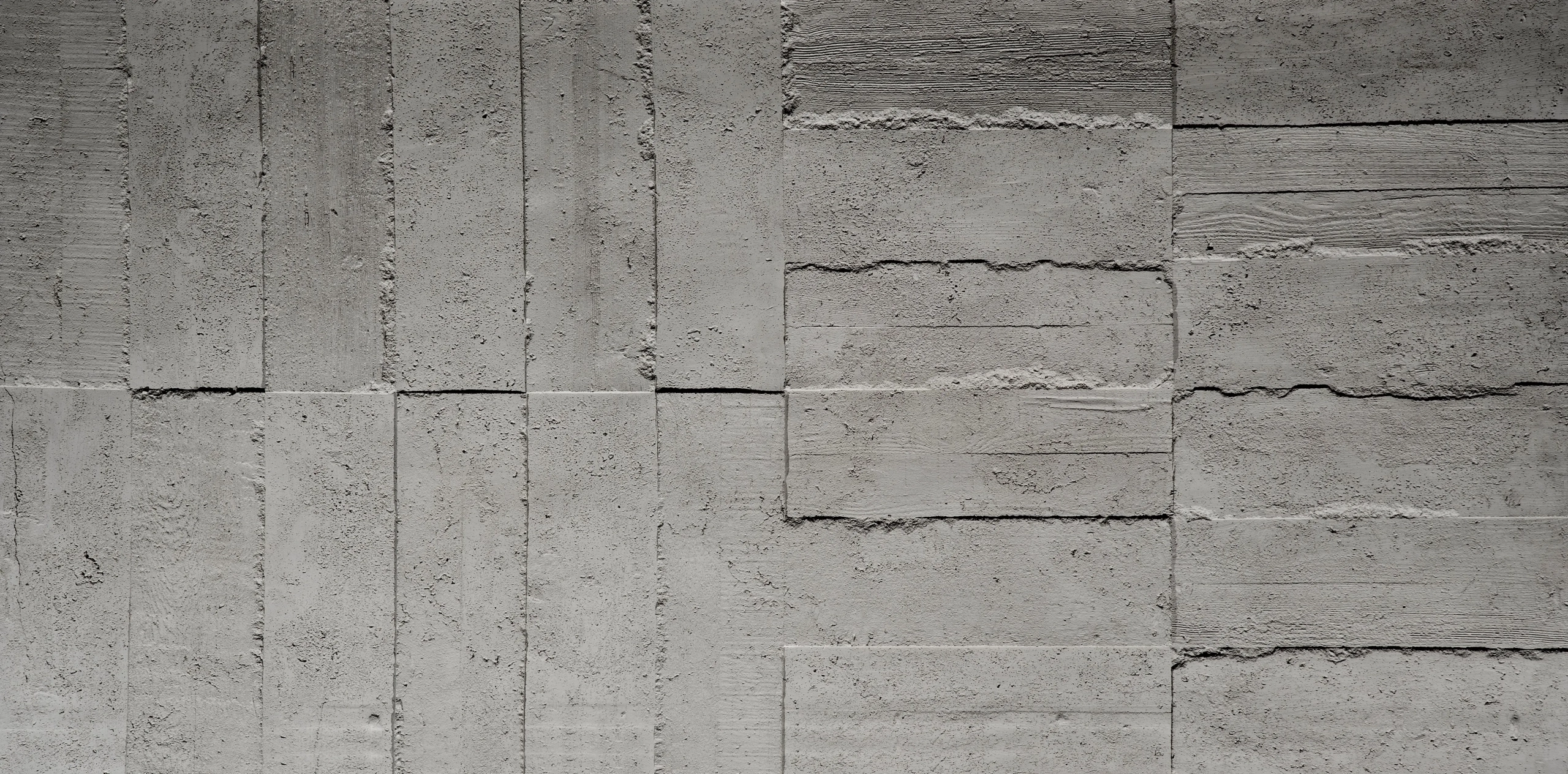
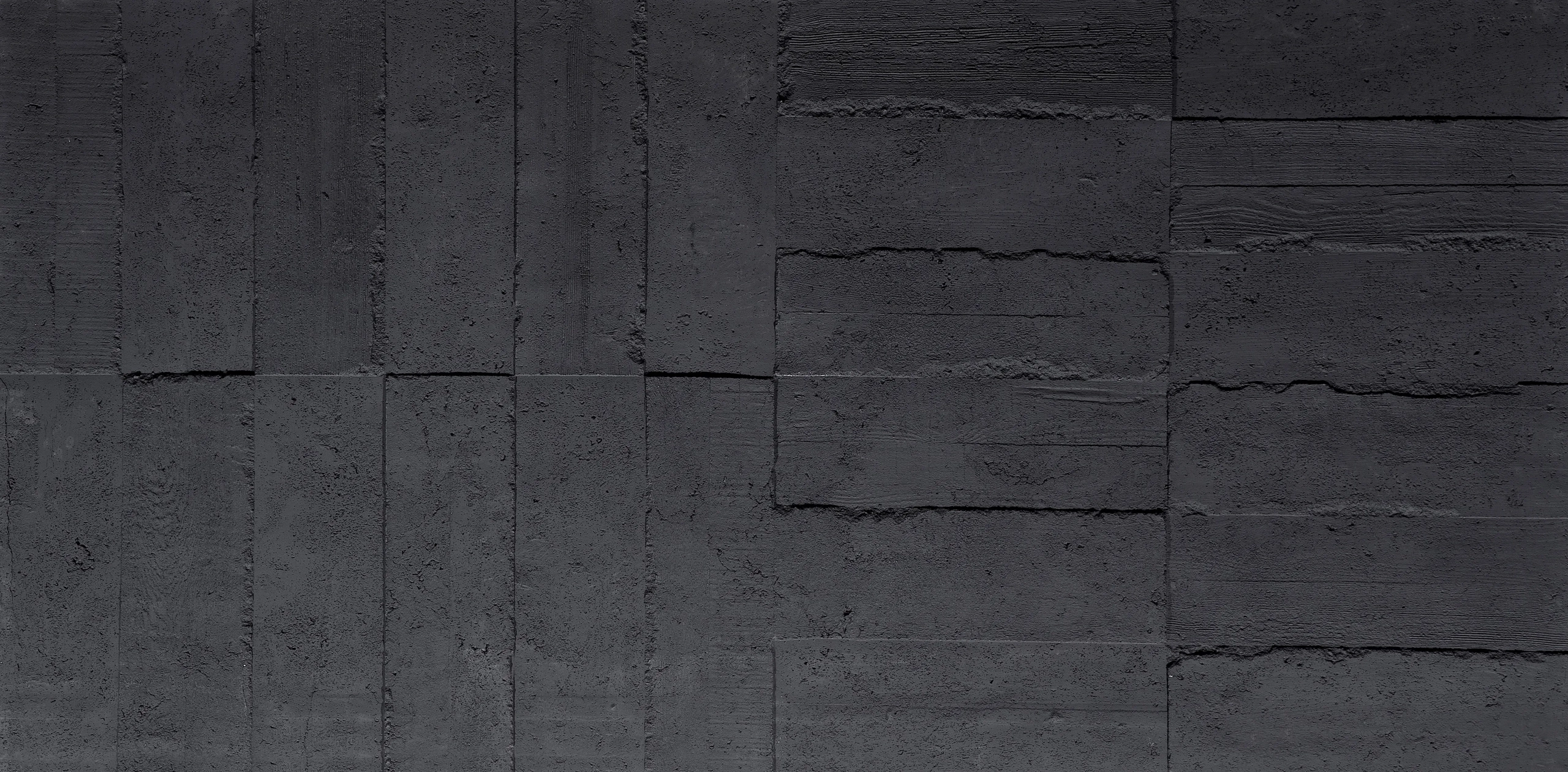
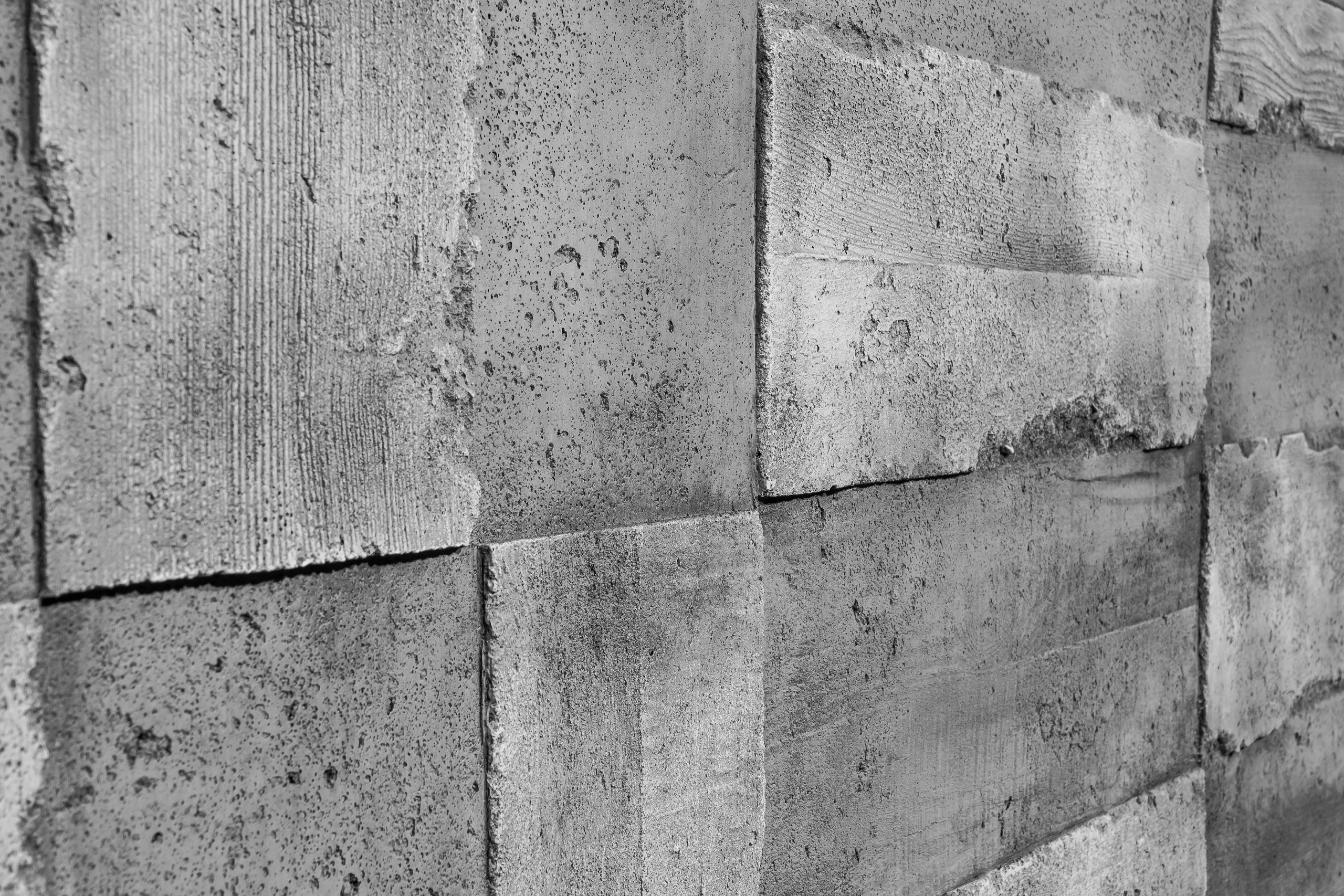
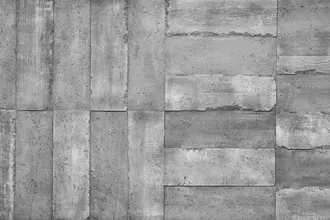
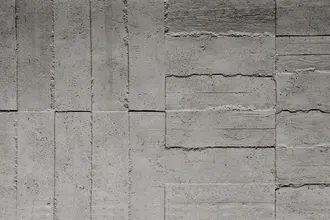
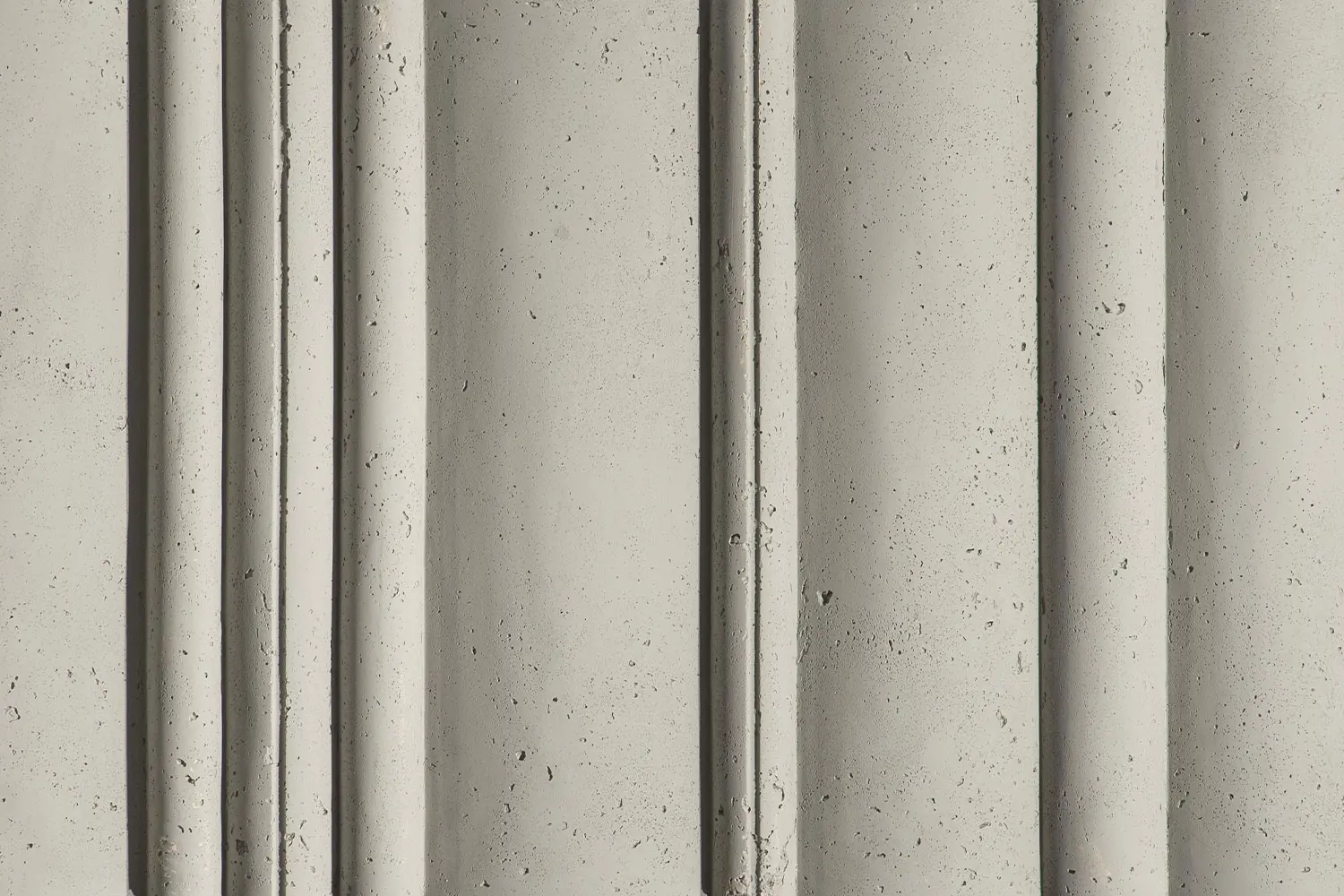
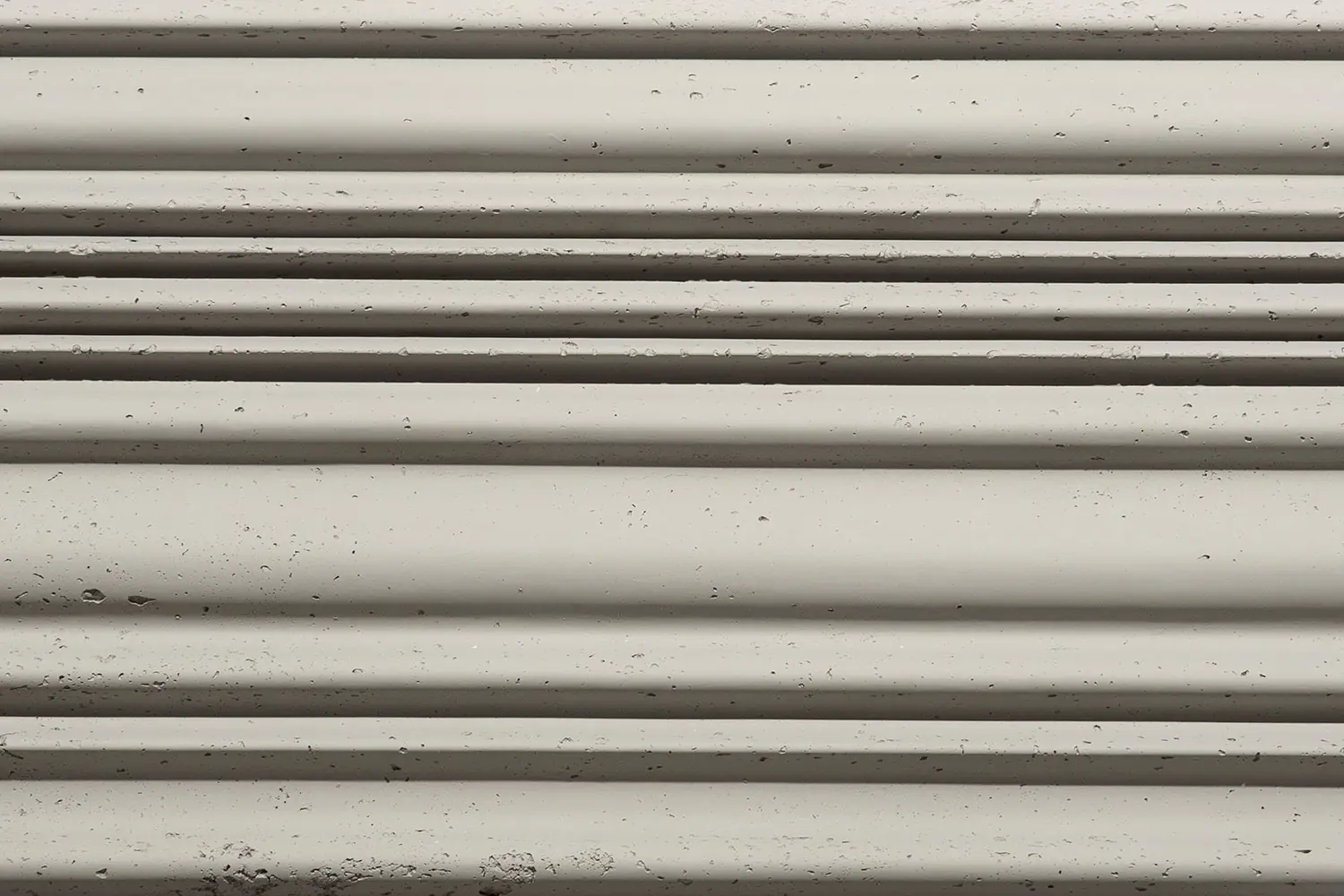
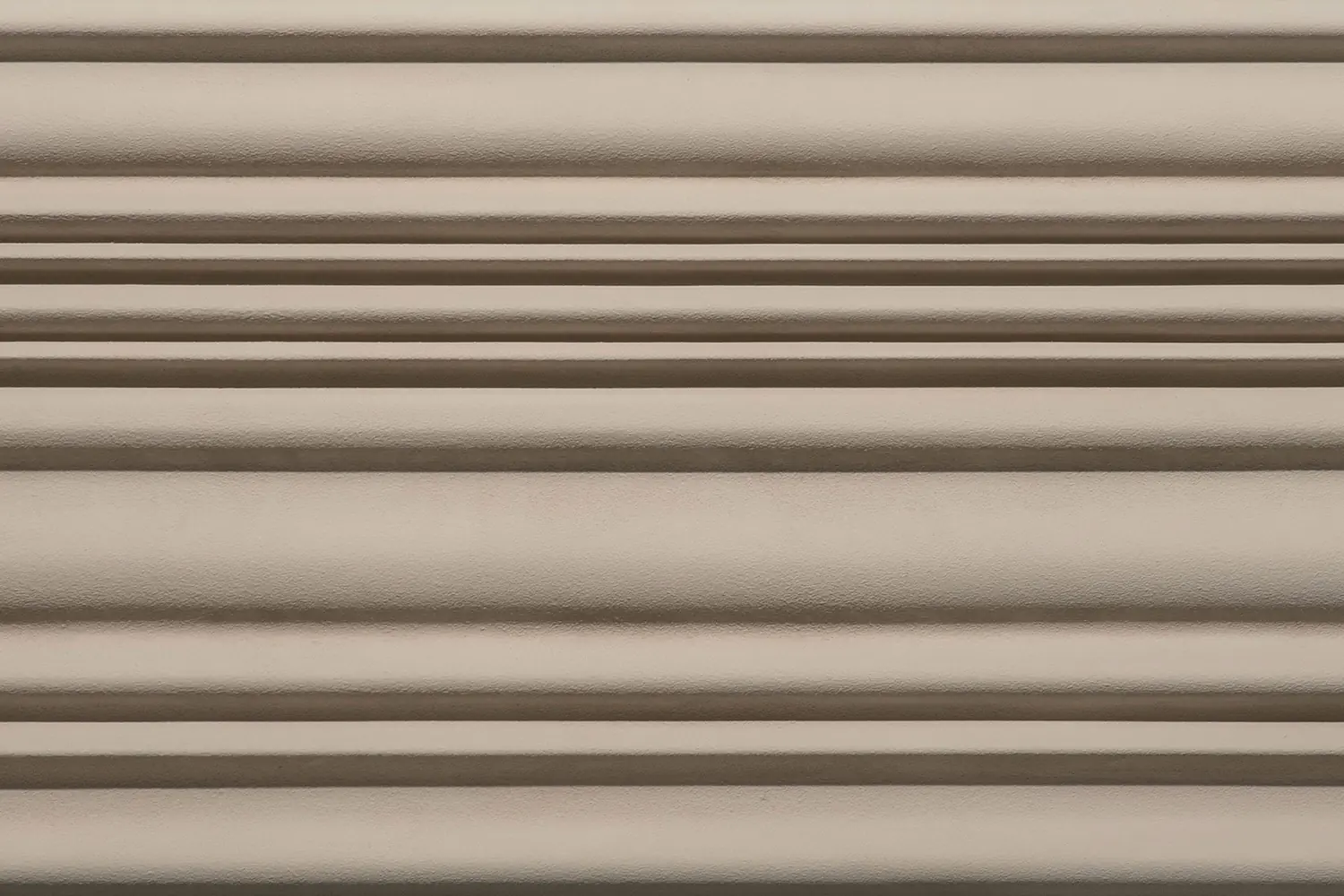
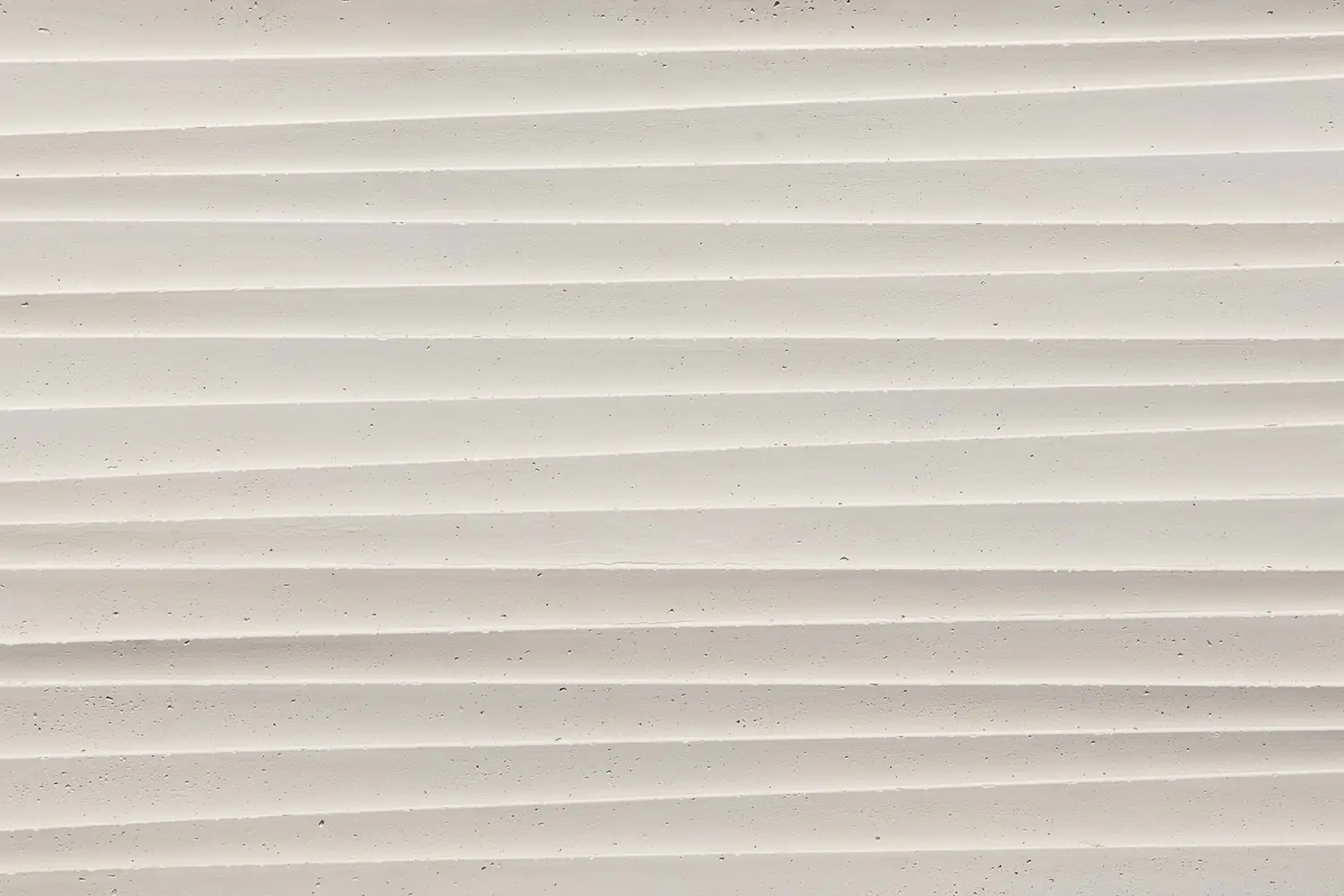
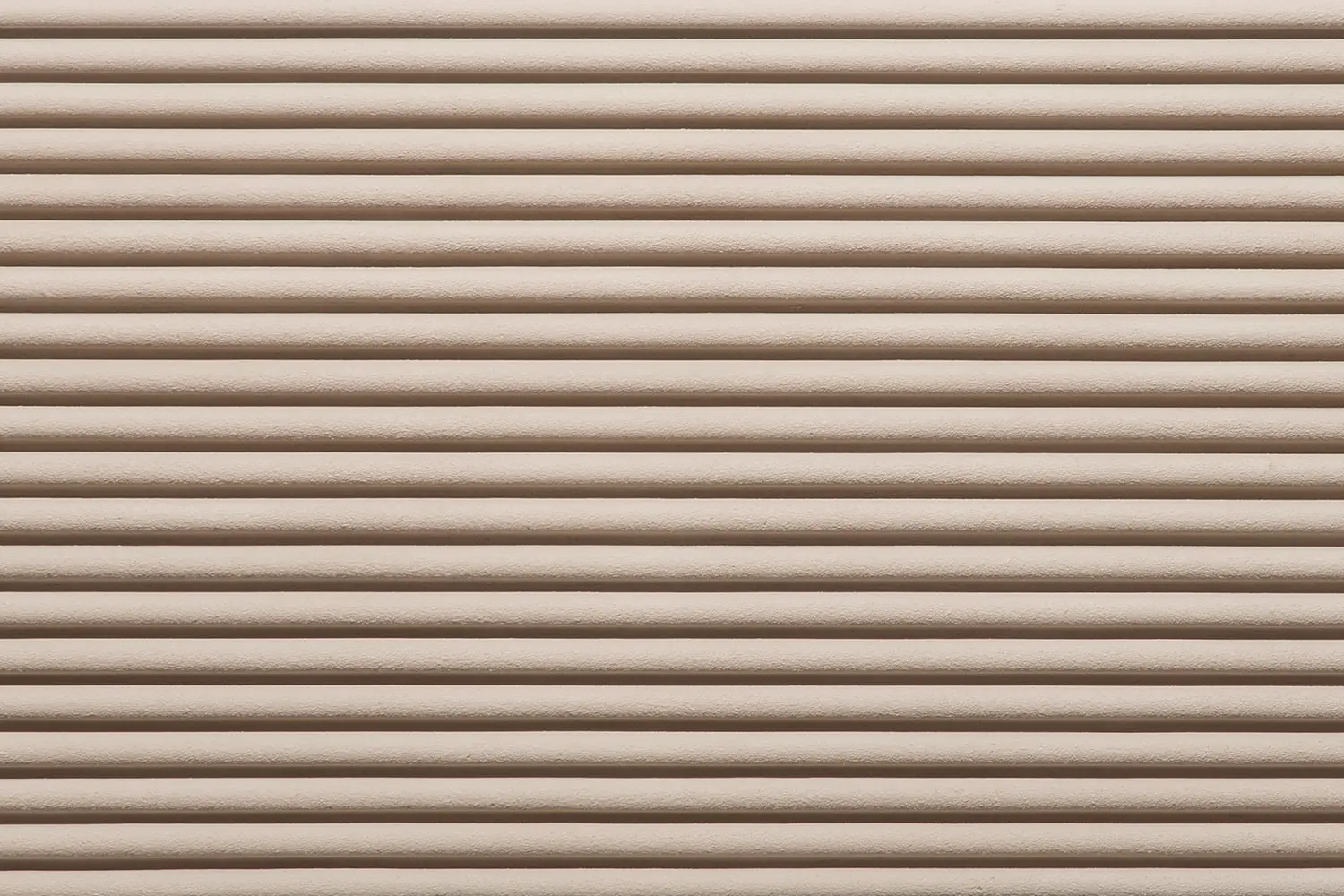
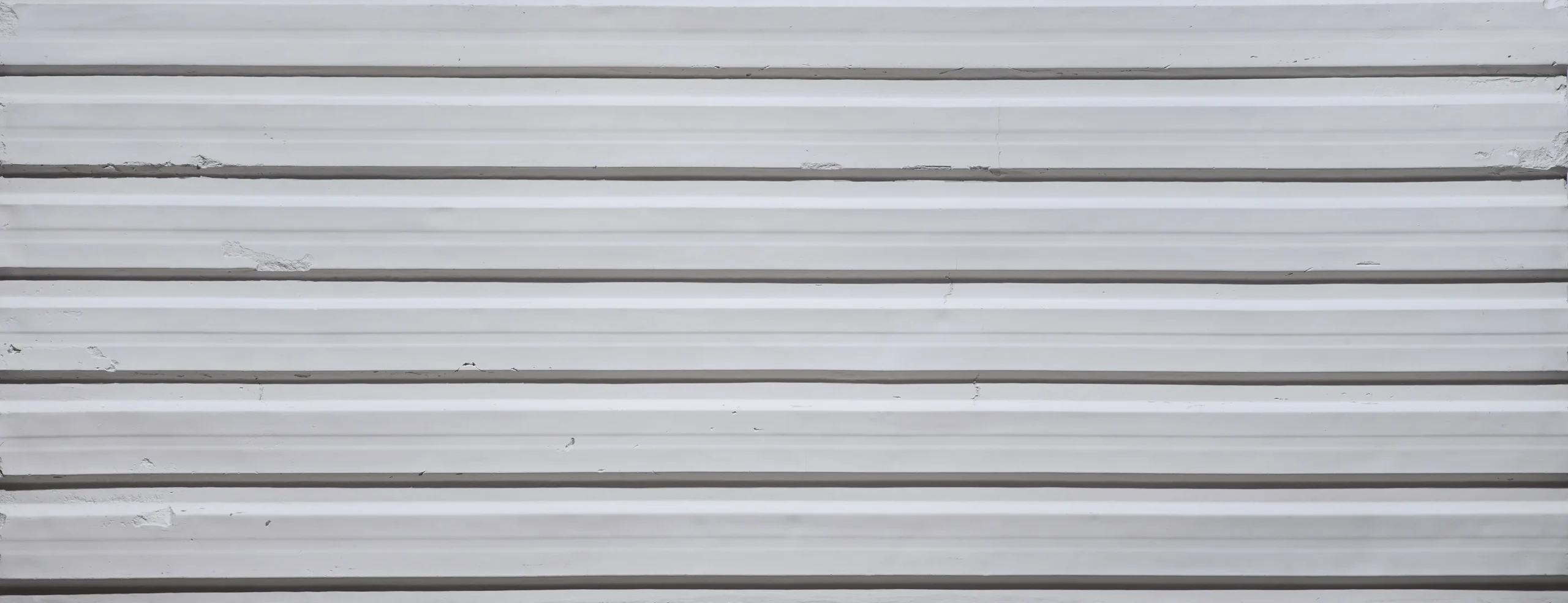
H-Recta concrete wall panel translates the raw architectural identity of concrete into a more structured and geometric surface language. Defined by planes, controlled transitions, matte texture, and subtle three-dimensional relief, the design creates a strong connection between exposed concrete and contemporary minimalism.
The geometric concrete texture is the defining feature of H-Recta. Rather than reproducing concrete as one uninterrupted flat surface, the design organizes it through clearly differentiated planes and transitions that give the wall greater architectural definition.
These changes in surface level become particularly visible when light reaches the panel from different angles. Projecting areas receive stronger illumination while recessed sections create controlled shadows, revealing the three-dimensional construction of the surface.
With broad, diffused lighting, the same geometry becomes calmer. The wall retains its concrete identity while the transitions between the planes appear softer, allowing H-Recta to work as a restrained architectural background.
Current technical documentation describes H-Recta as a fiber-composite 3D wall panel engineered to reproduce the geometric character of concrete. Its topography incorporates planes, structured transitions, matte concrete textures, and subtle relief effects produced with high-precision molds.
This precise construction makes the geometric concrete texture suitable for architecture where order and material expression need to coexist. The surface retains the direct character associated with cast concrete while introducing greater control through its geometric composition.
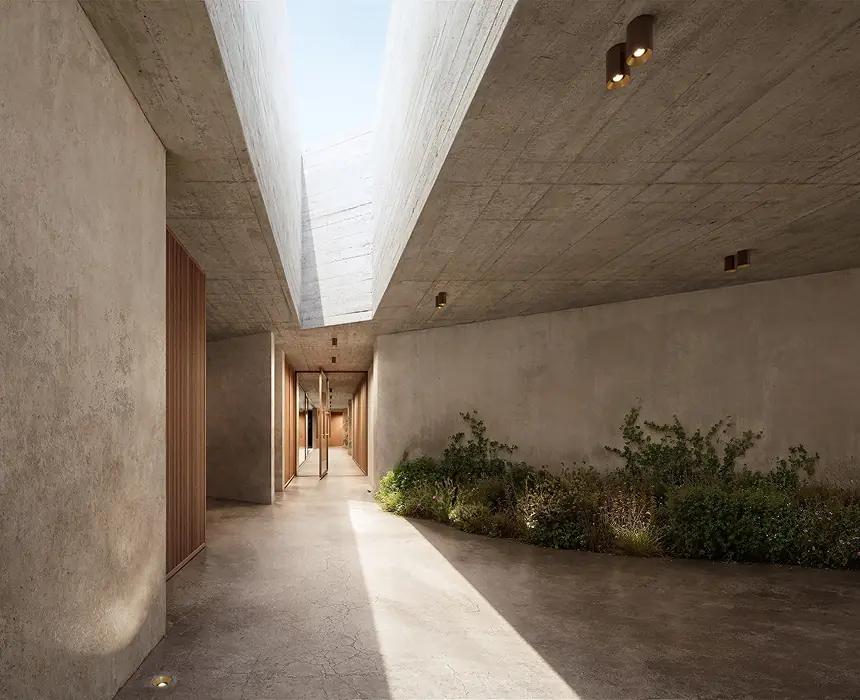
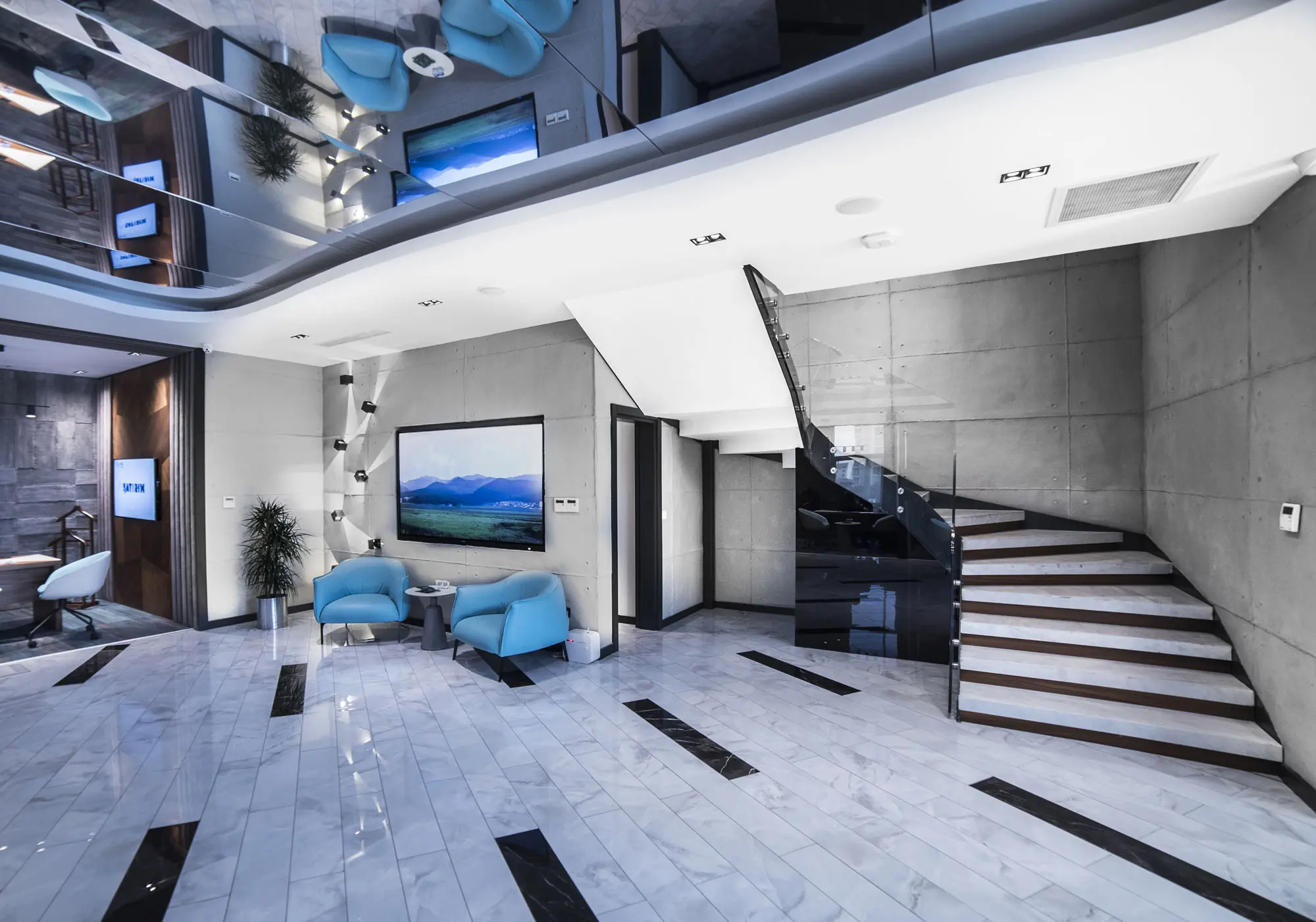
As an exposed concrete wall panel, H-Recta pairs naturally with materials commonly used in contemporary interiors. Glass and metal can reinforce its industrial character, while timber and tactile textiles can soften the visual impact of the concrete surface.
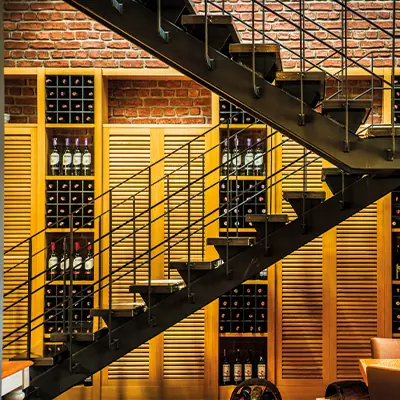
In residential projects, H-Recta concrete wall panel can define living areas, entrance walls, staircases, dining zones, and selected feature surfaces. Its structured form introduces depth without requiring additional decorative motifs.
Office environments can use the geometric concrete texture to create clear and professional architectural backgrounds. The surface provides visual identity while maintaining enough restraint for workspaces, meeting areas, reception zones, and circulation spaces.
Hotels, cafés, and restaurants can also use H-Recta where a strong contemporary material language is required. Directional lighting can accentuate the surface transitions, while softer illumination allows the wall to feel more understated.
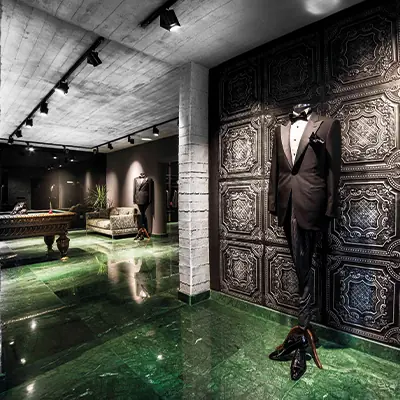
Showrooms and retail environments benefit from the same controlled character. The concrete surface creates a distinctive architectural foundation without competing unnecessarily with products, graphics, display systems, or furniture.
Among decorative wall panels, H-Recta stands out through its combination of raw concrete character and controlled geometric structure. Its visual impact comes from proportion, planes, depth, and light-shadow interaction rather than applied ornament.
H-Recta belongs to Artstone’s Concrete & Art Series and is classified as Concrete. Its current style classifications include industrial, modern minimal, and Scandinavian approaches.
The panel measures approximately 238 × 120 cm, with a listed thickness of around 12–14 mm and a current weight of approximately 5.5–6 kg/m².
Its large-format structure allows the geometric concrete texture to continue across broad architectural surfaces with fewer visible panel divisions. This helps the design read as a unified concrete composition rather than a sequence of small decorative units.
H-Recta concrete wall panel is suitable for both interior and exterior architectural applications. Current usage data also includes ceilings, residences, cafés and restaurants, hotels and spas, offices, showrooms, stores, and sports and wellness environments.
The structural core combines a fiberglass-reinforced polymer matrix with mineral fillers. This composite system is designed to provide shape stability under bending, torsion, and static loads while supporting resistance to impact and mechanical stress.
Across larger surfaces, the construction is engineered to resist warping, deformation, and cracking. This technical stability supports the clean geometry that defines the exposed concrete wall panel.
H-Recta is also formulated with controlled thermal behavior. Current technical information states that the panel is designed to resist blistering, cracking, and delamination under changes in temperature.
The surface formulation is stabilized against UV exposure, water vapor, humidity, and exterior atmospheric conditions, supporting its documented use in suitable exterior architectural environments as well as interior applications.
The geometry of the panel also assists with the distribution of impact energy across the surface. This helps reduce localized stress while maintaining the intended surface definition over time.
Its fiber-composite structure can be cut, drilled, and shaped according to project requirements. Electrical outlets, lighting lines, mechanical channels, and other architectural details can therefore be incorporated into the application.
Installation uses mechanical fastening with screws and dowels. This provides secure attachment to the supporting surface and supports long-term structural performance.
The geometric concrete texture becomes particularly expressive under grazing illumination. Light catches the edges of individual planes while shadows develop across the structured transitions, strengthening the three-dimensional effect.
With softer illumination, those transitions become less pronounced and the wall takes on a quieter architectural presence. This allows the same panel to work both as a focal surface and as a restrained material background.
Viewing distance also changes how H-Recta is experienced. From farther away, the geometric organization defines the complete surface; closer observation reveals matte concrete grain, subtle relief, plane changes, and smaller topographic details.
This layered visual quality gives H-Recta flexibility across both compact interiors and expansive commercial projects. Larger applications emphasize continuity and geometry, while smaller feature walls draw greater attention to the surface relief.
Among decorative wall panels, the relationship between precise geometry and raw concrete character gives H-Recta a distinctive architectural identity. It maintains the strength of exposed concrete while presenting it through a cleaner contemporary composition.
H-Recta concrete wall panel ultimately combines geometric concrete texture, matte cast-concrete character, structured planes, large-format continuity, and three-dimensional relief within one architectural surface.
For projects seeking an exposed concrete wall panel with a precise, minimal, and industrial identity, H-Recta offers a distinctive Concrete & Art Series solution. Its controlled geometry, interaction with light, technical structure, and suitability for interior, ceiling, and exterior applications allow the direct character of concrete to become part of contemporary architecture.