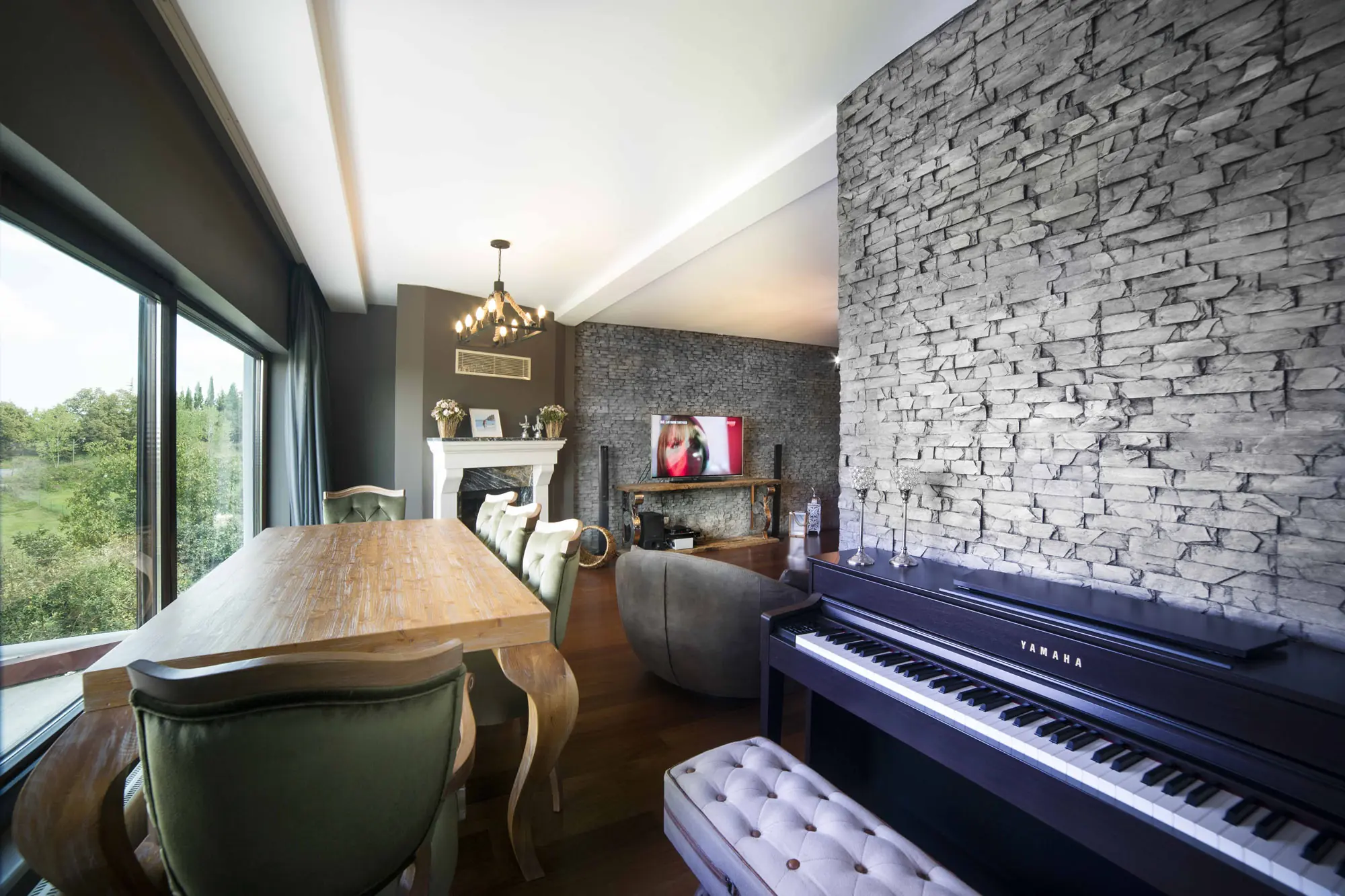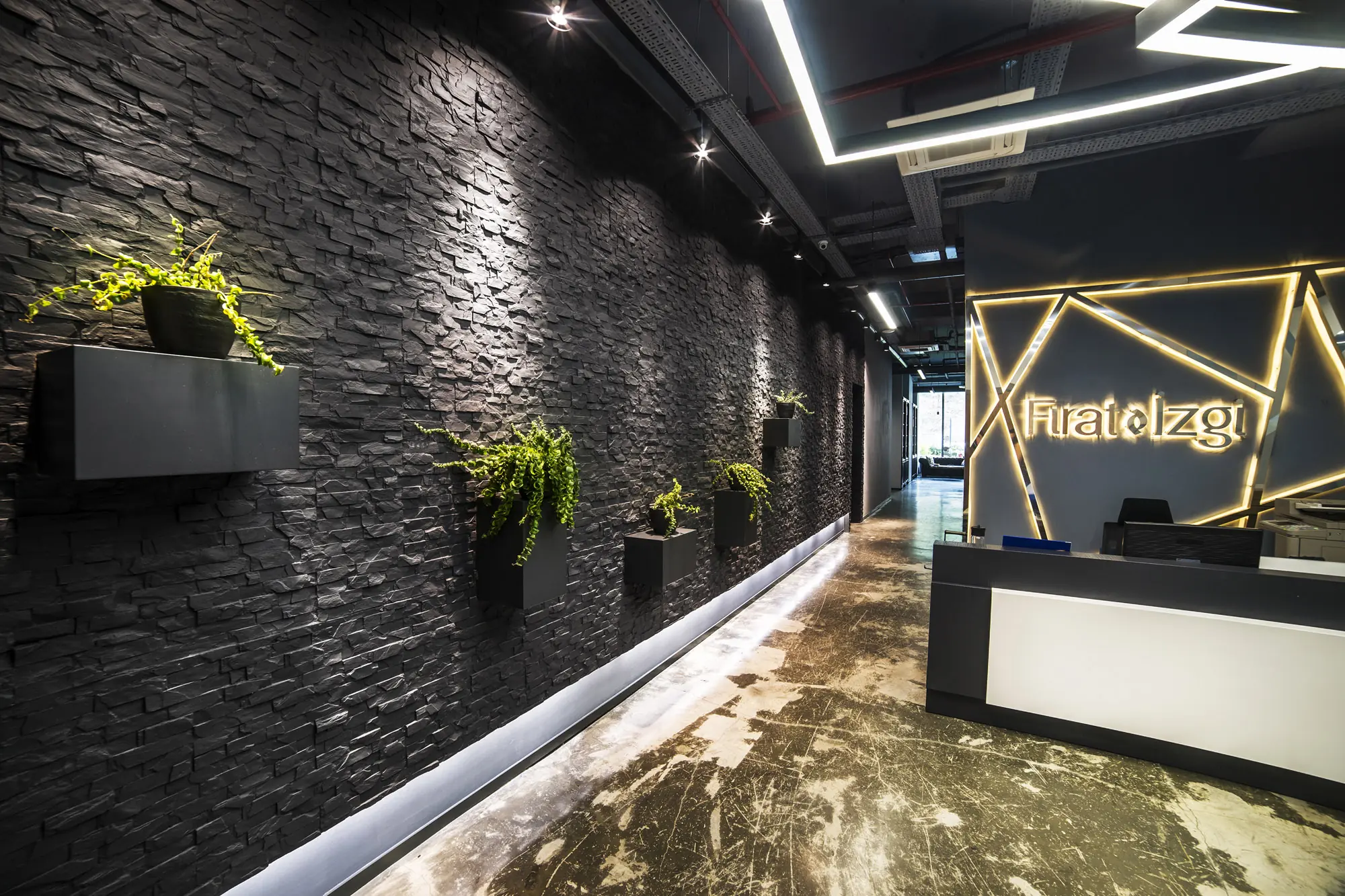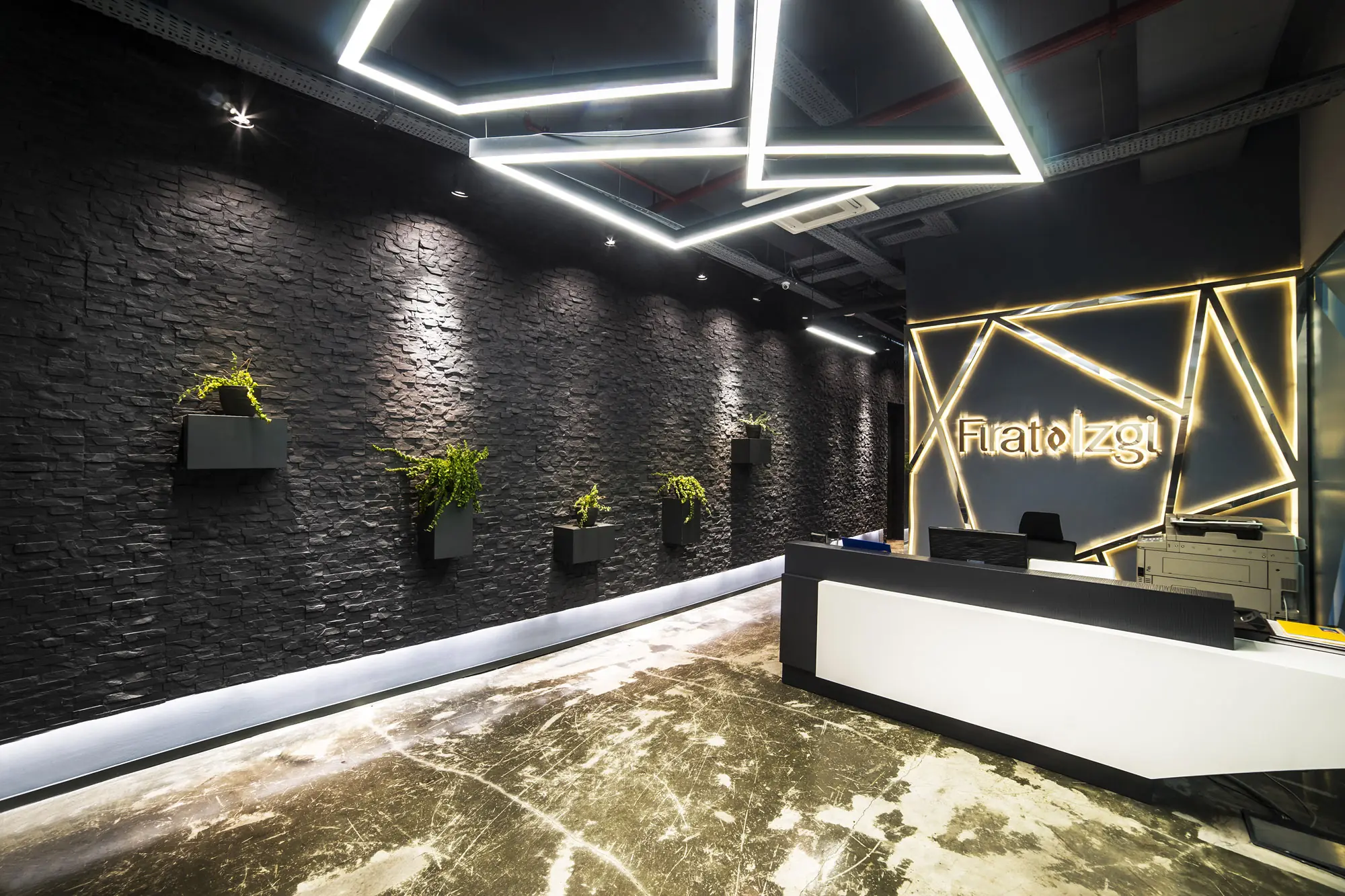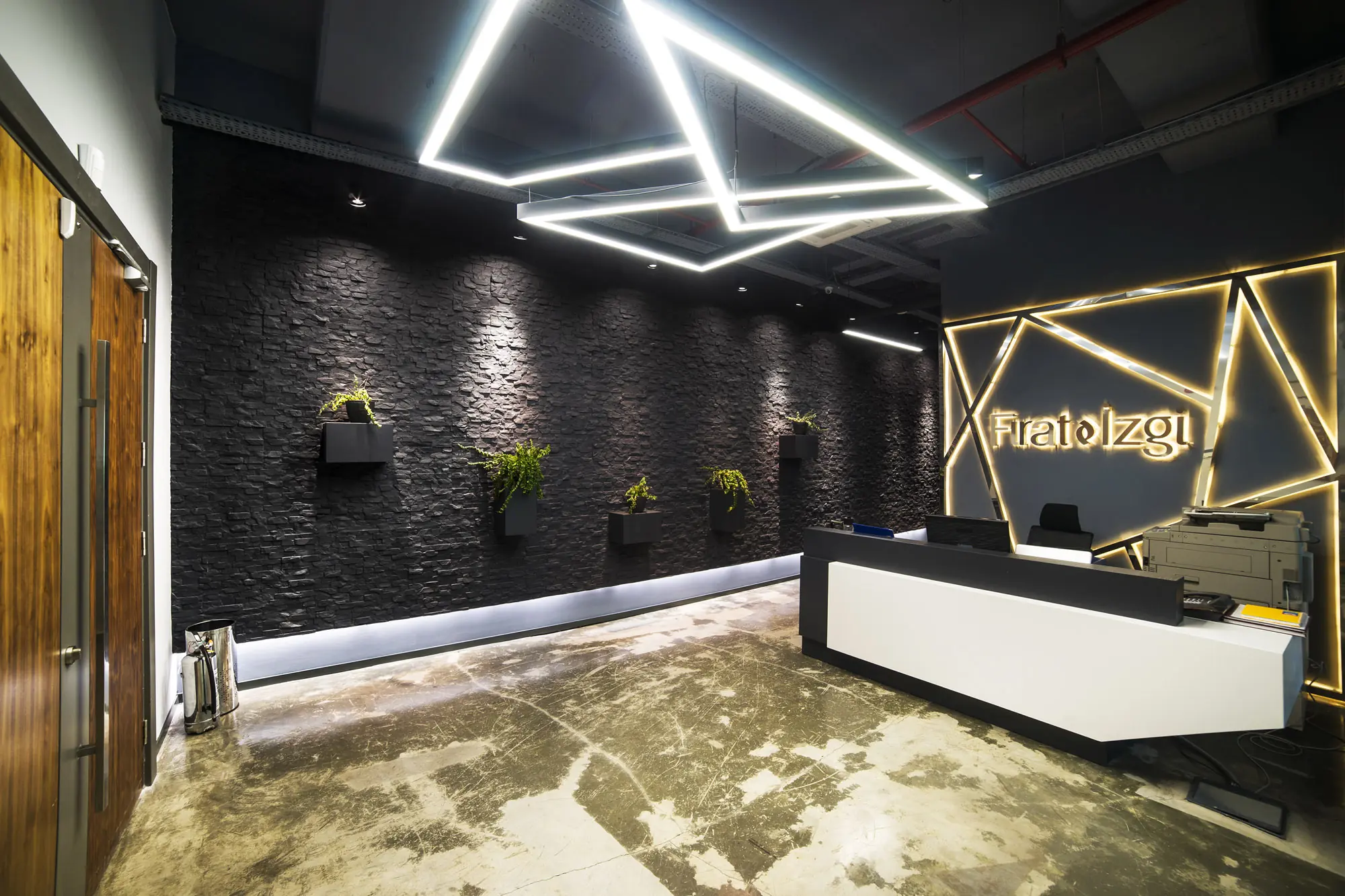
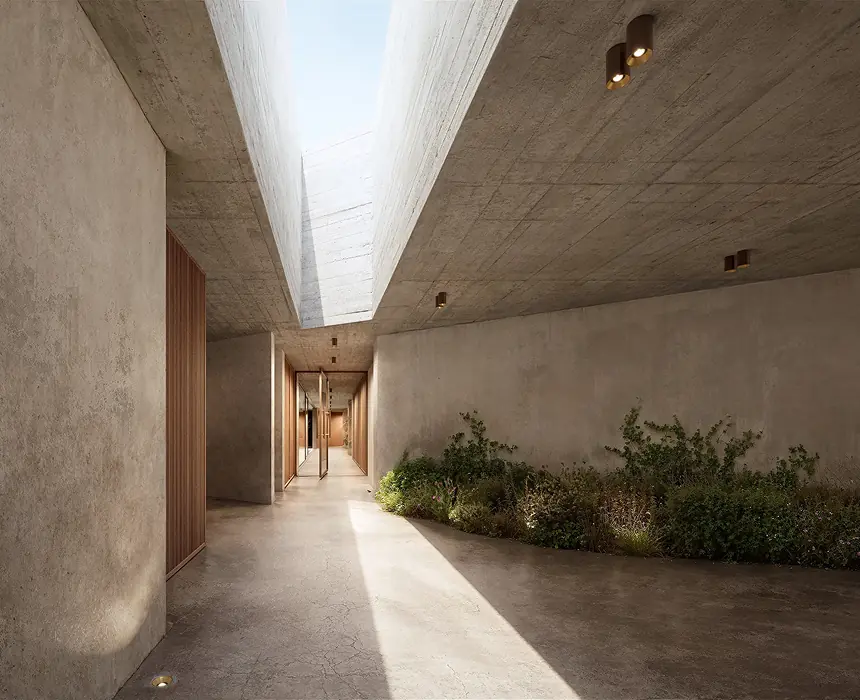
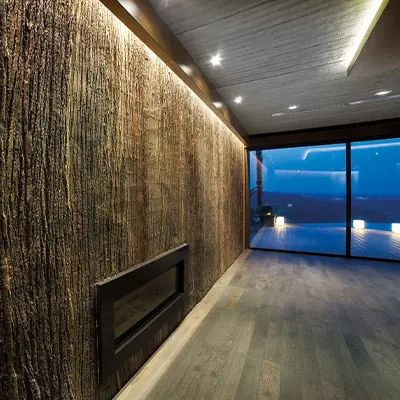
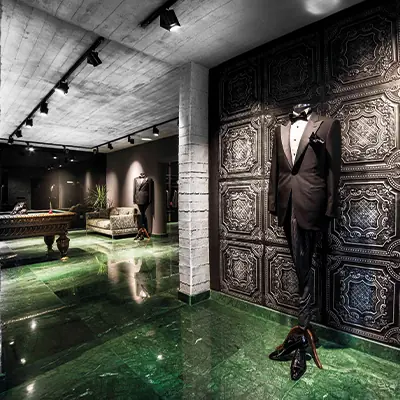
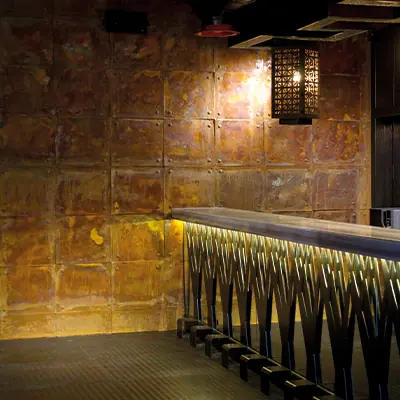
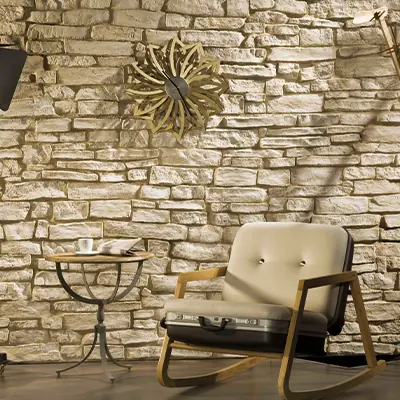
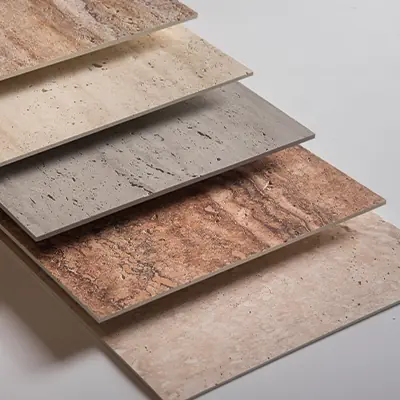
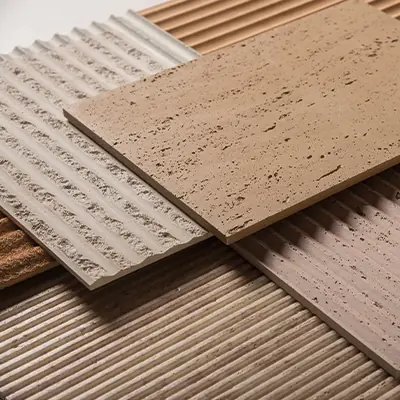
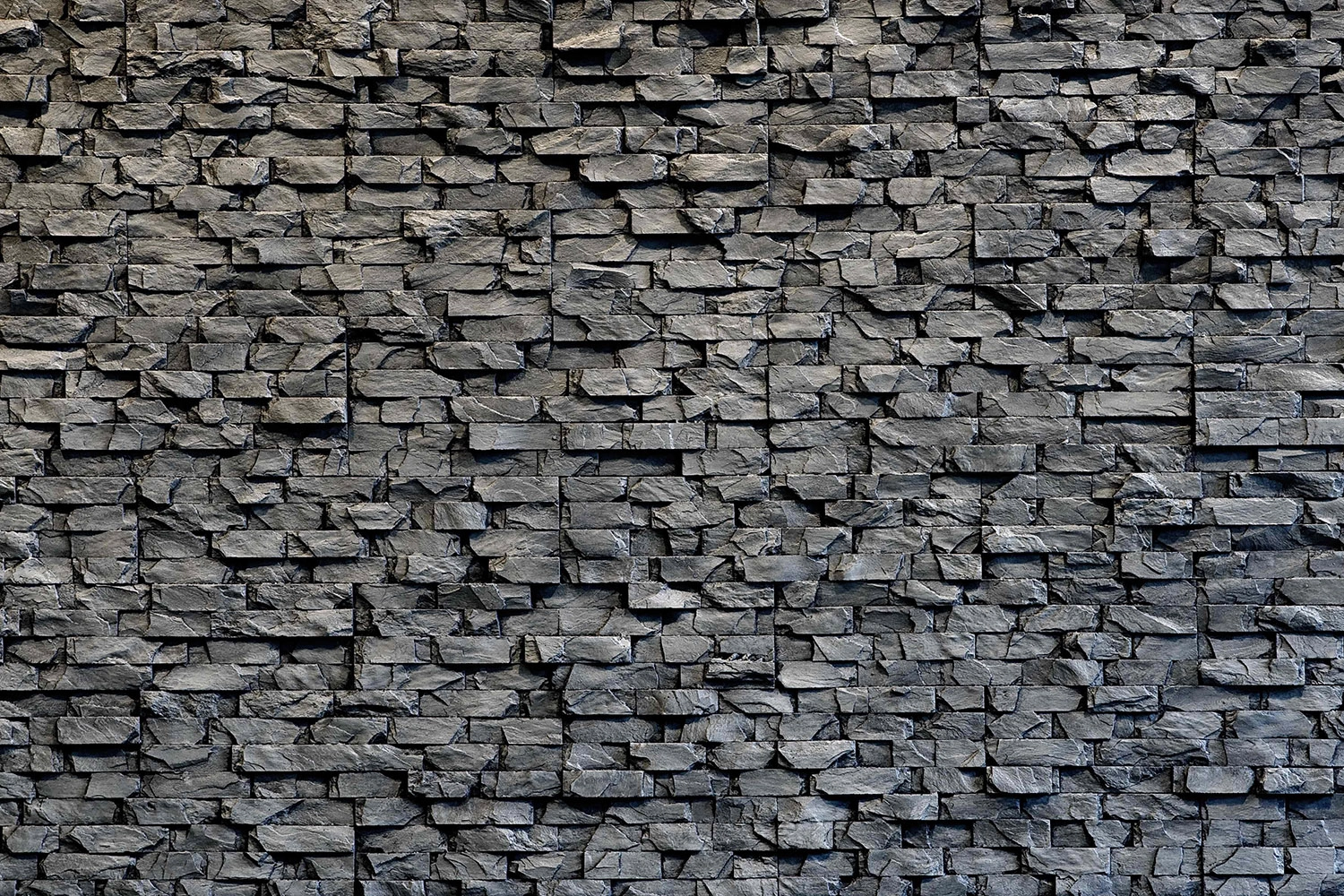
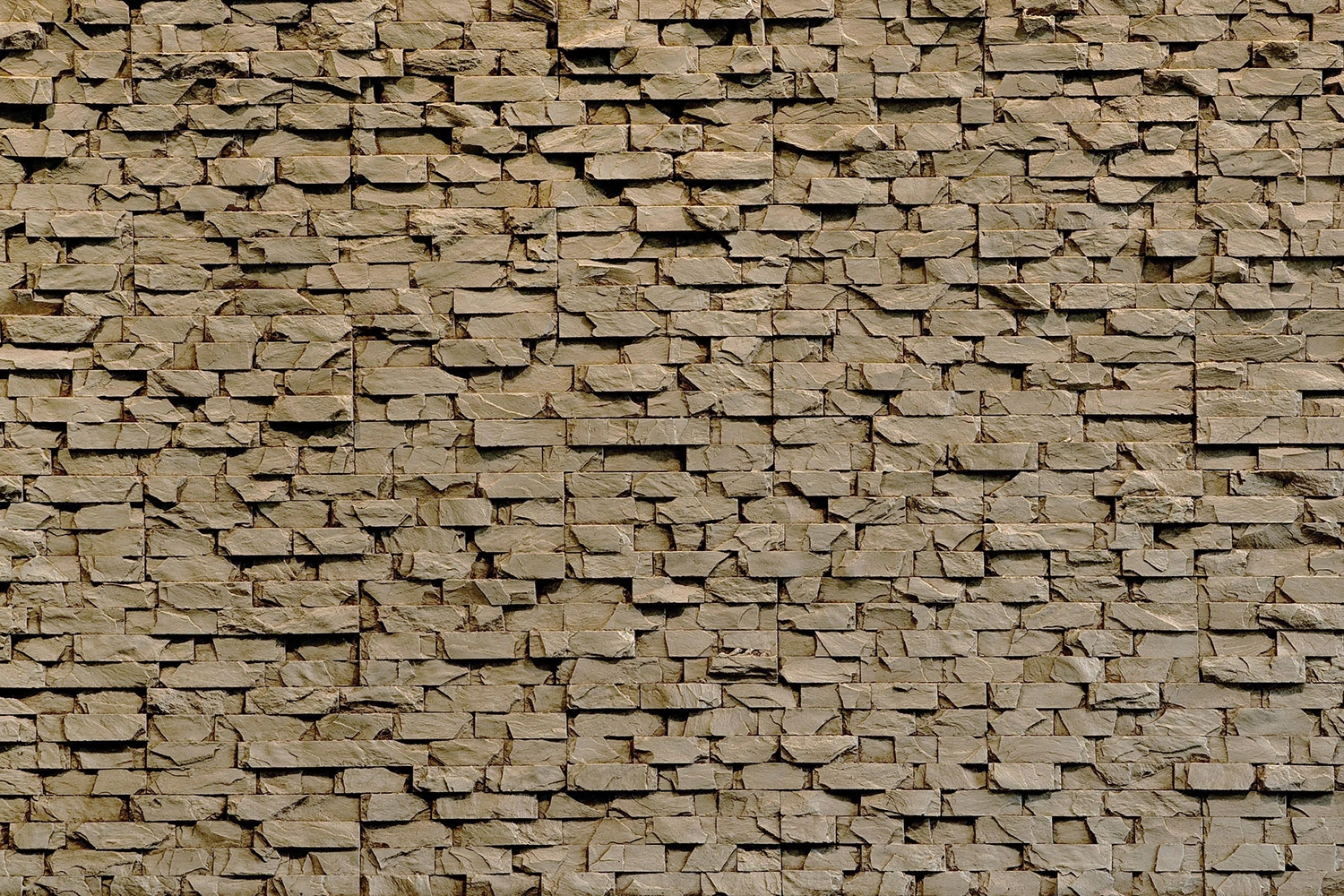
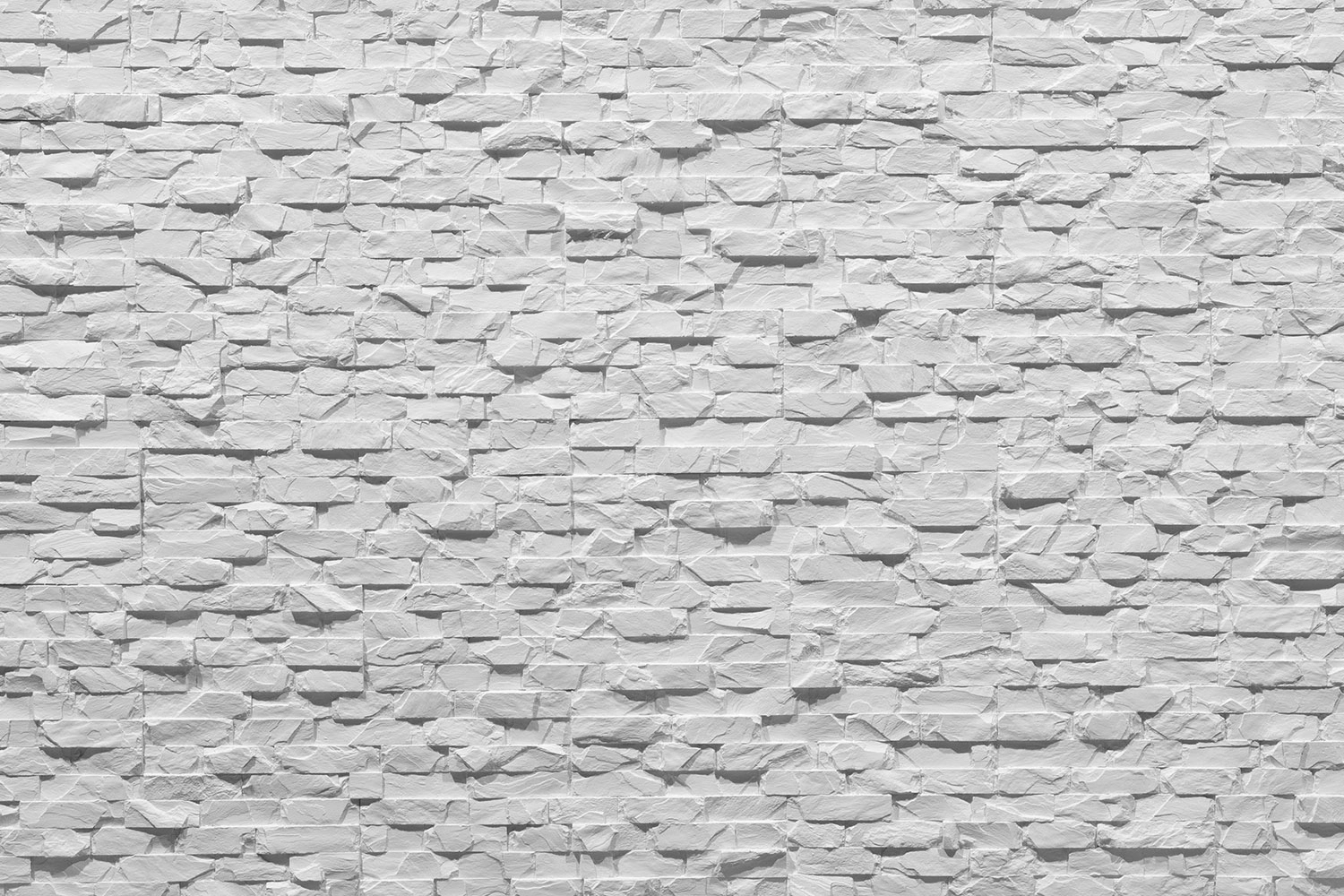
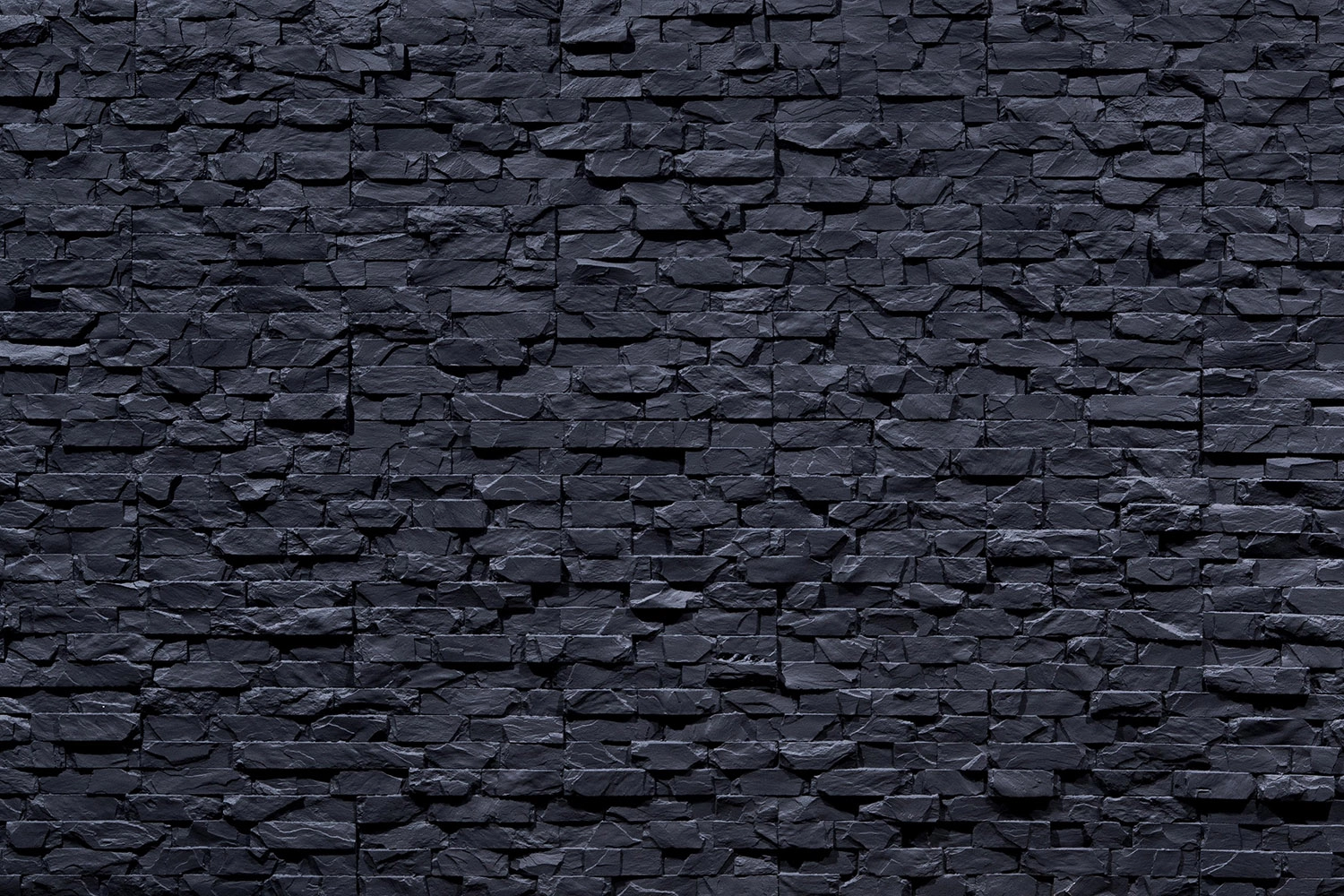
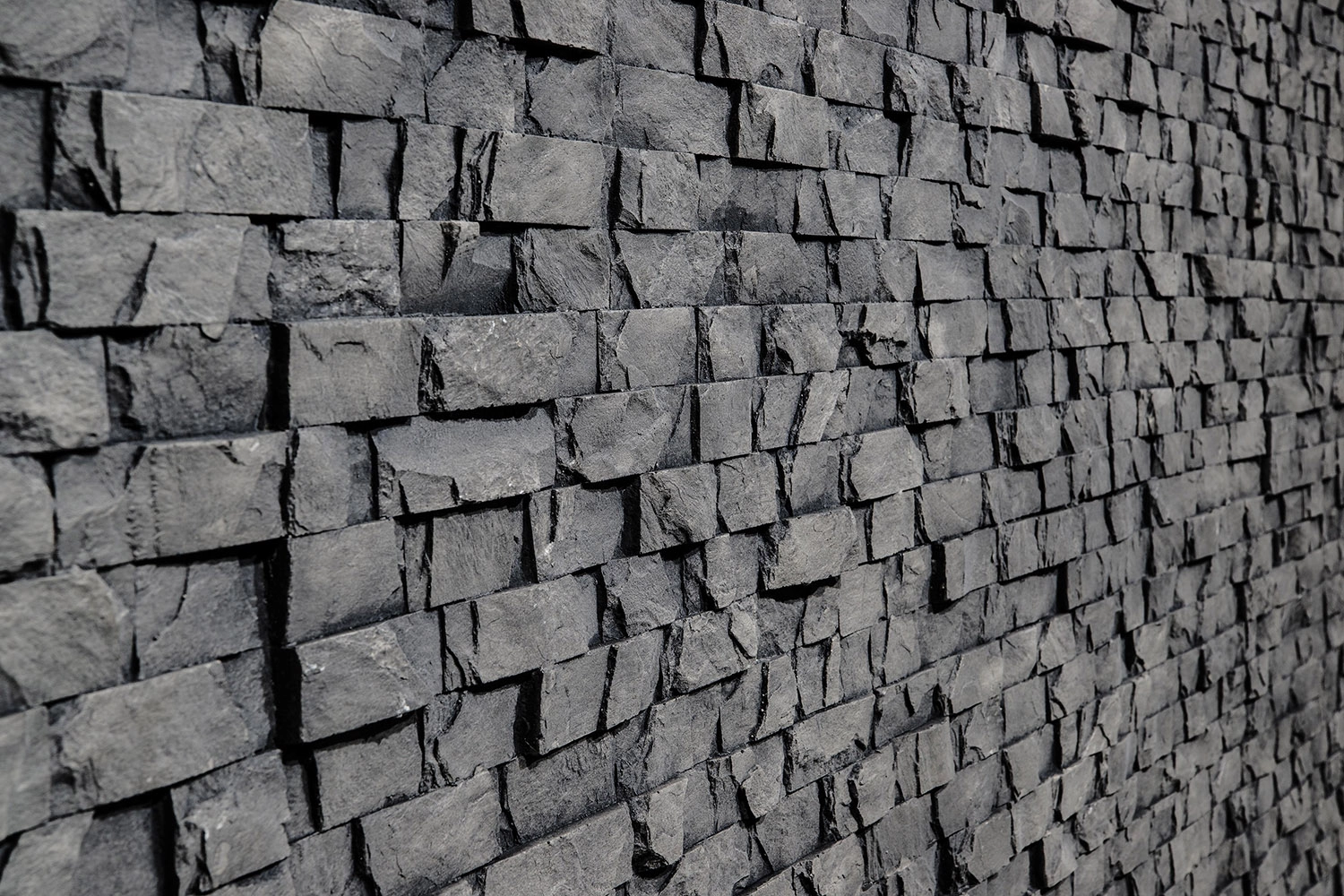
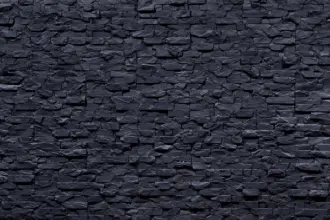
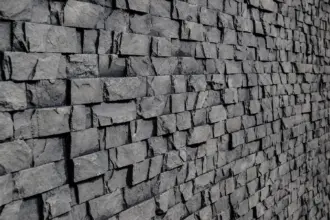
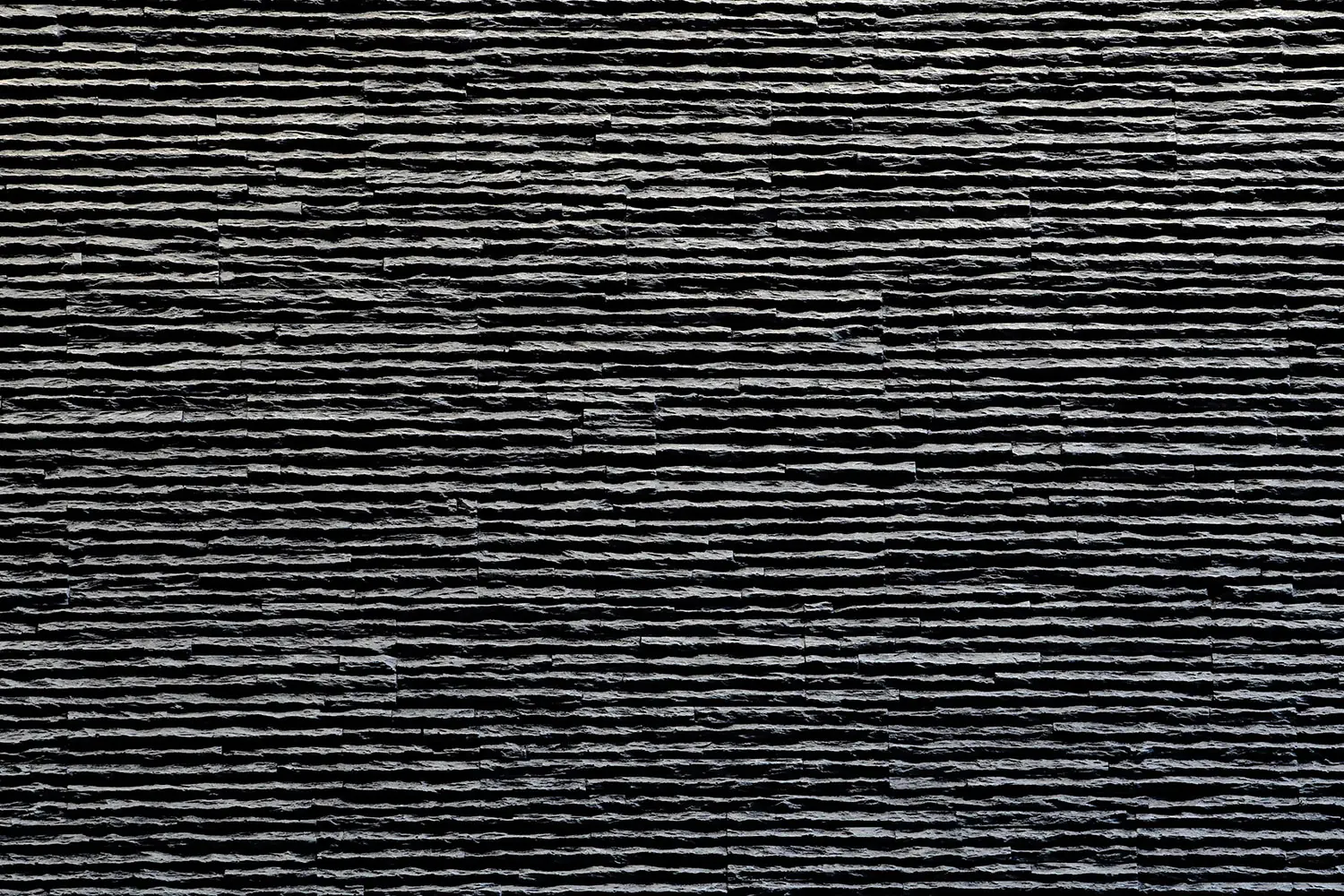
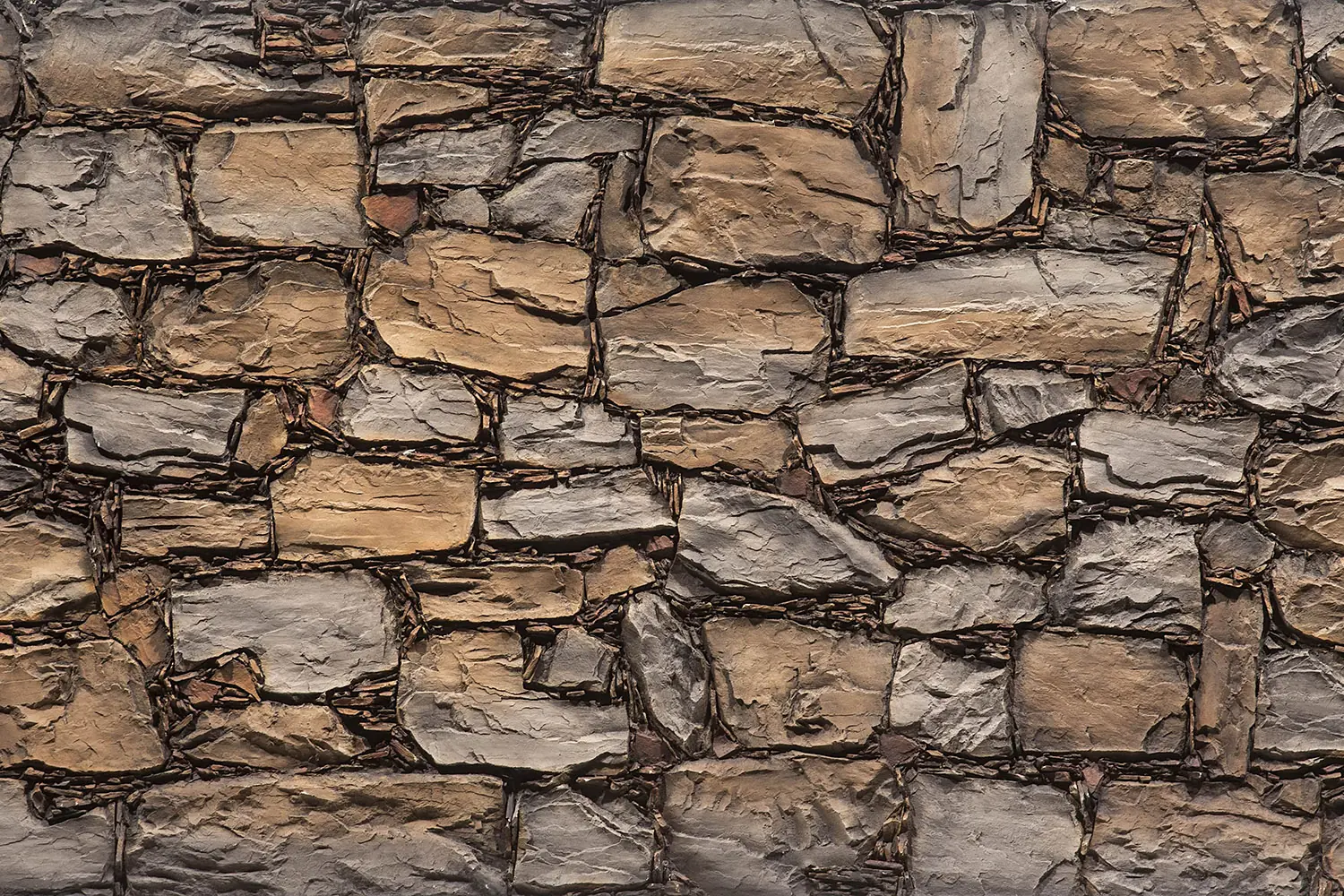
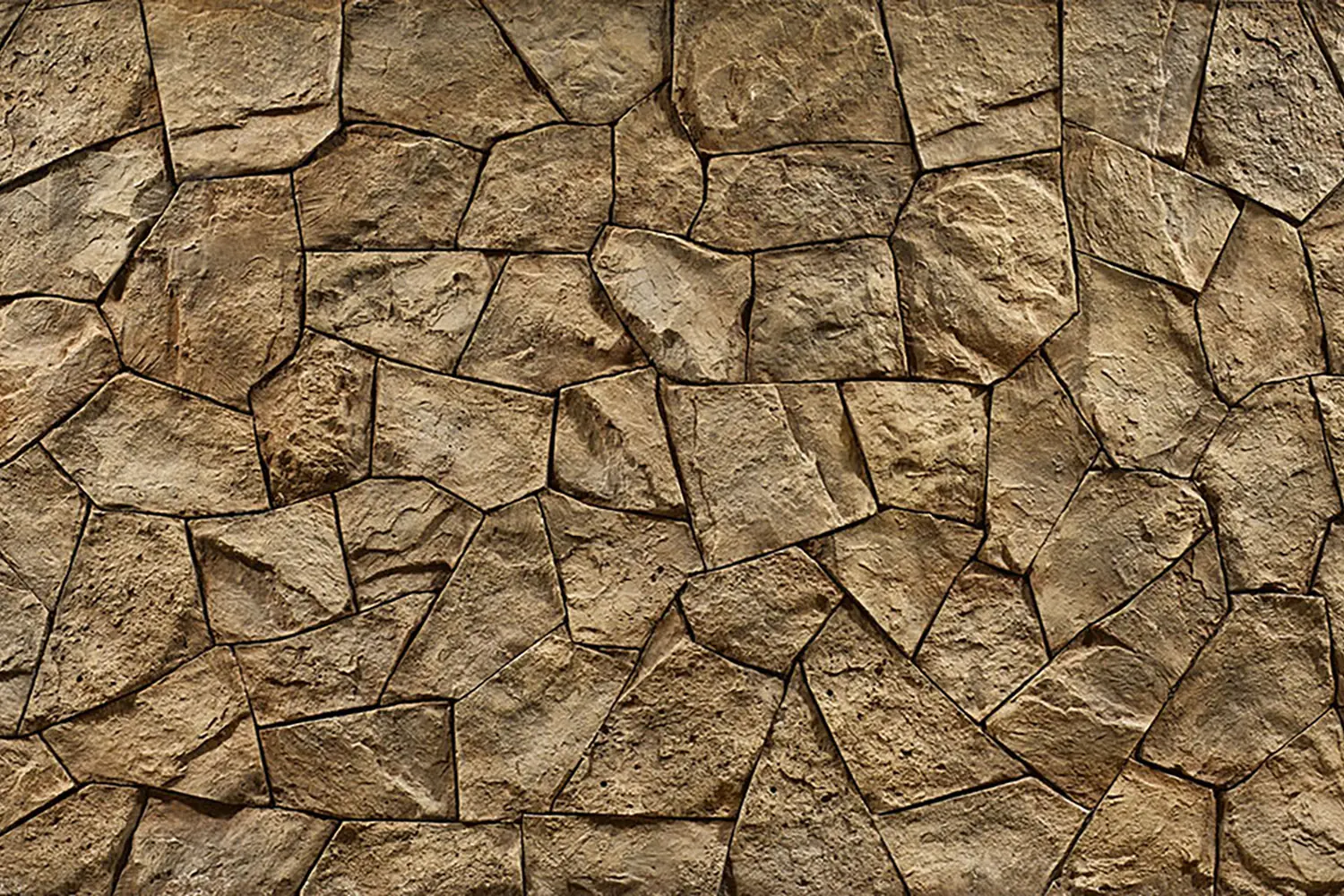
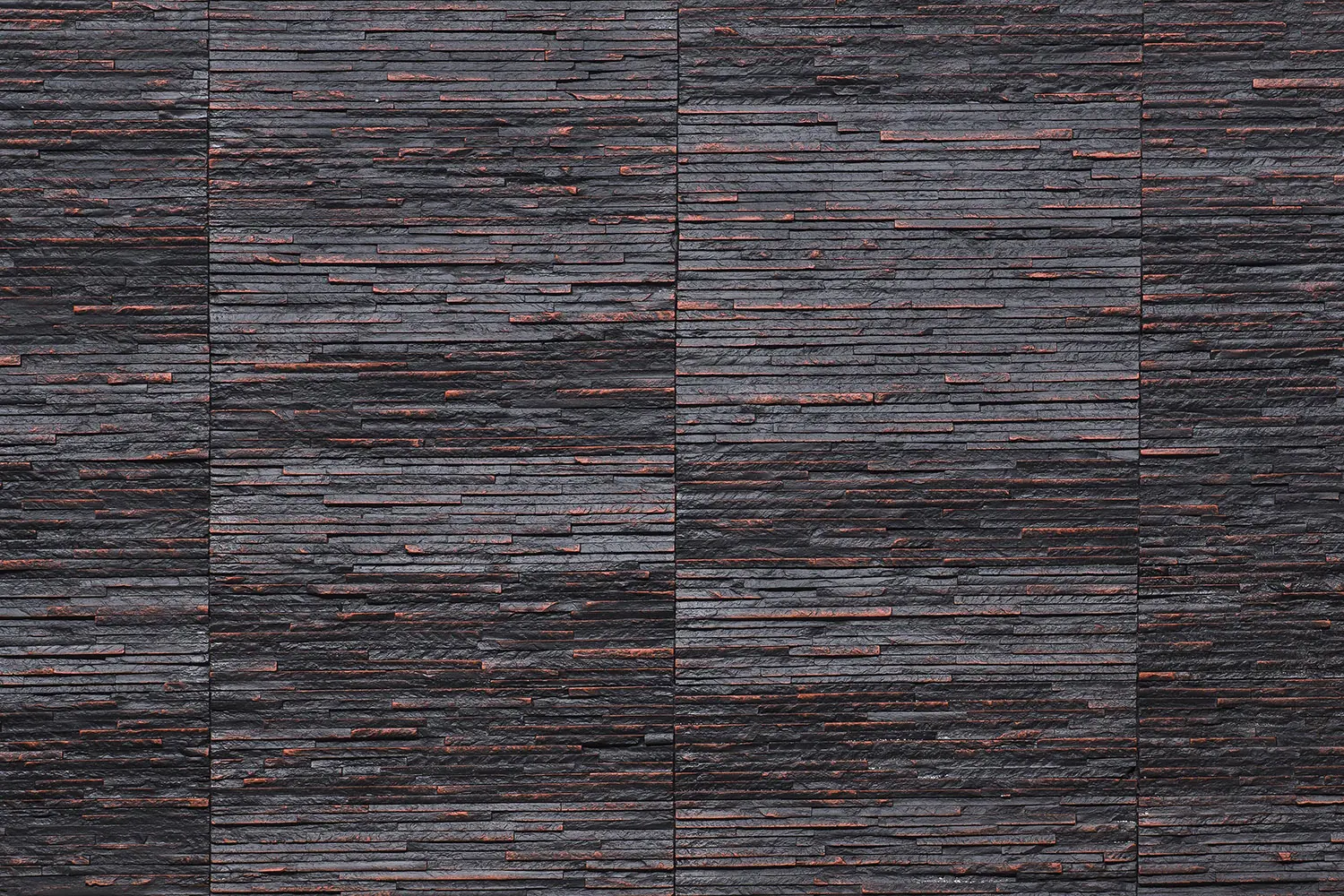
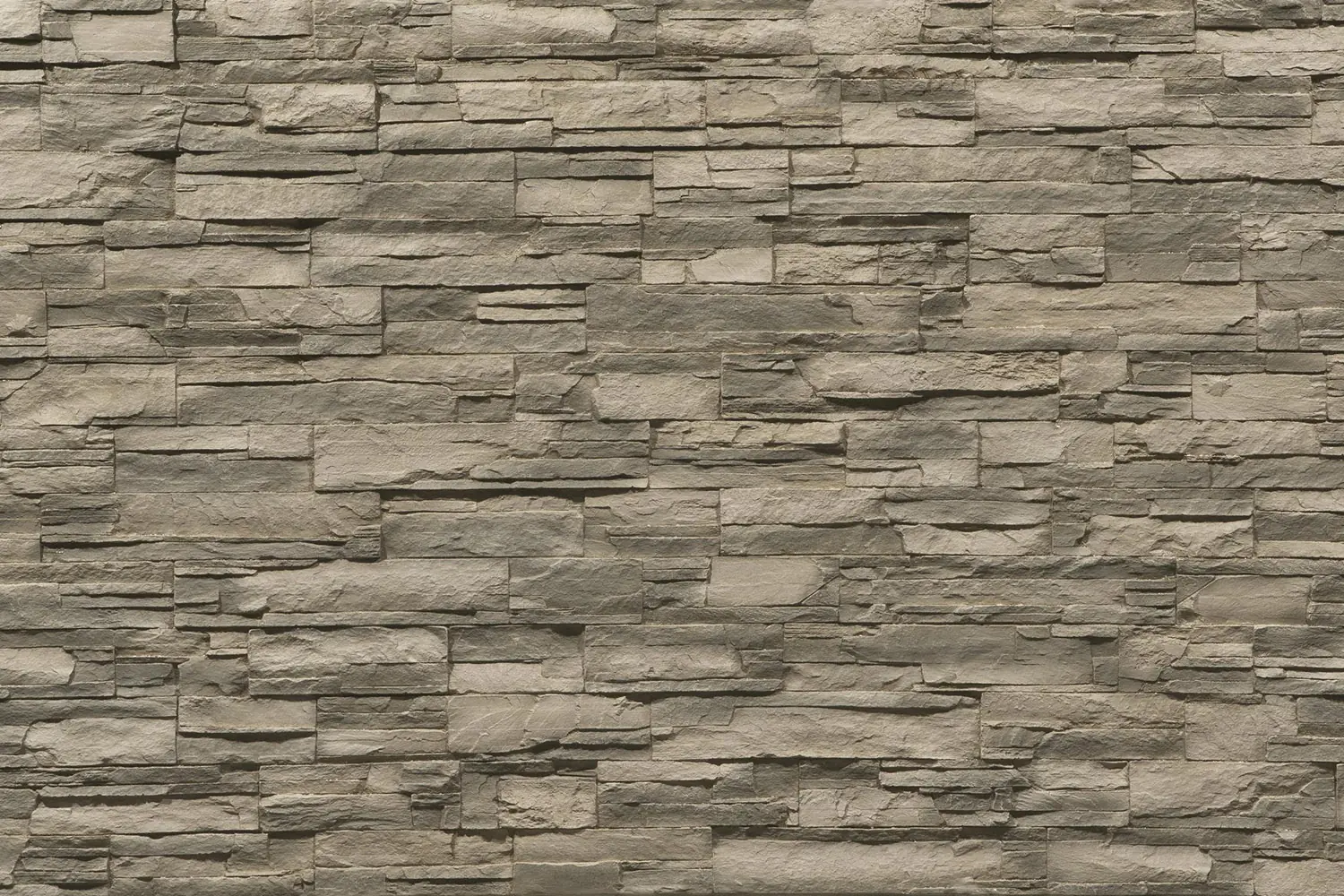
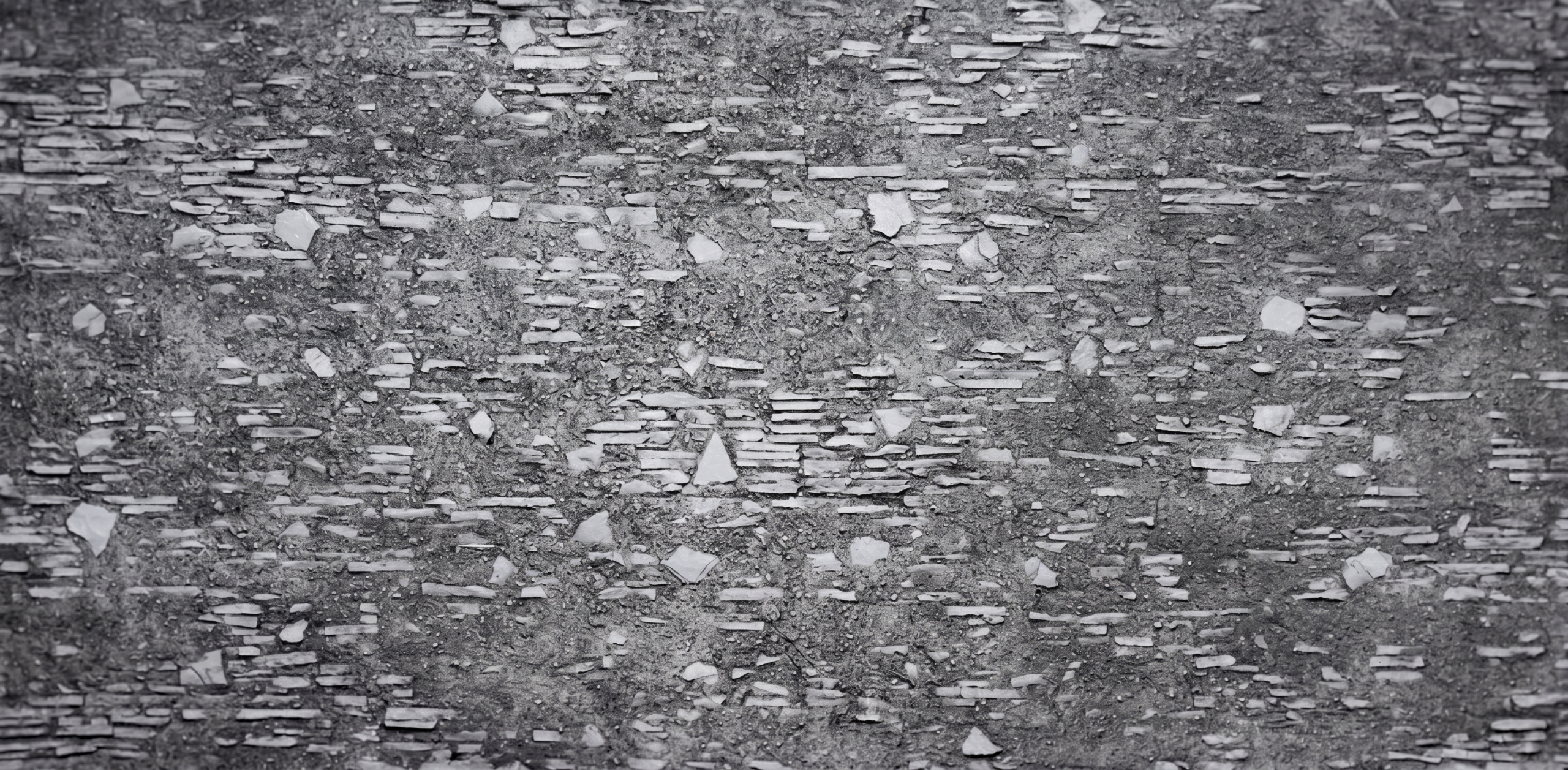
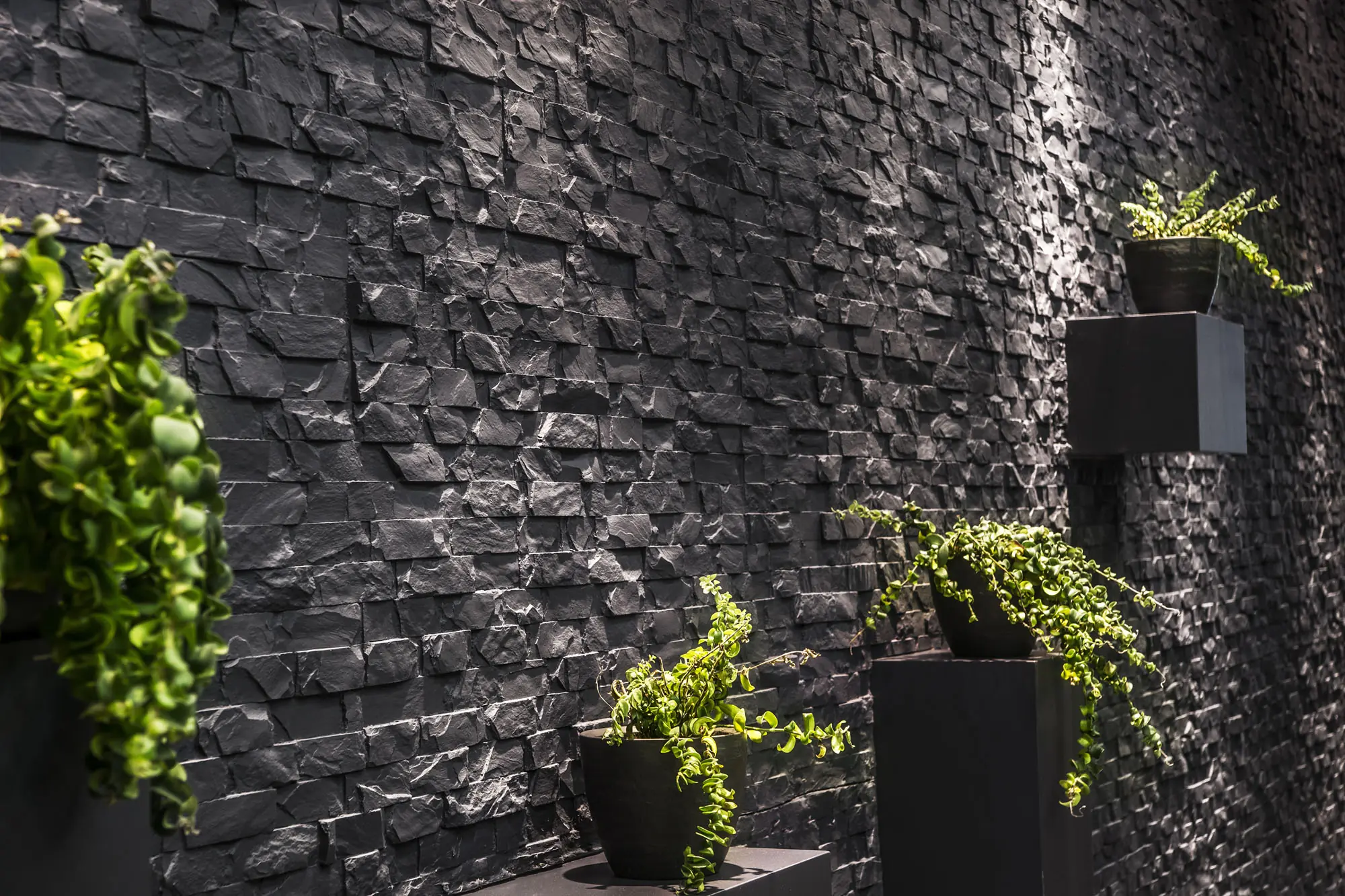
Fiji translates the irregular character of natural stone into a contemporary architectural surface with a distinctly urban identity. Rather than appearing overly ornamental, the design builds its presence through subtle roughness, layered fractures, micro-details, and controlled three-dimensional variation.
The surface is shaped to reproduce both the smaller and larger irregularities associated with stone. Fine texture, fractured layers, micro-crack traces, and volumetric changes work together to create a more authentic material impression across broad architectural surfaces.
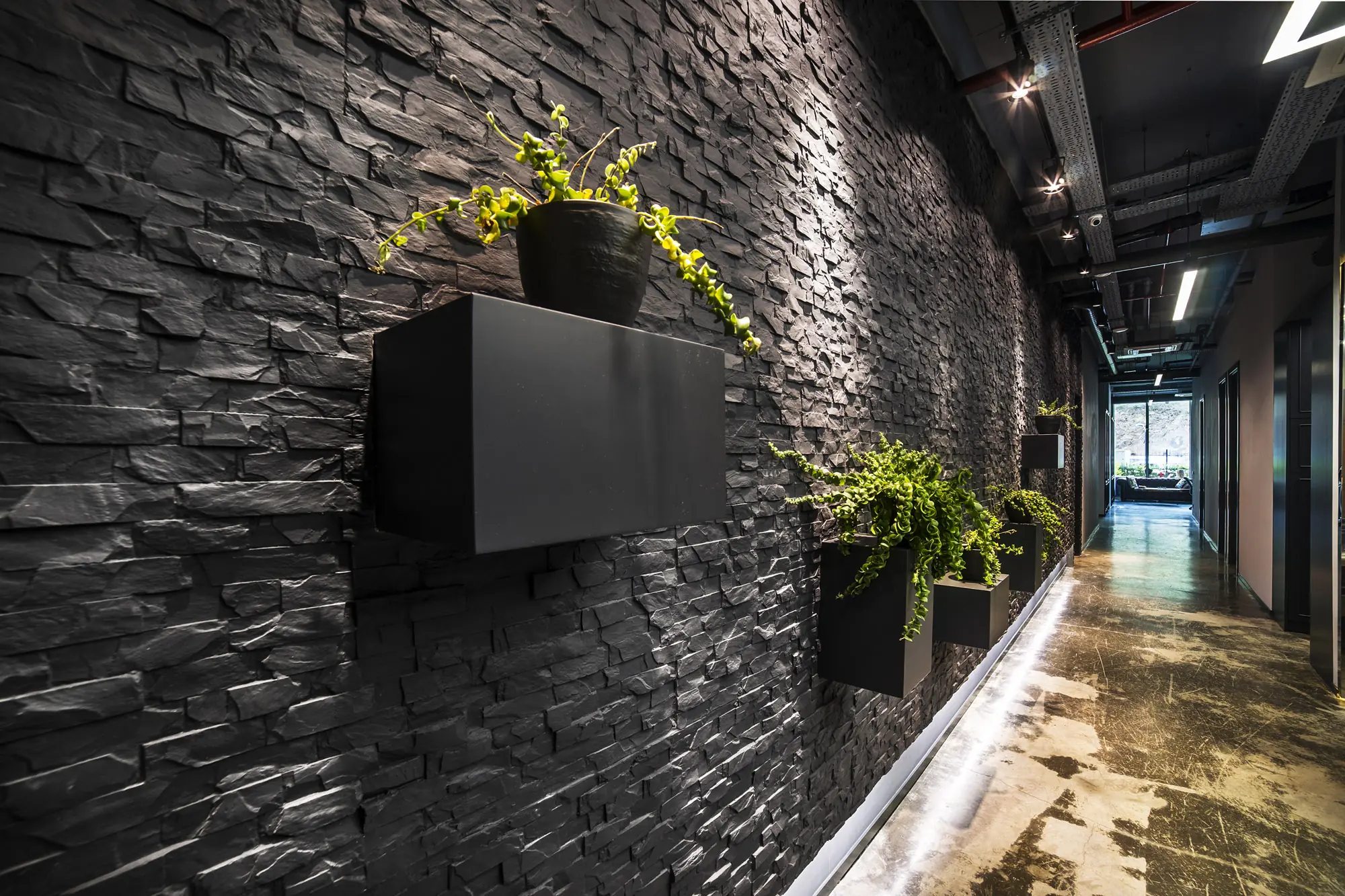
These details become especially visible when light reaches the wall from an angle. Raised areas receive stronger highlights, while recessed textures create softer shadows that reveal the changing depth of the surface.
Under diffused illumination, the same texture feels calmer and more unified. This allows the panel to support different architectural atmospheres without losing its natural stone identity.
The urban stone texture gives Fiji a contemporary character that differs from heavily rustic or deeply fractured rock surfaces. Its material expression remains natural, but the overall appearance is composed enough for modern architecture.
This balance makes the surface suitable for interiors where stone should feel refined rather than excessively rugged. It can introduce material depth while preserving clean surrounding lines and restrained furniture arrangements.
Fiji belongs to Artstone’s Stone Series and is currently classified as Stone. Its listed design styles include Mediterranean, organic natural, rustic, and Scandinavian approaches.
The panel measures approximately 296 × 127 cm, with a listed depth of around 8–10 mm and a weight of approximately 6–7 kg/m².
Its large-format proportions allow the stone texture to continue across substantial architectural areas. This supports a broader visual field in which individual surface details contribute to one cohesive material expression.
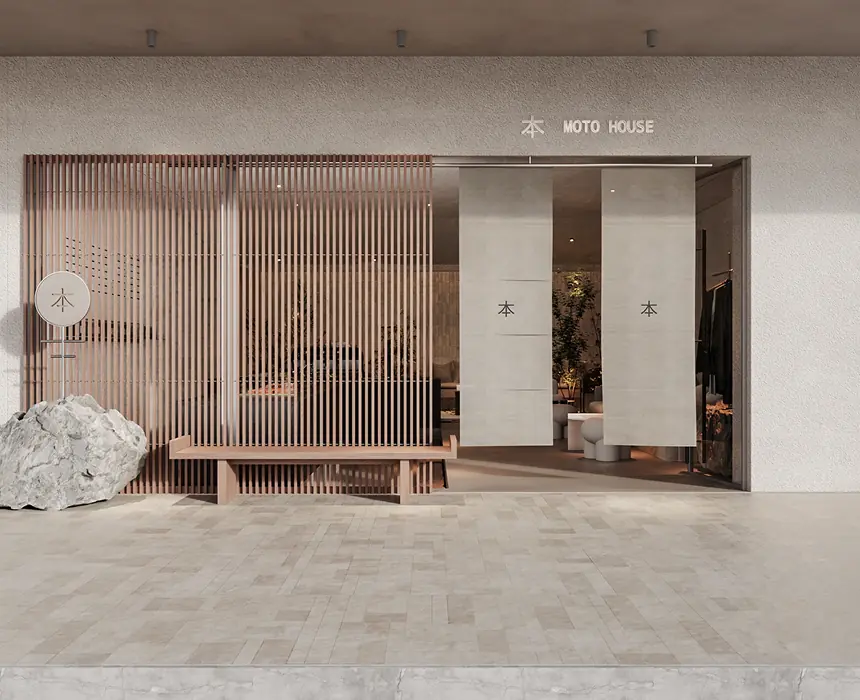
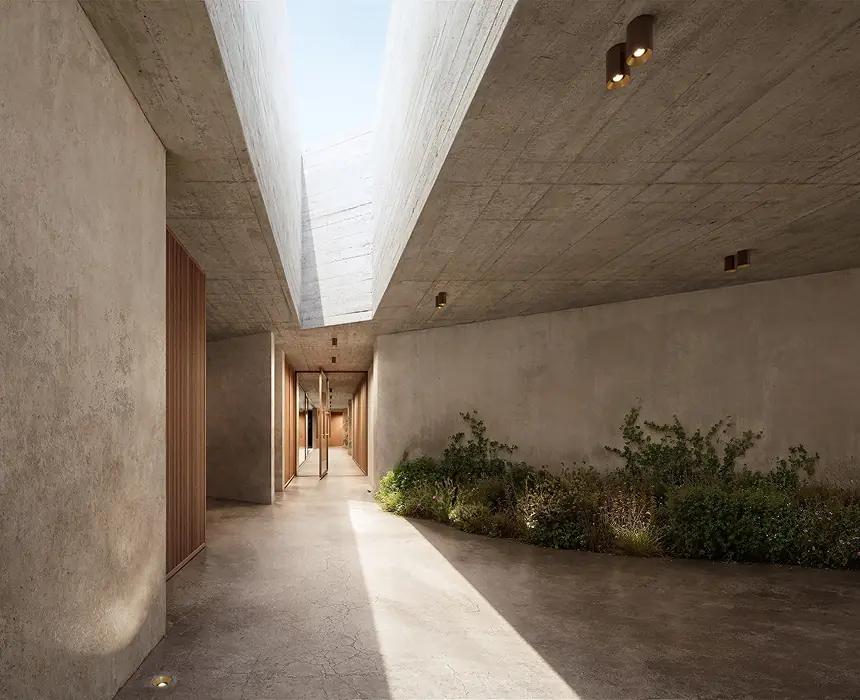
As a natural stone wall panel solution, Fiji works effectively alongside timber, glass, concrete, metal, and smooth architectural finishes. These contrasting materials can emphasize its stone character without making the overall environment feel overly decorative.
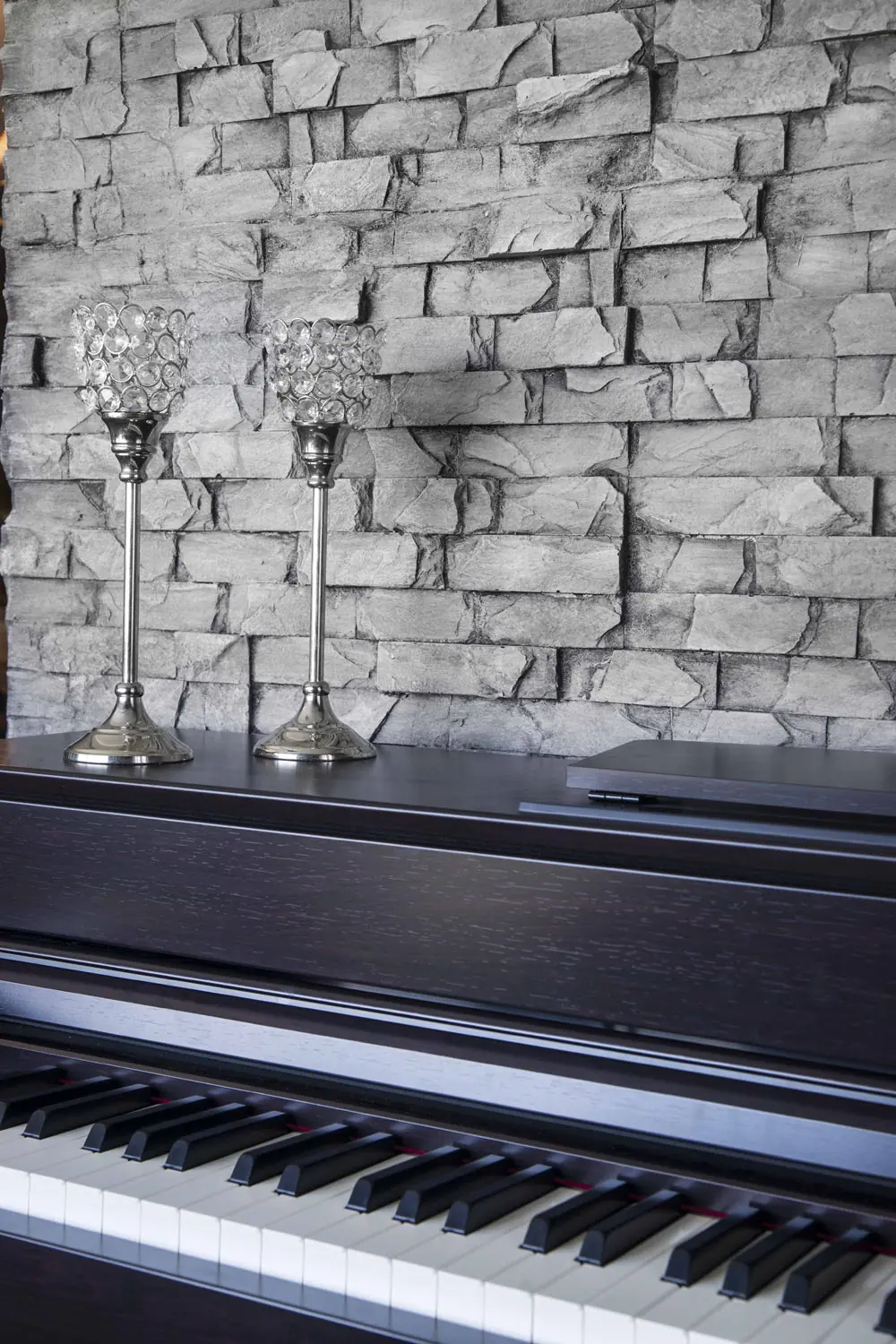
In minimalist spaces, the surface can function as a textured backdrop. Its irregular details prevent the wall from appearing flat, while the restrained overall form maintains the clarity associated with contemporary interiors.
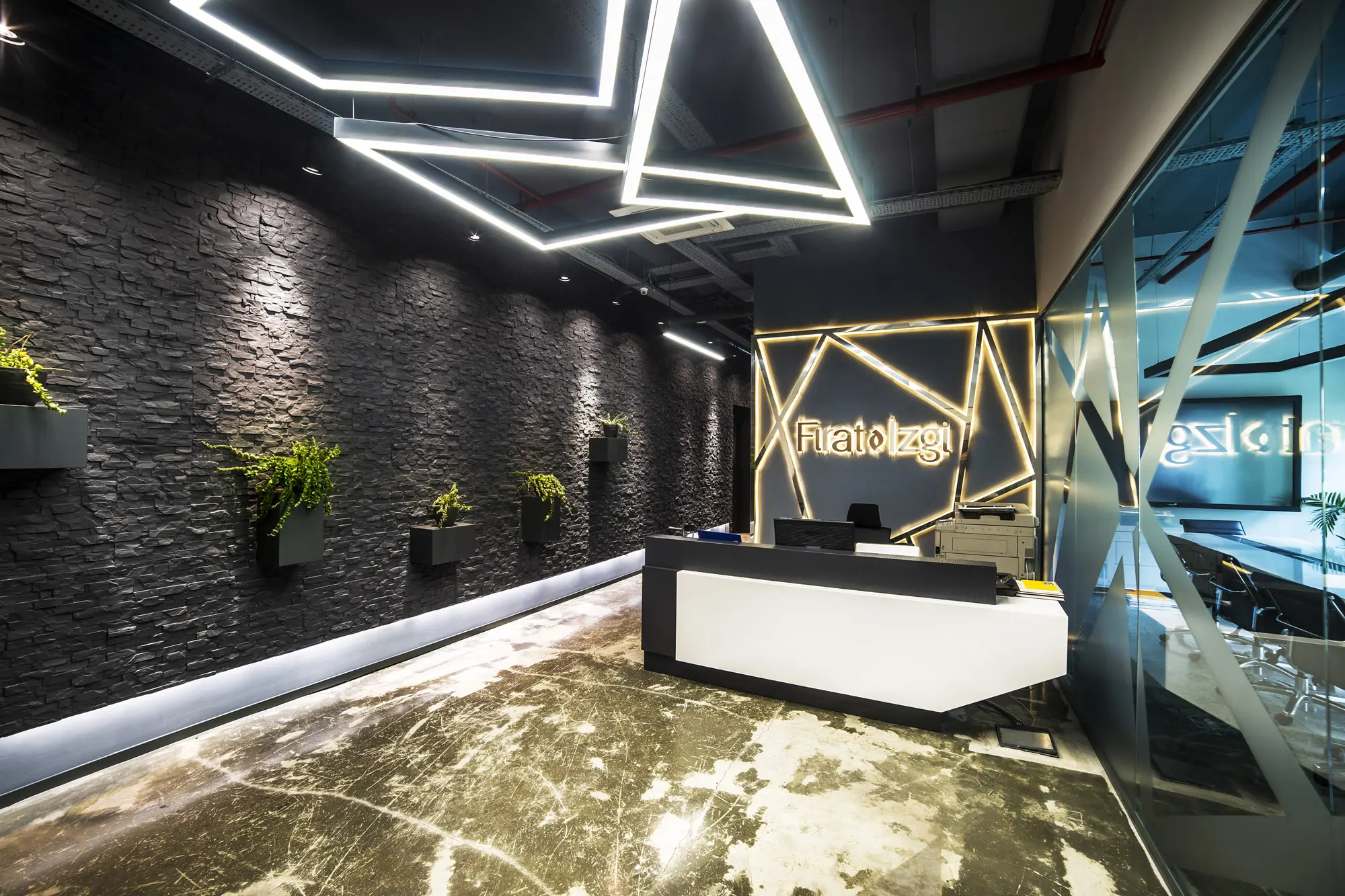
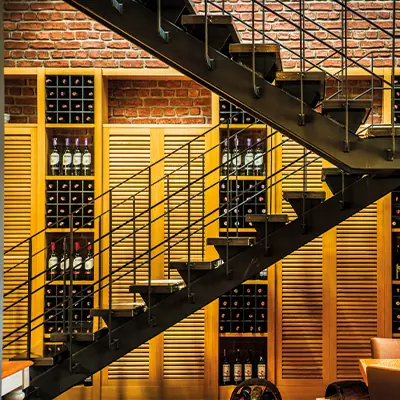
Hospitality environments can use Fiji to introduce material character across hotel areas, restaurants, reception spaces, lounges, and circulation zones. The stone texture provides depth while remaining compatible with modern furniture and lighting schemes.
Residential applications can use the same surface on living areas, entrance walls, or larger architectural features. Natural texture adds warmth and visual depth without depending on ornamental motifs.
Commercial, office, showroom, and retail environments can also benefit from its controlled surface character. The material presence is strong enough to define the architecture while allowing displays, furniture, and lighting to remain visually prominent.
Among decorative wall panels, Fiji is distinguished by its combination of natural irregularity and contemporary restraint. The surface does not rely on repetitive geometry; its identity comes from variations inspired by the structure of real stone.
Current technical information describes a multi-layered system developed to reproduce natural stone surfaces at both micro and macro scales through high-resolution molding. This includes roughness distribution, layer fractures, micro-crack traces, and volumetric surface movement.
Fiji stone wall panel is also engineered with a fiber-reinforced upper surface layer and a mineral-enhanced lower structural component. The current technical description states that this construction supports stability under impact, bending, and torsion forces.
Its technical documentation also identifies a protective surface layer developed for atmospheric conditions. This treatment is described as reducing water absorption while supporting UV color stability and surface integrity under freeze–thaw cycles.
These characteristics support the product’s listed use on exterior architectural surfaces as well as interior applications. Current product data also includes ceilings among the available usage areas.
This broader application range makes Fiji suitable for projects seeking continuity between different architectural zones. The same stone language can move from interior feature areas to suitable exterior surfaces when required by the project.
The panel’s composite infrastructure is also described as workable for architectural detailing. Current technical information states that it can be cut and drilled to accommodate elements such as socket positions, lighting lines, corner transitions, and custom dimensions.
Installation is documented with a mechanical fastening system using screws and anchors. This provides a defined fixing method rather than relying on the vague “independent mounting system” language in the older copy.
The surface protection system also helps reduce dirt retention through its controlled pore structure, according to the current technical description. This supports the panel’s performance across wider architectural applications.
Fiji also has Environmental Product Declaration documentation. Current product information notes that this may support projects assessed under international green building systems such as LEED, BREEAM, and WELL, depending on the requirements of the individual project.
The design changes subtly according to viewing distance. From farther away, the stone surface appears more unified and architectural; closer observation reveals the smaller fractures, roughness, and micro-textural variations.
This layered visual experience helps Fiji work effectively on large surfaces. The wall can remain calm at architectural scale while still offering enough detail to reward closer inspection.
Lighting can further control how pronounced the surface becomes. Grazing light increases contrast between raised and recessed areas, while softer illumination emphasizes the broader urban stone texture rather than individual details.
Among decorative wall panels, this flexibility allows Fiji to move between understated and more expressive environments without changing its fundamental material identity.
The natural stone wall panel character is particularly effective where architecture requires texture without excessive pattern. Instead of relying on repeated motifs, Fiji creates visual interest through irregularity, depth, and the interaction between surface and light.
Fiji ultimately combines authentic stone-inspired detail with a modern architectural scale. Its subtle fractures, roughness, layered surface movement, and three-dimensional variation create a refined material presence suited to both contemporary interiors and exterior architectural applications.
For projects seeking an urban stone texture that balances natural irregularity with modern clarity, Fiji offers a distinctive Stone Series solution. Its large format, changing interaction with light, and technically documented interior and exterior performance allow the surface to become an integrated part of the architecture.