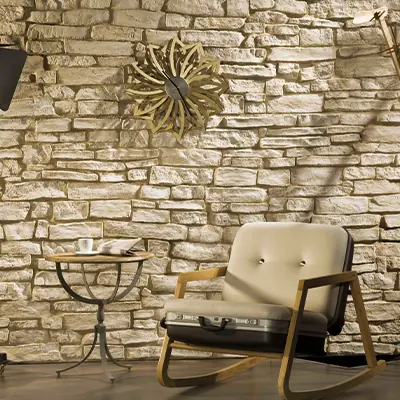
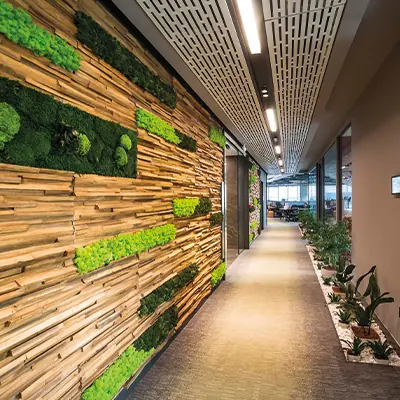
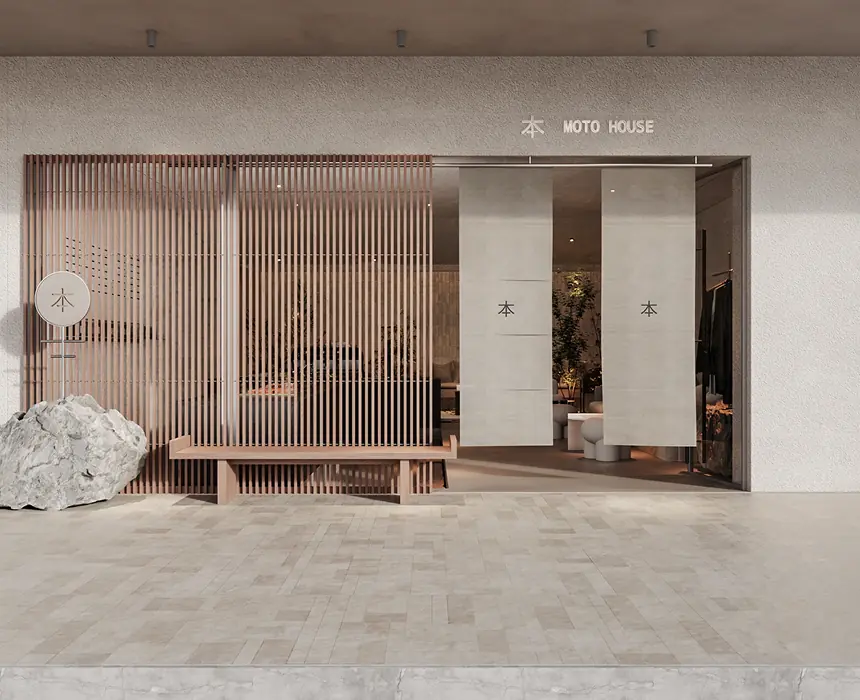
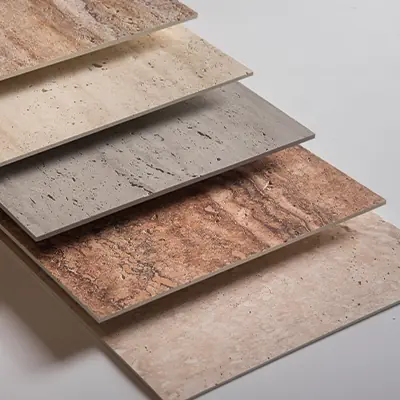
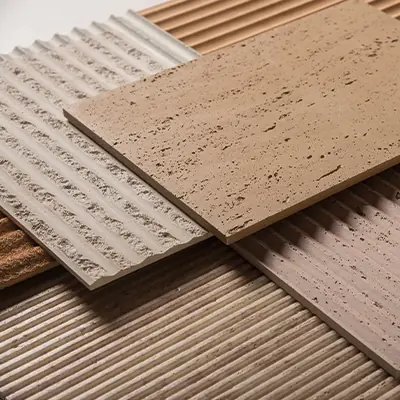
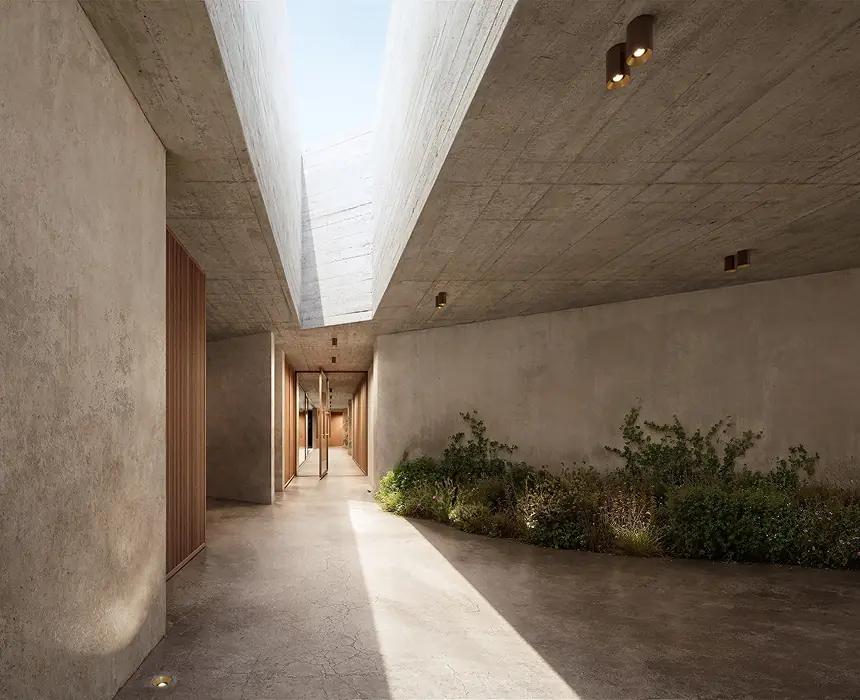
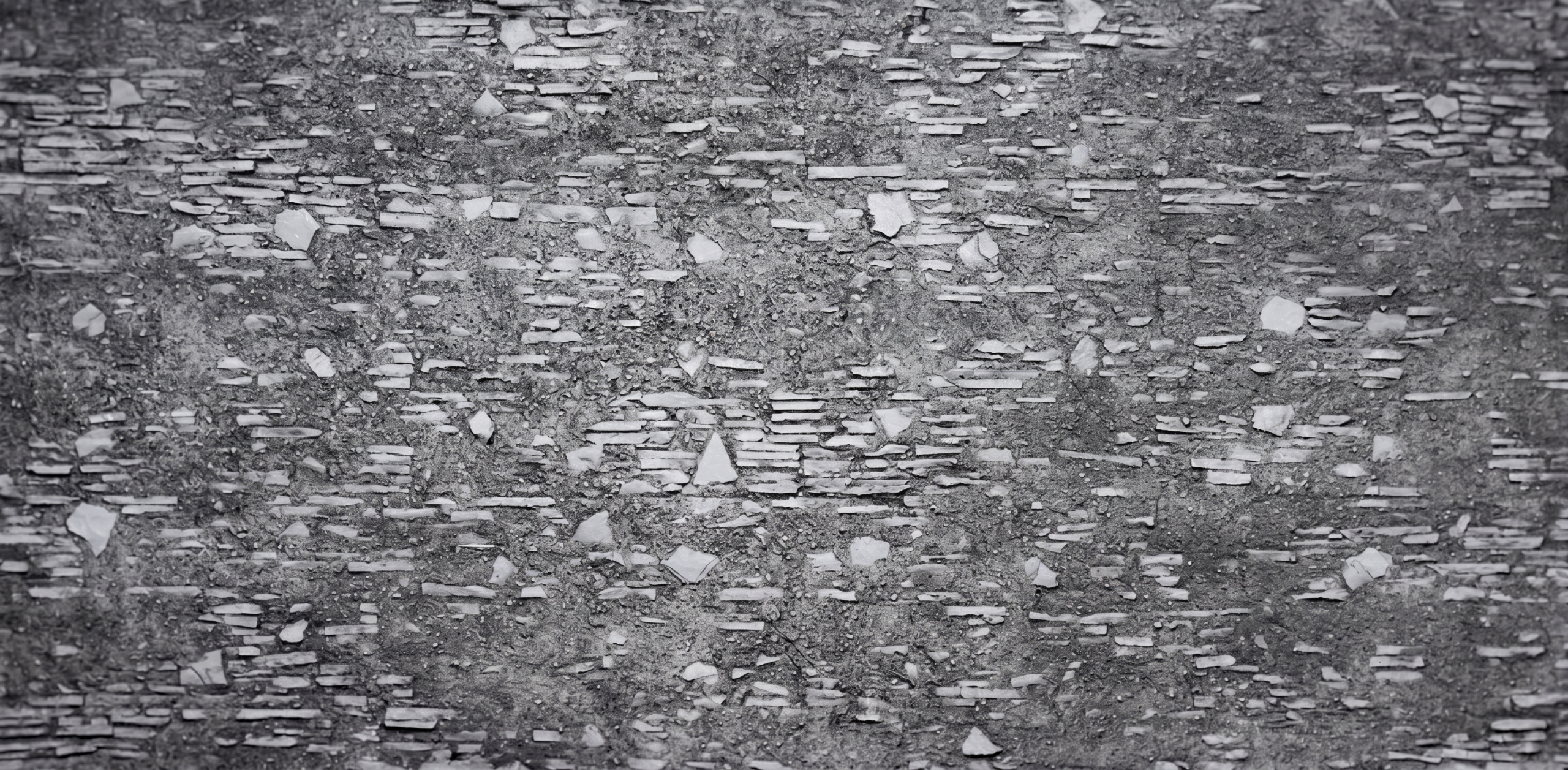
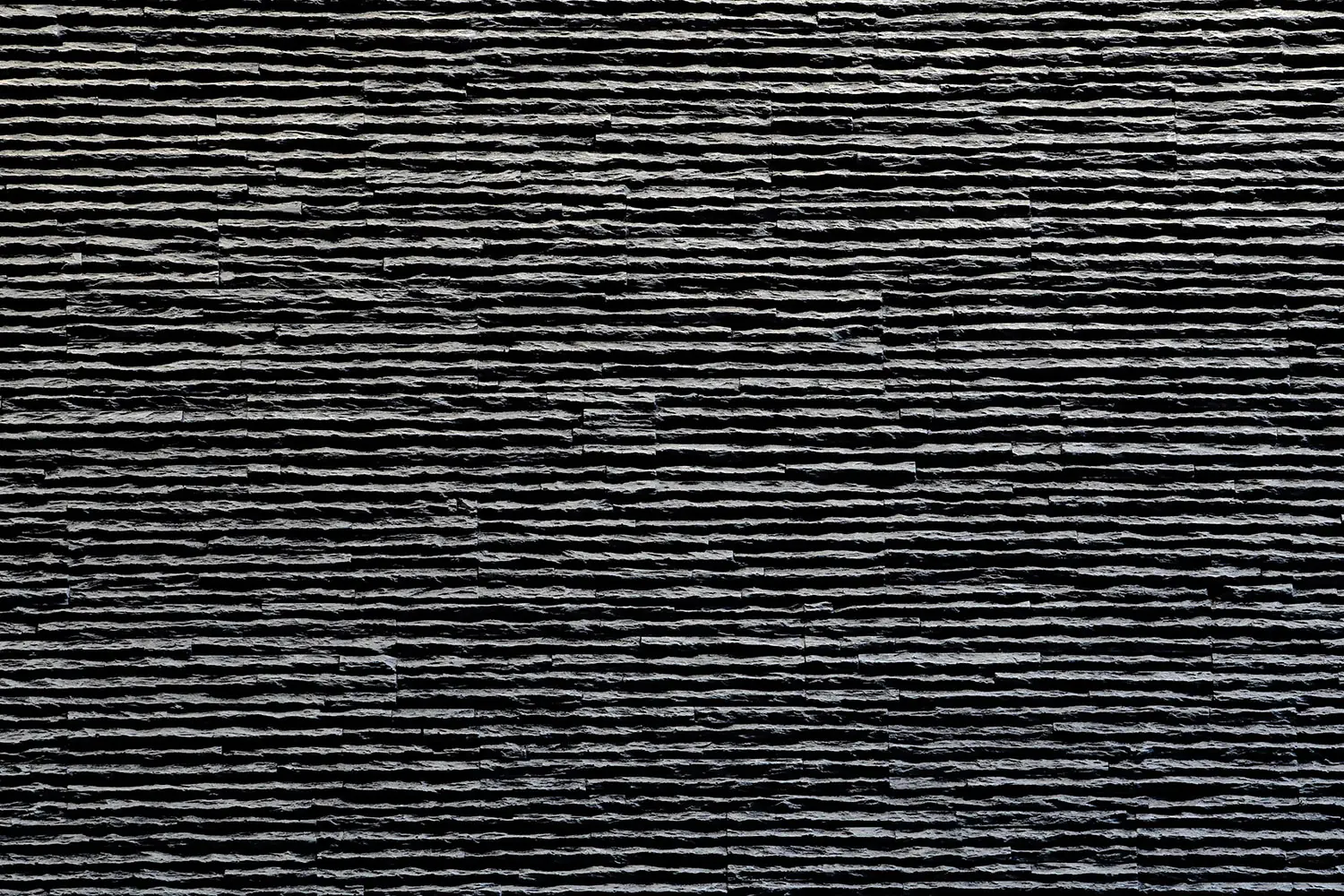
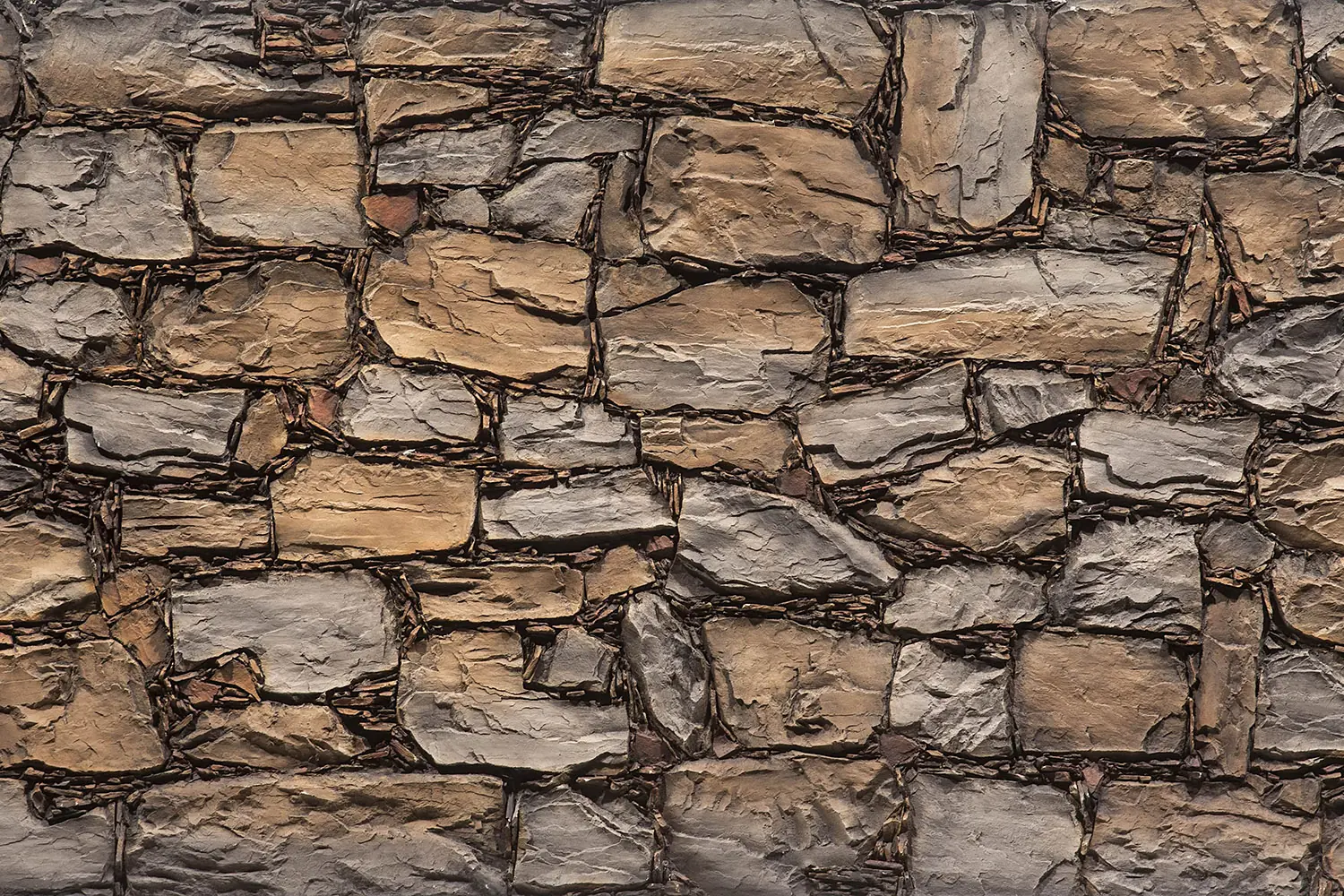
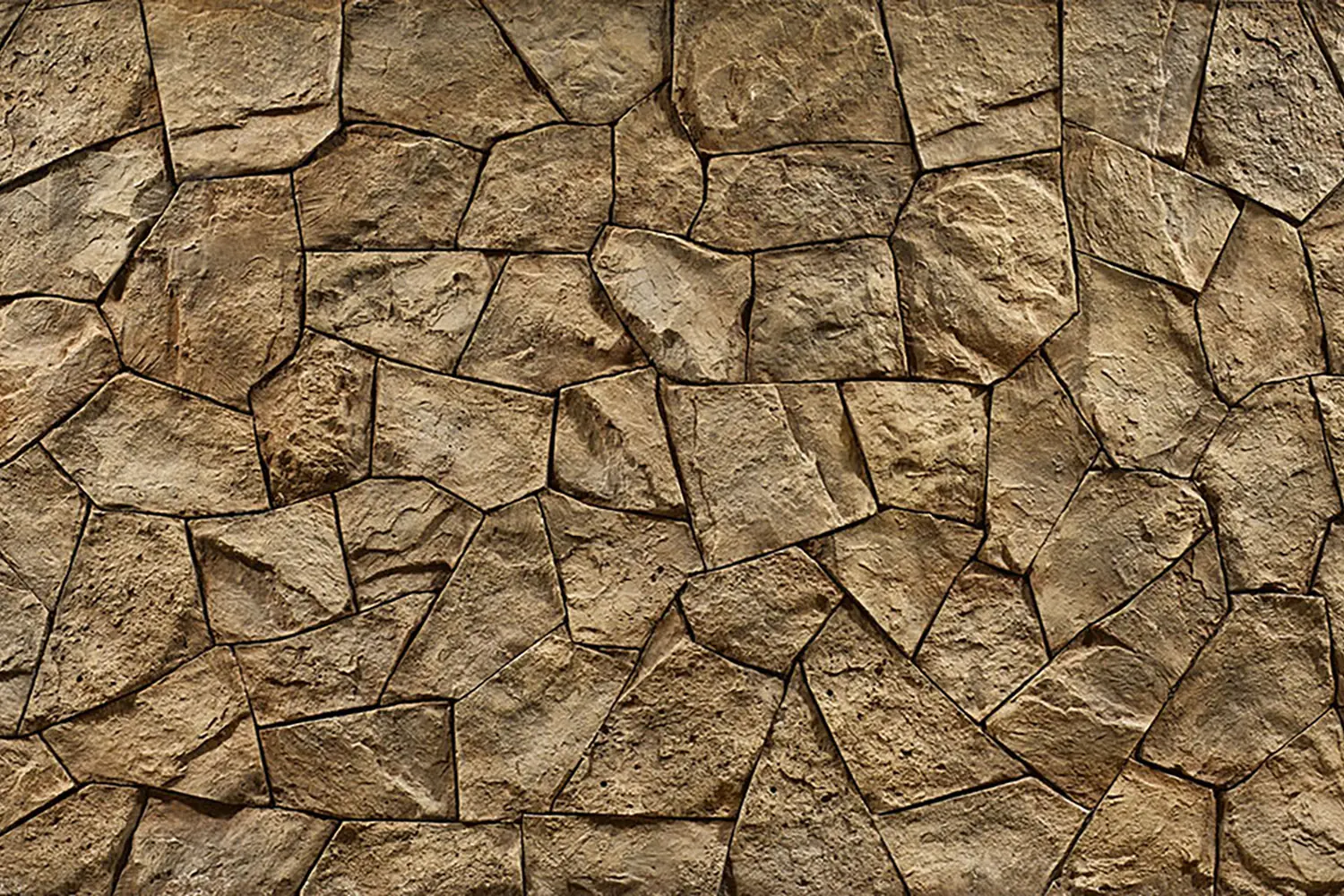
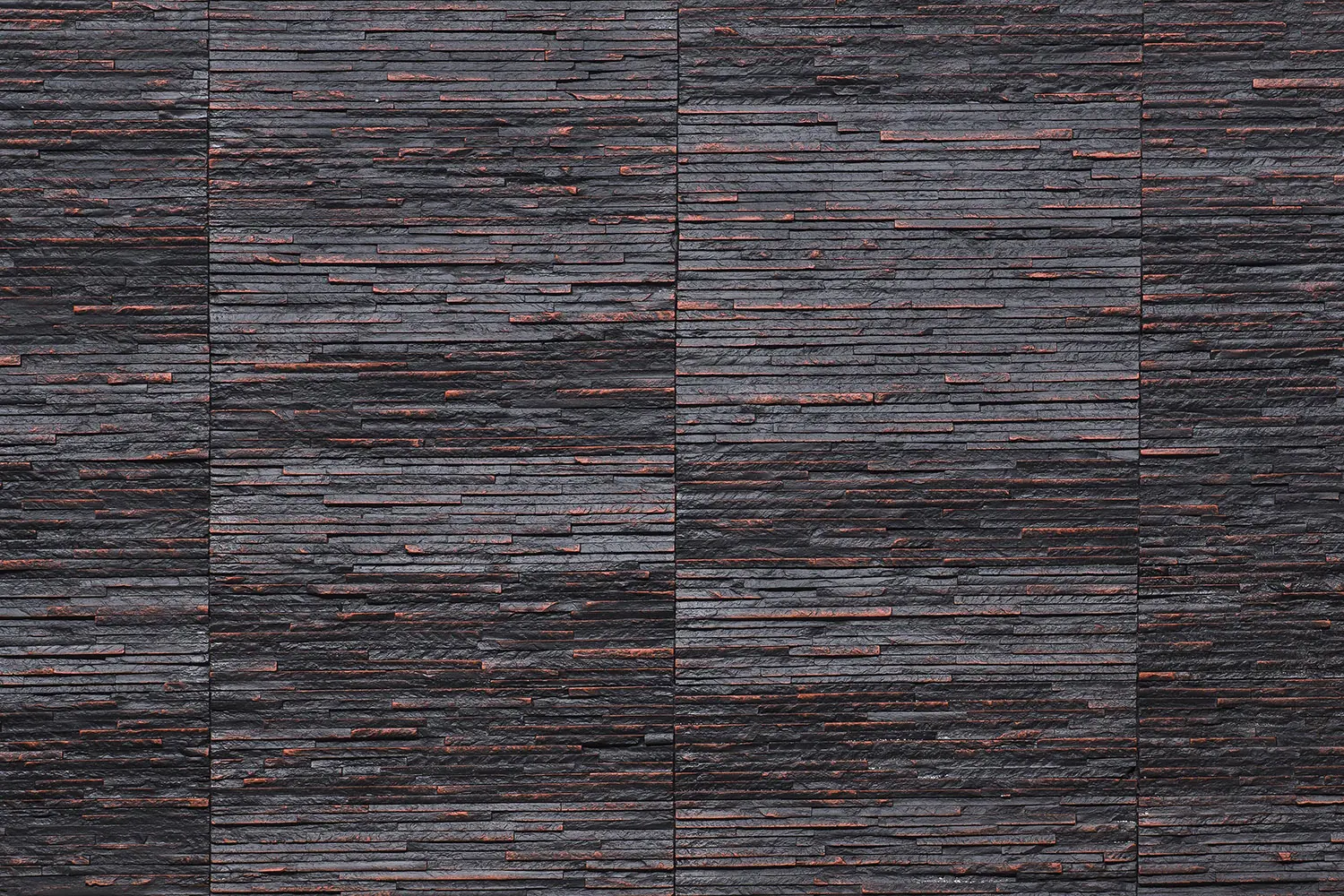
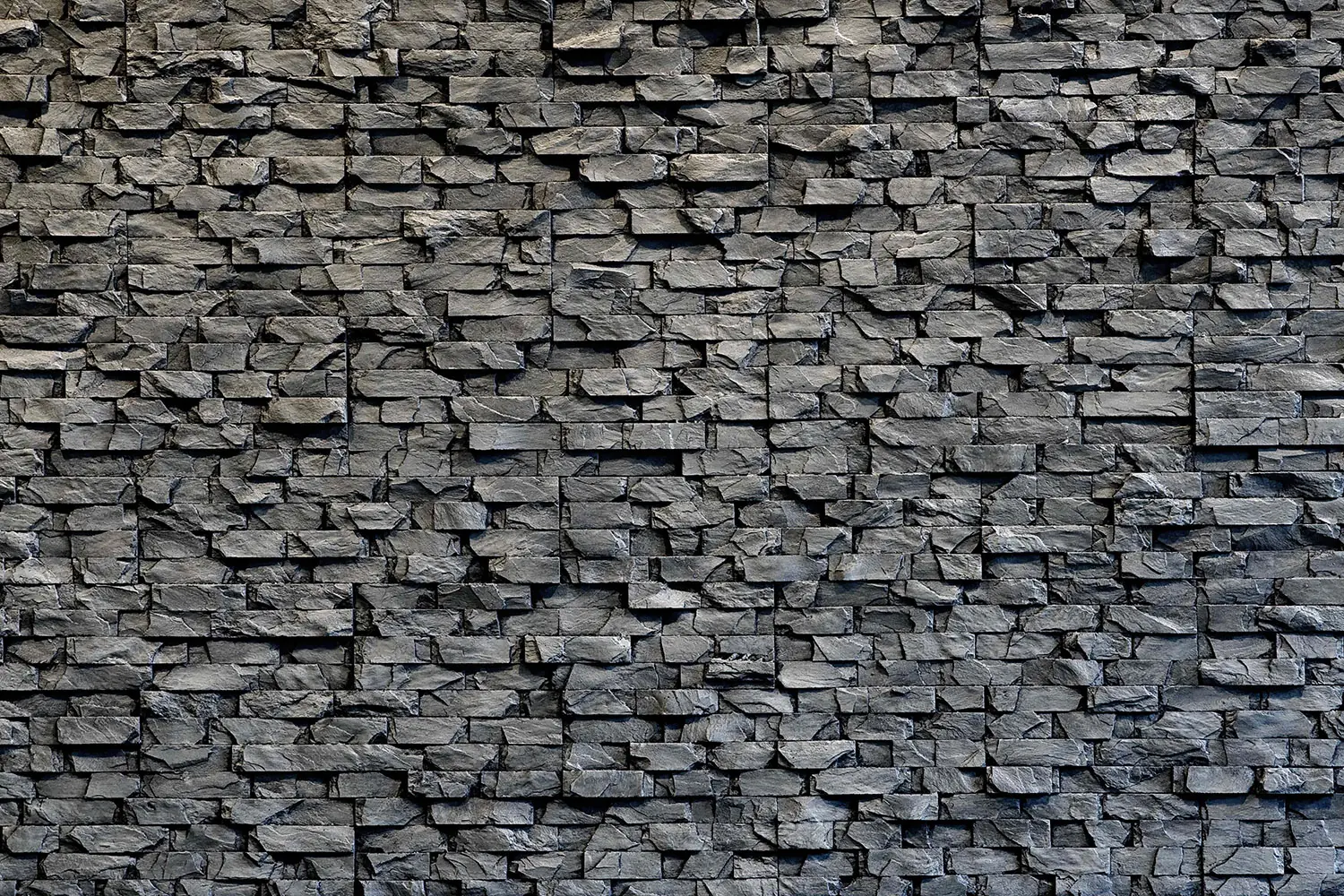
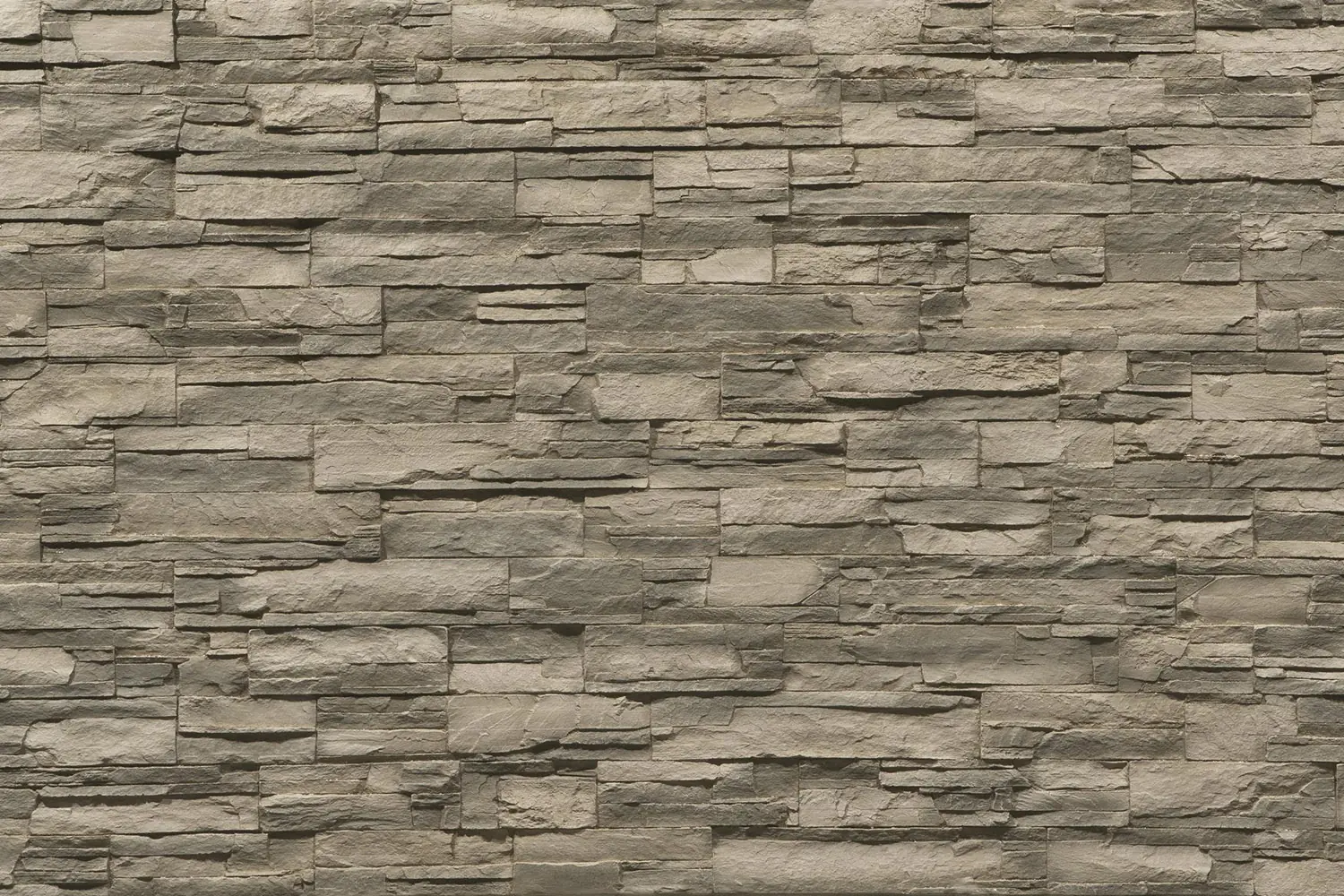
Brudt transforms the layered character of natural stone into a contemporary architectural surface defined by depth, angular transitions, and controlled geometric variation. Rather than reproducing a completely uniform stone plane, the design creates a multidimensional composition that changes according to viewing angle and illumination.
The layered stone texture is one of the most distinctive elements of the design. Different surface levels create clear transitions between highlights and shadows, allowing the wall to gain volume without relying on ornamental patterns.
Light plays an important role in defining these layers. Directional illumination emphasizes the projecting areas and deeper recesses, while softer lighting reduces contrast and gives the overall stone surface a calmer architectural appearance.
This changing visual effect makes Brudt particularly effective on larger surfaces. From farther away, the panel creates a coherent geometric stone composition; closer viewing reveals smaller irregularities, roughness, and variations inspired by natural stone topography.
The surface is produced to reproduce both micro- and macro-scale stone characteristics. Current technical information identifies stone-layer traces, surface roughness, light-shadow depth, and natural irregularities among the details transferred through high-precision molding.
These features give the panel a more tactile identity than a completely smooth geometric surface. The structure remains contemporary, but its irregularities keep the design connected to the visual language of natural stone.
As a geometric stone wall panel, Brudt offers a different approach from highly fractured or traditionally stacked stone designs. Its layers are organized into a more architectural composition, creating depth while maintaining a clear modern character.
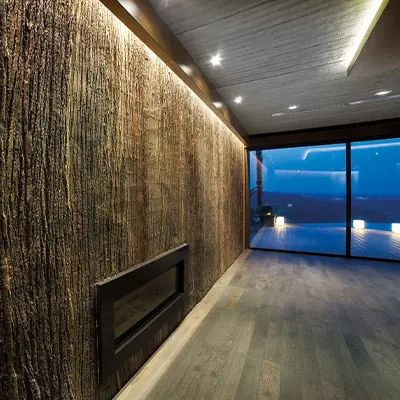
This balance allows the surface to work comfortably beside clean contemporary materials. Glass, timber, metal, concrete, and smooth plaster can create strong contrast against the dimensional stone structure.
In minimalist interiors, the wall can become a focal element without requiring additional decorative patterns. The depth of the surface provides enough visual interest while the broader composition remains controlled.
Hospitality environments can use Brudt across reception areas, lounges, restaurants, hotel interiors, and other feature surfaces. Its layered form introduces architectural depth while supporting both refined and more natural material palettes.
Residential projects can use the same surface in living areas, entrances, or feature walls where a stronger material identity is desired. Its three-dimensional structure adds character while remaining adaptable to modern furniture and lighting.
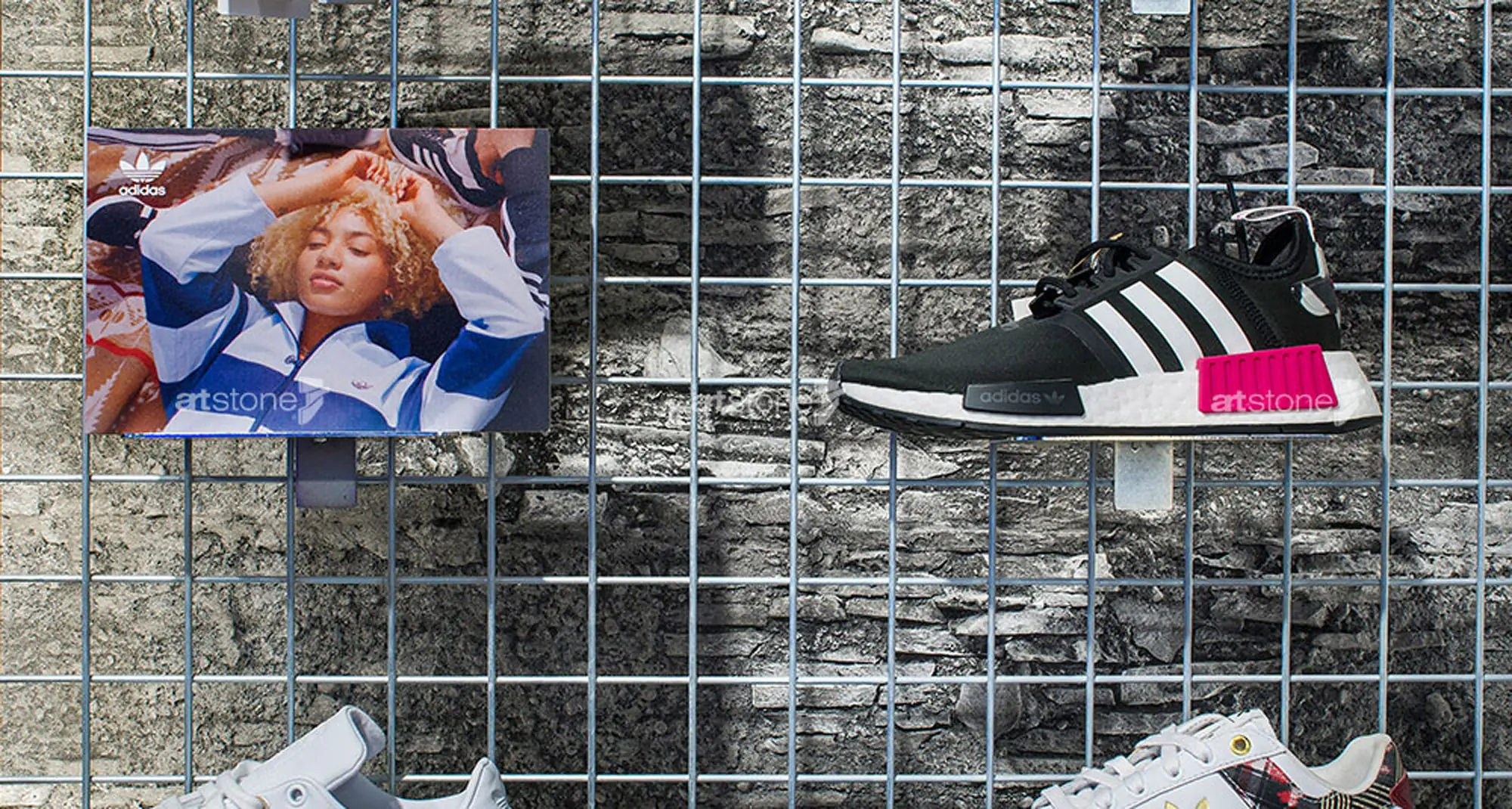
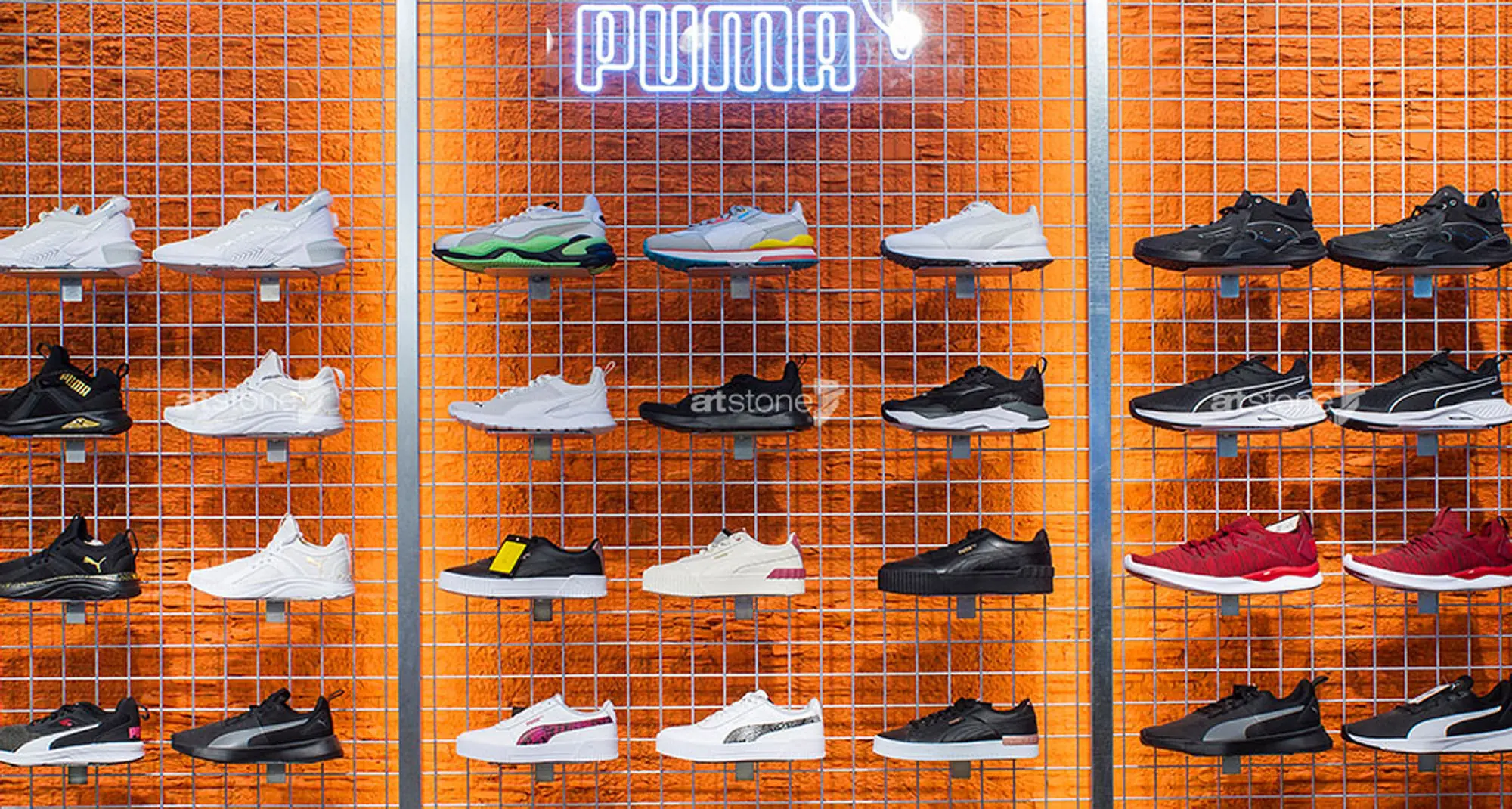
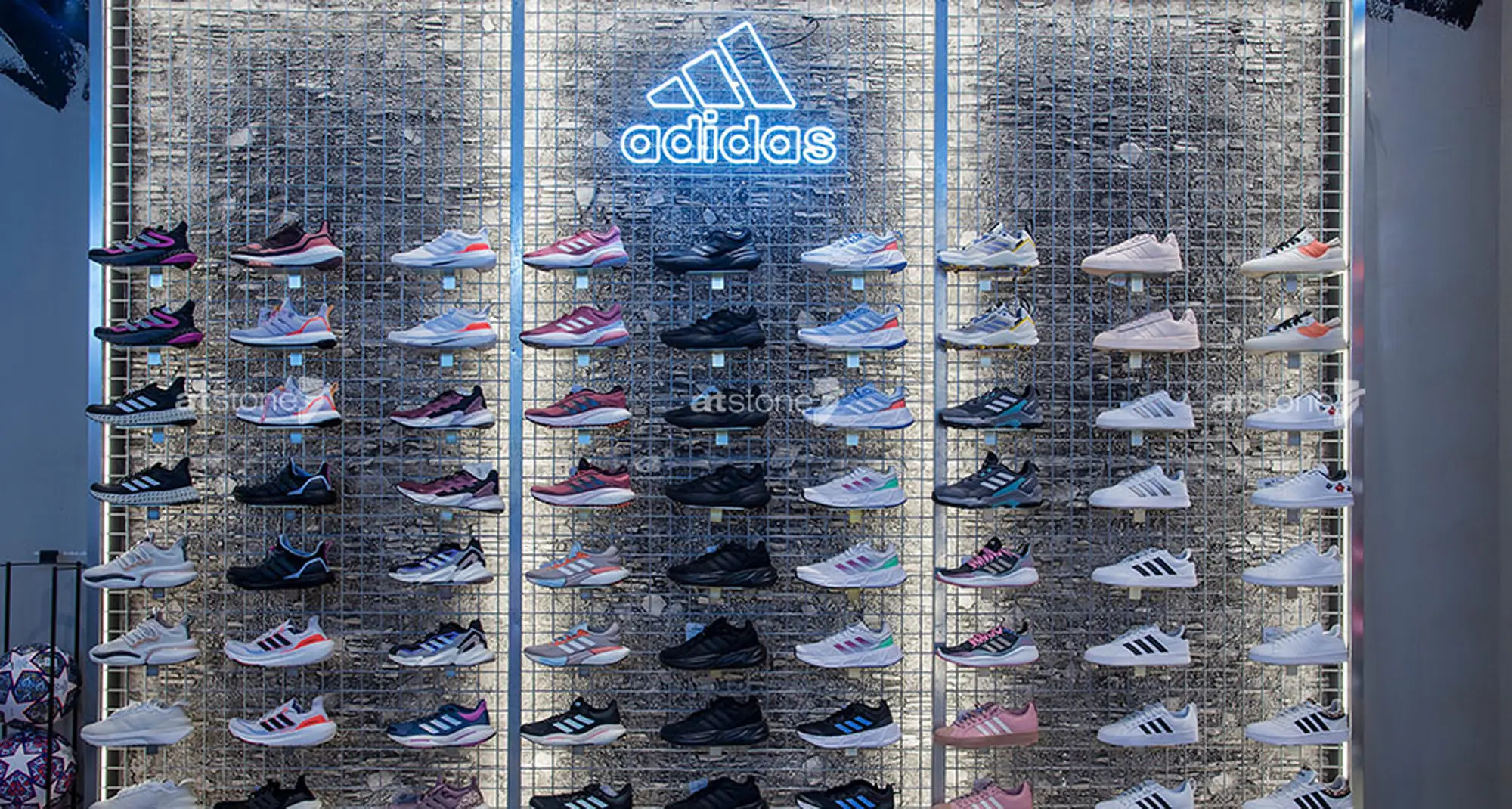
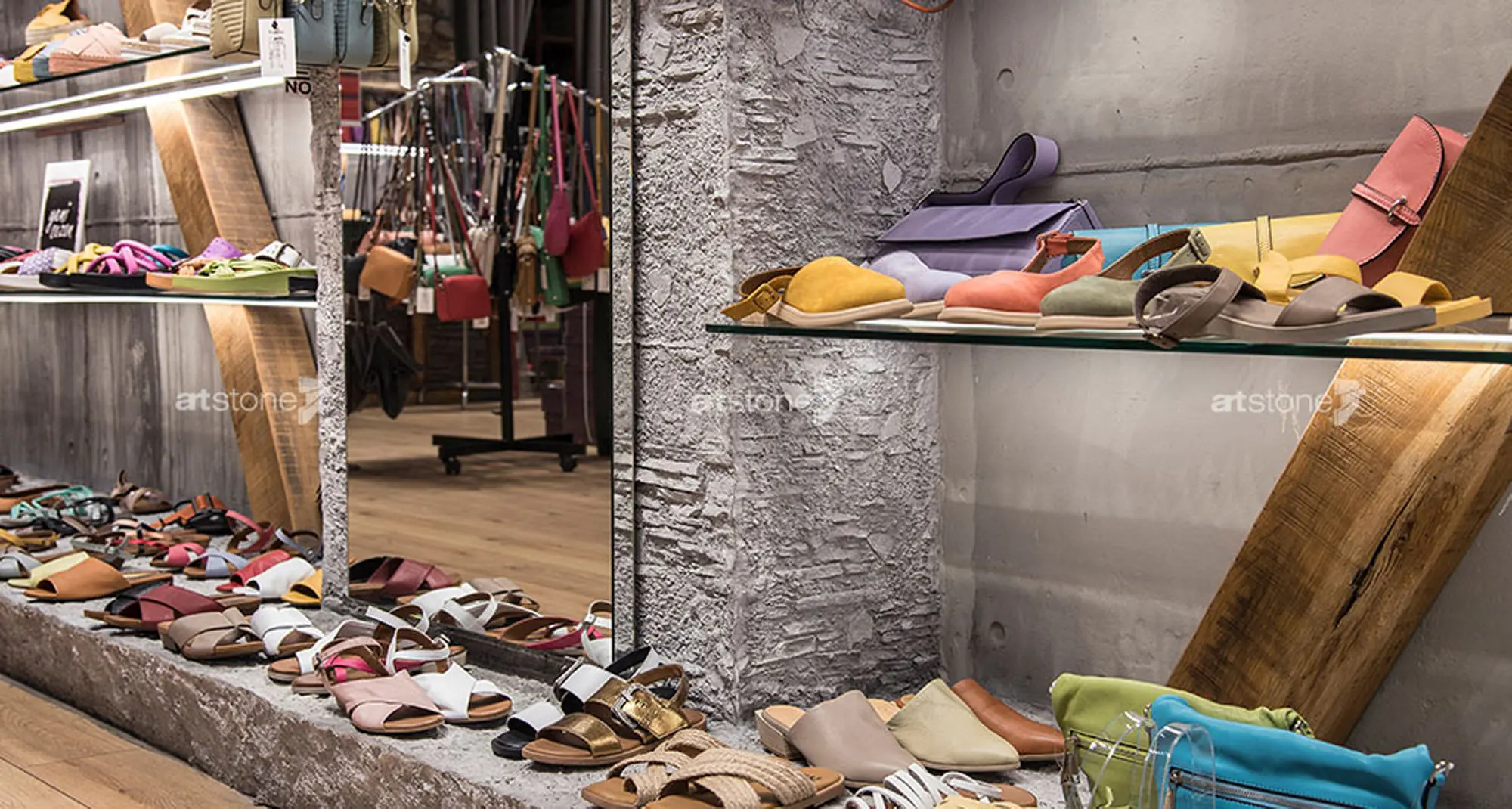
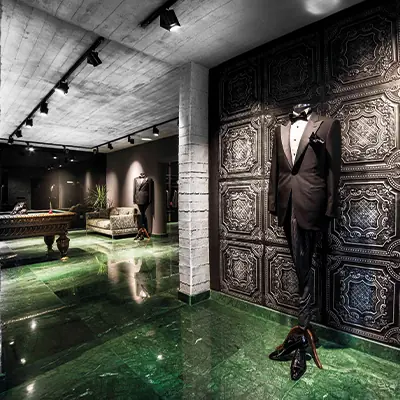
Commercial, office, showroom, and retail spaces can also benefit from the same visual balance. The stone surface establishes a distinctive background while allowing displays, furniture, graphics, and lighting to remain clearly visible.
Among decorative wall panels, Brudt is distinguished by the way geometry and natural irregularity exist within the same design. Clean directional transitions introduce order, while surface variations prevent the composition from feeling repetitive or mechanical.
Brudt belongs to Artstone’s Stone Series and is classified as Stone. Its current style classifications include Mediterranean, organic natural, rustic, and Scandinavian approaches.
The panel measures approximately 227 × 121 cm, with a listed thickness of around 12–14 mm and a weight of approximately 6–6.5 kg/m².
Its dimensions allow the multidimensional pattern to remain clearly visible across larger architectural areas. The panel scale prevents the layered geometry from becoming a small decorative motif and instead allows it to function as part of the overall spatial composition.
The structural body combines a fiber-reinforced upper layer with a dense mineral-enhanced lower layer. Current technical information describes this hybrid system as lightweight while also providing mechanical rigidity, impact resistance, and surface stability.
Fiber reinforcement is also documented as supporting resistance to bending, torsion, and surface loads. The technical description notes that the panel maintains stability across large surfaces while reducing the risk of sagging, deformation, cracking, or surface breakage.
Brudt is not limited to interior applications. Current product data lists Ceilings and Facades alongside cafés and restaurants, hotels and spas, houses, offices, showrooms, stores, and sports and wellness environments.
Its protective surface coating is formulated for exposure to water, humidity, UV radiation, outdoor pollution, freeze-thaw cycles, and atmospheric conditions. This supports its documented use in exterior and semi-open architectural applications.
The controlled pore structure is also described as having a low tendency to retain dirt, helping reduce maintenance requirements while preserving the detailed surface texture.
The panel offers flexibility for architectural detailing as well. Current technical documentation states that Brudt can be cut and drilled and adapted for socket positions, lighting lines, niches, corners, and other project-specific details.
Mechanical fastening with screws and anchors is the recommended installation method. This fixing approach is designed to keep the panel firmly positioned while maintaining stability under thermal and mechanical stresses.
The layered stone texture becomes especially expressive when lighting is planned together with the wall surface. Grazing light increases contrast and emphasizes individual planes, while broader illumination creates a softer relationship between the geometric sections.
This flexibility allows designers to control how dramatic the finished wall feels. The same surface can appear sculptural and pronounced in one project or more subtle and composed in another.
Because the visual effect is created through physical depth rather than printed pattern, viewing position also changes the perception of the design. Angled views reveal stronger dimensional transitions than direct frontal views.
Brudt therefore works particularly well in circulation areas and larger spaces where users experience the surface from multiple positions. The wall continues to reveal different depths as the viewing angle changes.
The combination of natural stone character and geometric organization gives the panel a contemporary identity without disconnecting it from organic material references. Its appearance remains rooted in stone while the layered structure introduces a more architectural interpretation.
Among decorative wall panels, this gives Brudt a distinctive position between natural irregularity and modern precision. It can support both highly contemporary projects and interiors where natural materials play a stronger role.
For exterior surfaces, the same multidimensional composition can emphasize entrances, selected architectural zones, and broader feature areas. Current Artstone usage information explicitly includes Facades, while the professional technical documentation also supports exterior applications under appropriate project conditions.
Brudt ultimately combines sculpted stone depth, layered geometry, tactile irregularity, and changing light-shadow transitions within one large-format architectural surface. Its identity is created through form rather than excessive decoration.
For projects seeking a geometric stone wall panel with strong three-dimensional character, Brudt offers a balanced Stone Series solution. Its multidimensional construction, layered stone texture, and suitability for interior, ceiling, and exterior applications give modern architecture a surface that feels precise, natural, and visually distinctive.