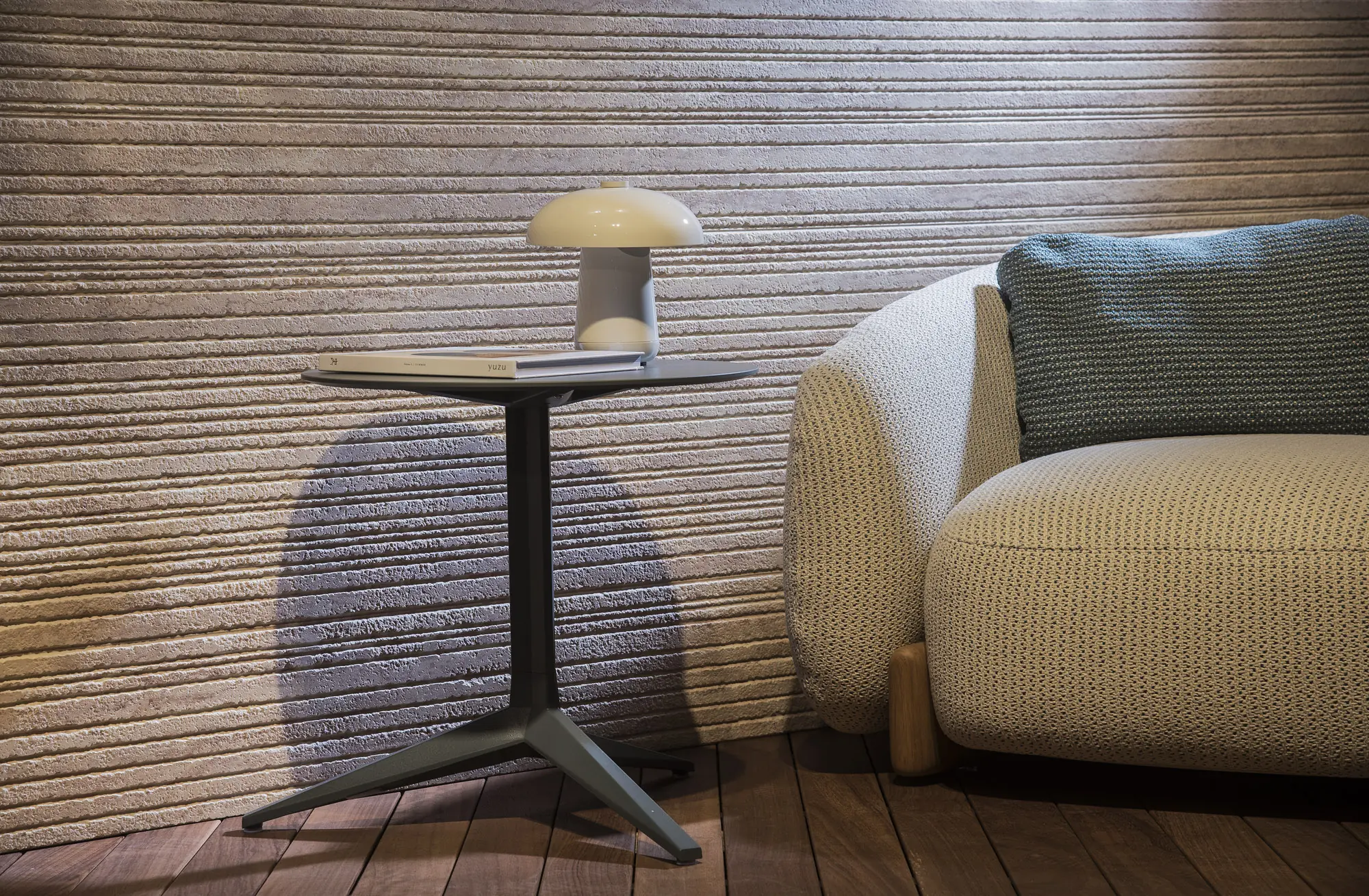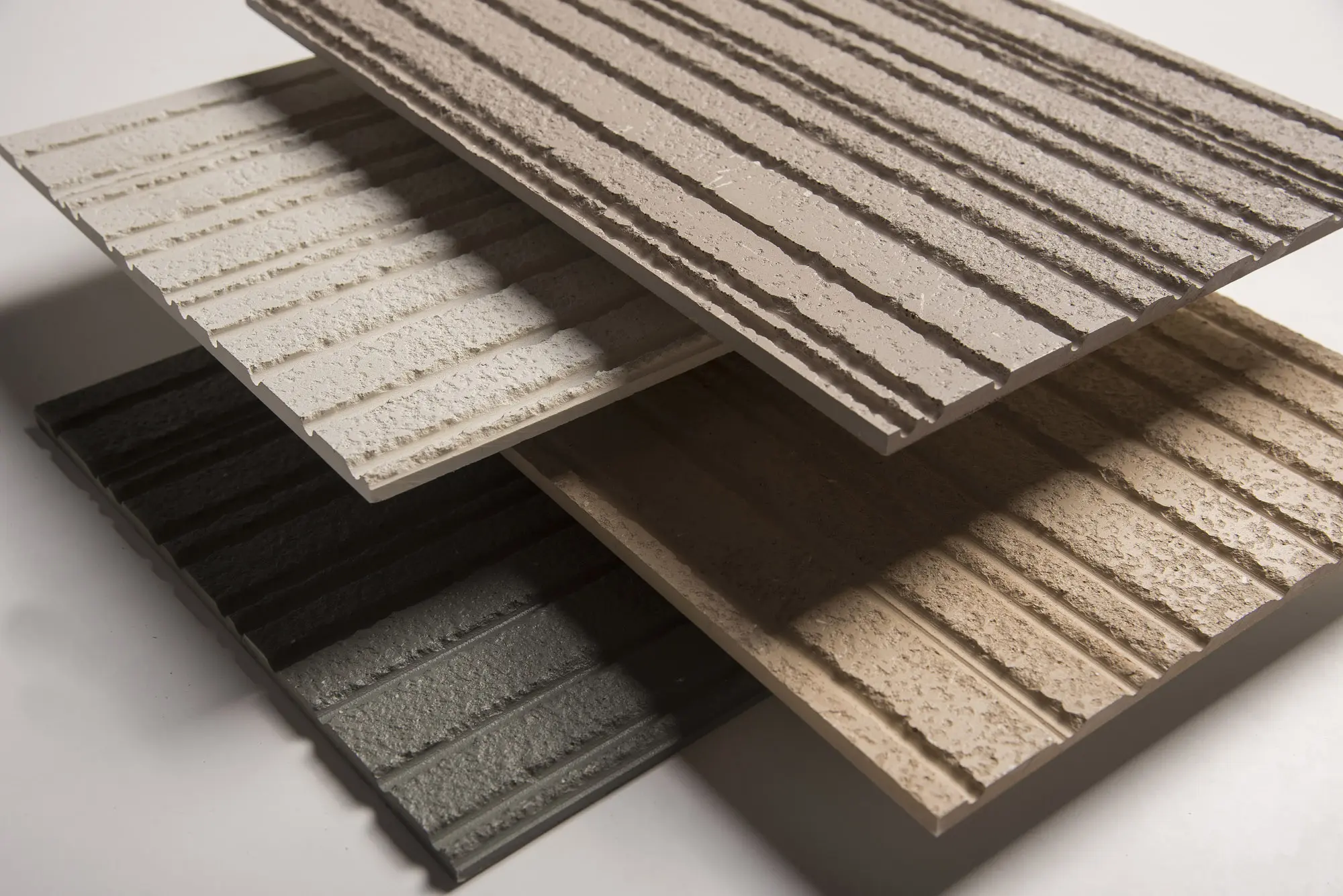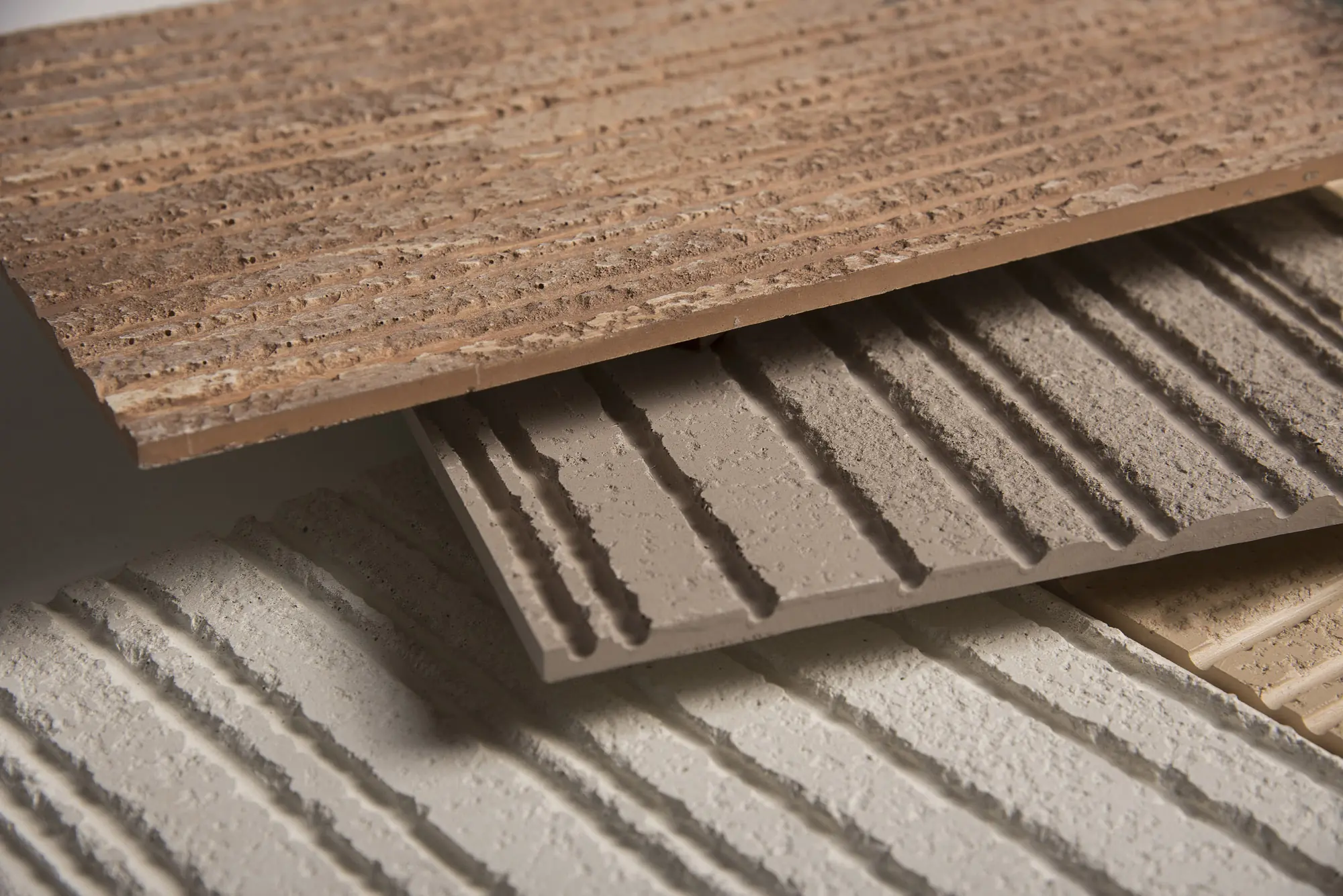
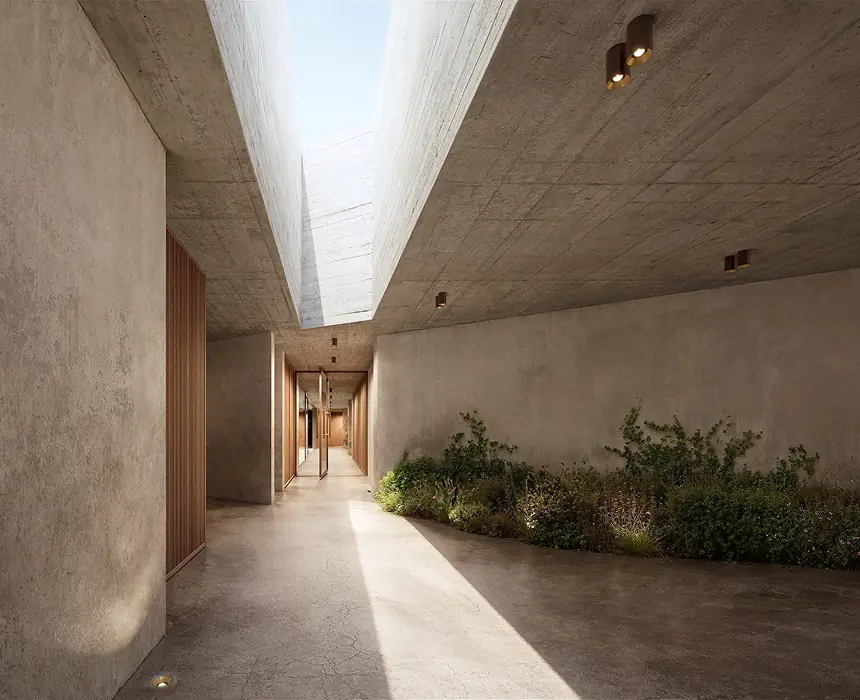
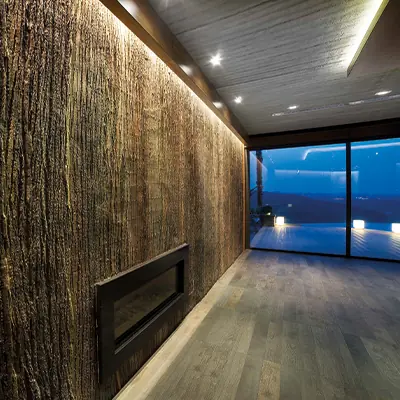
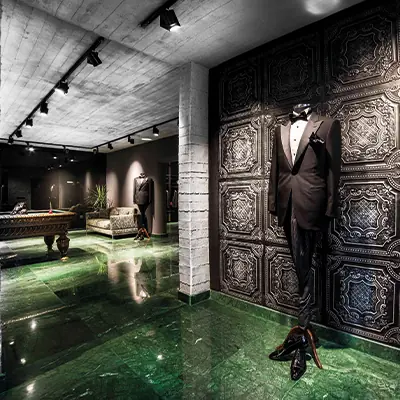
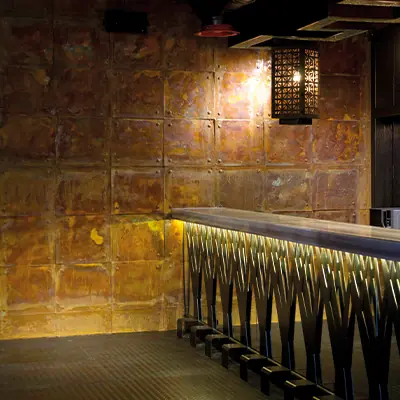
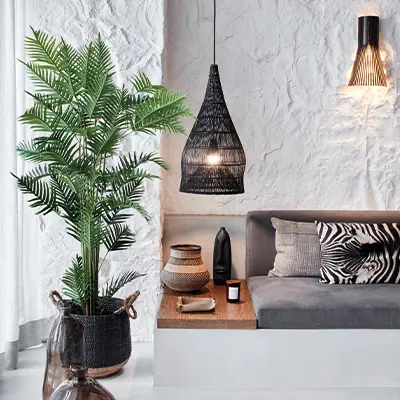
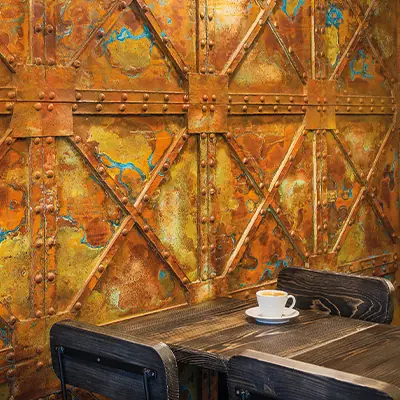
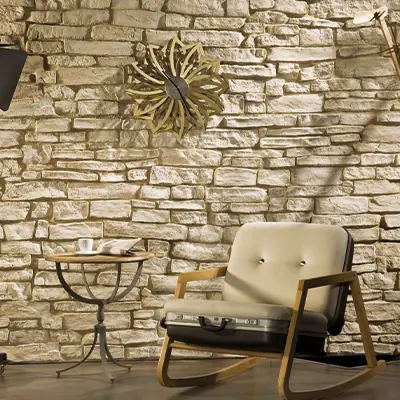
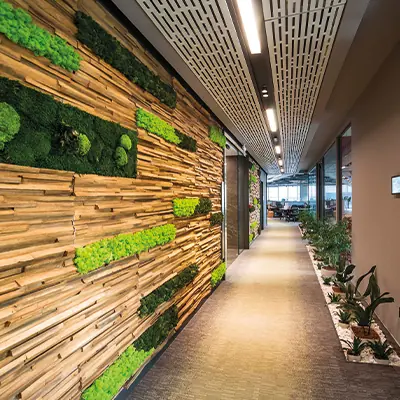
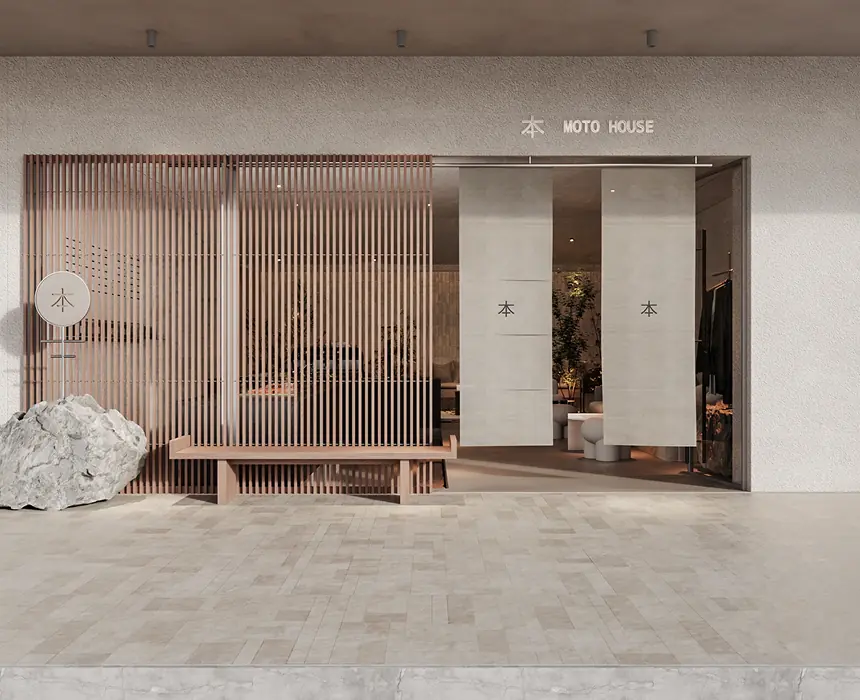
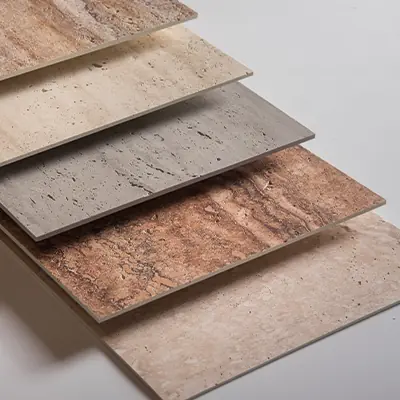
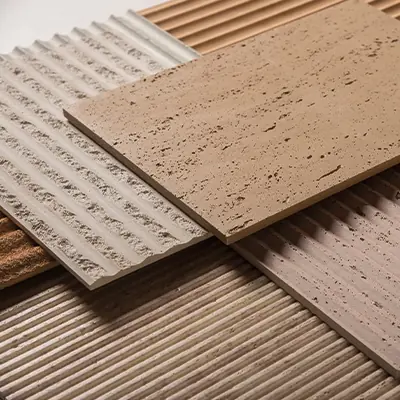
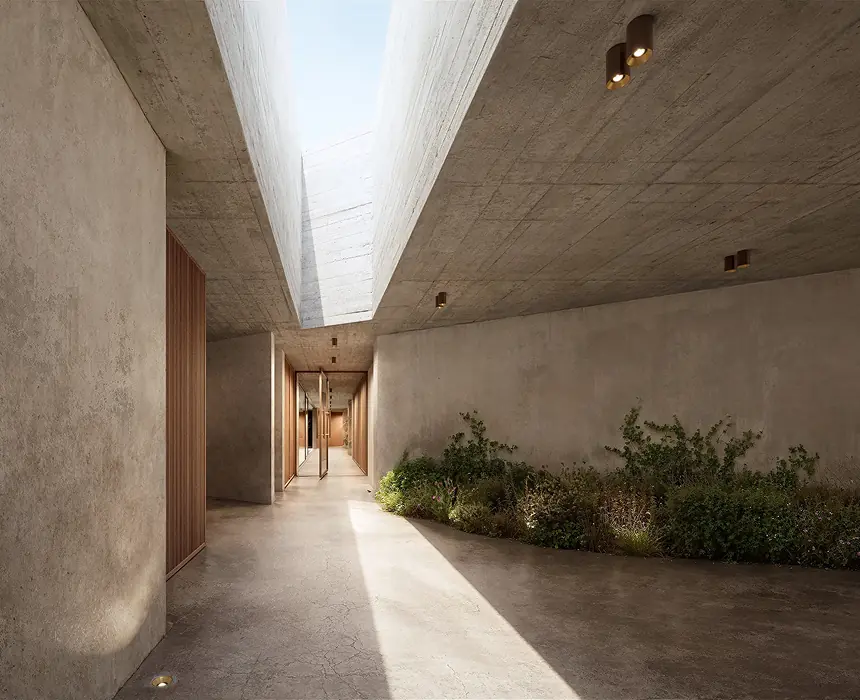
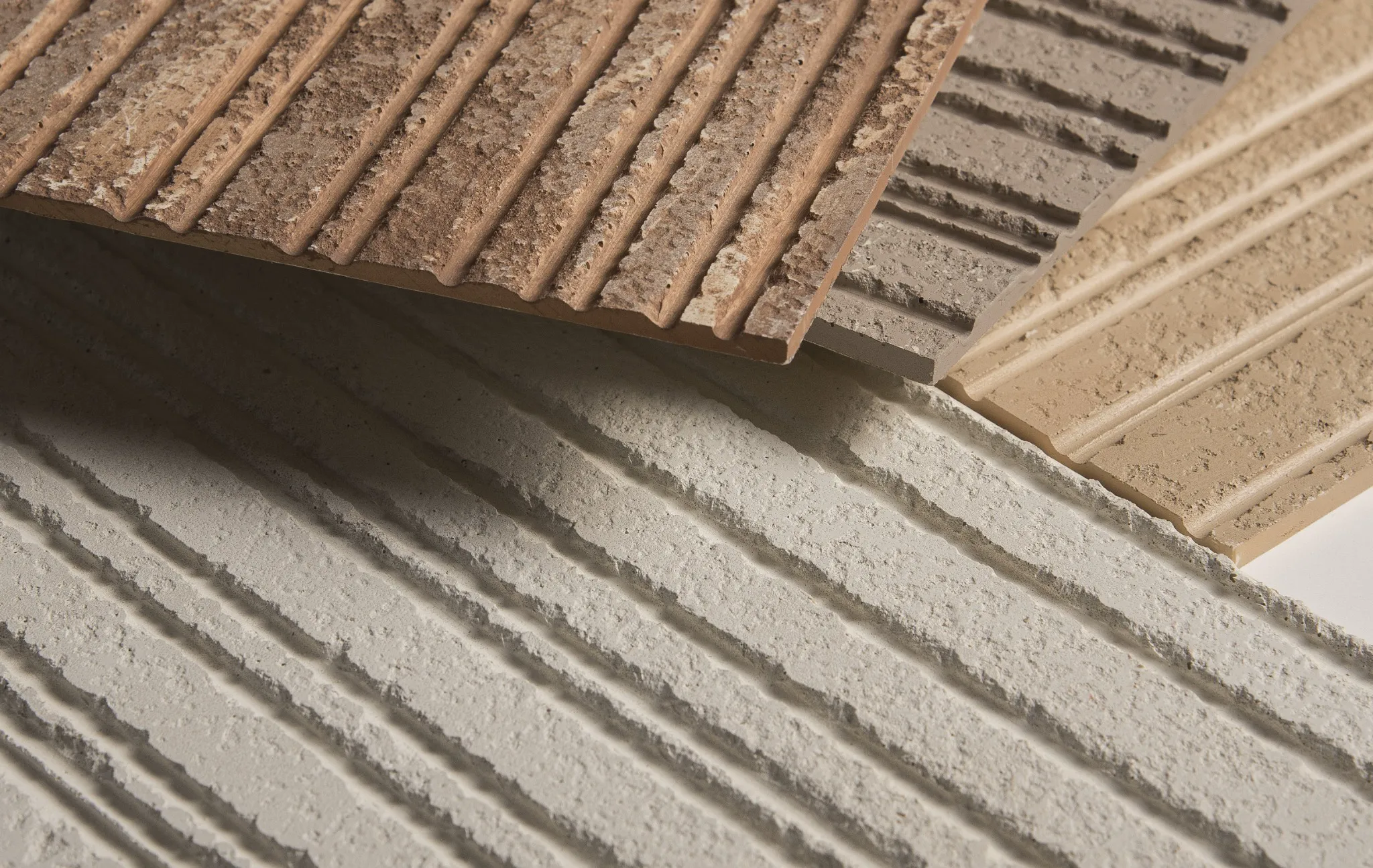
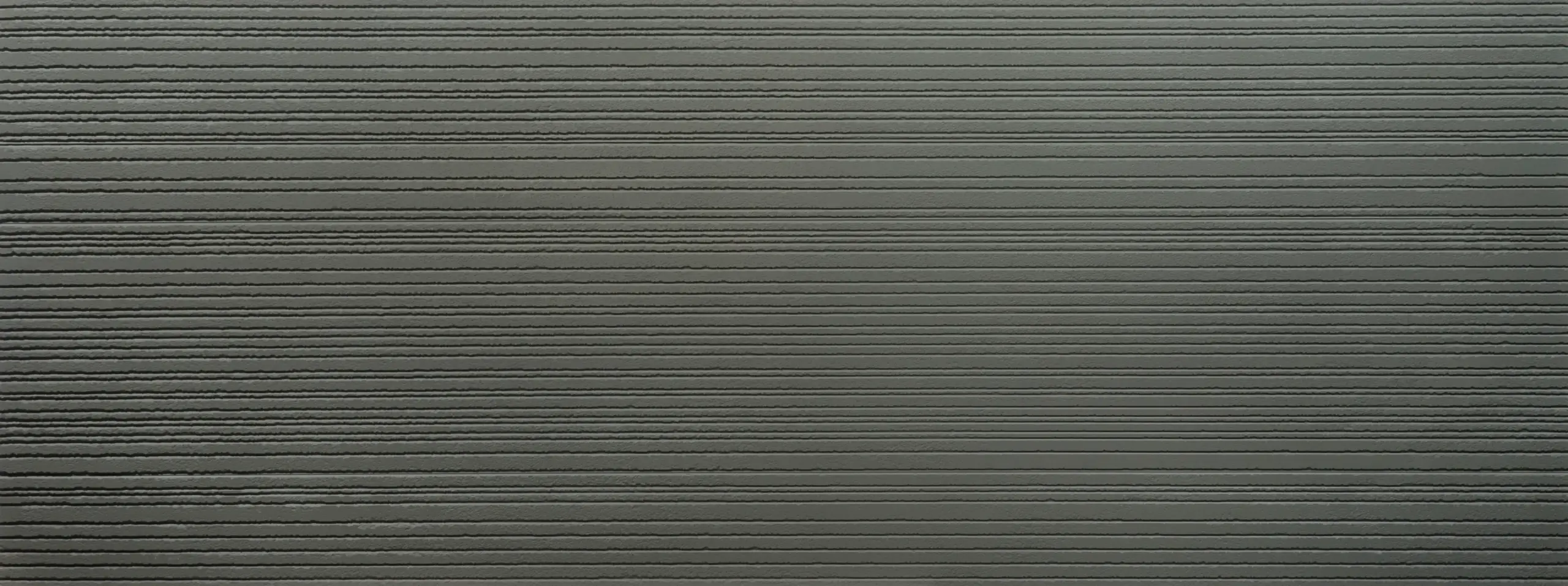
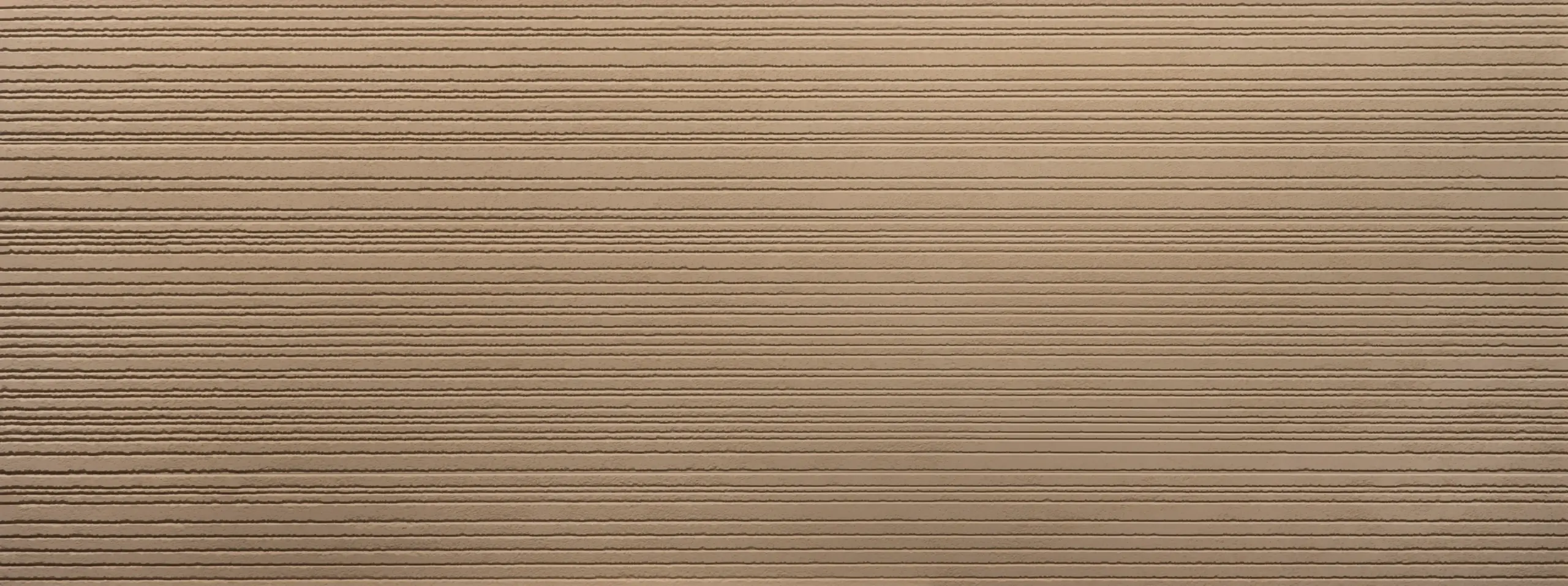
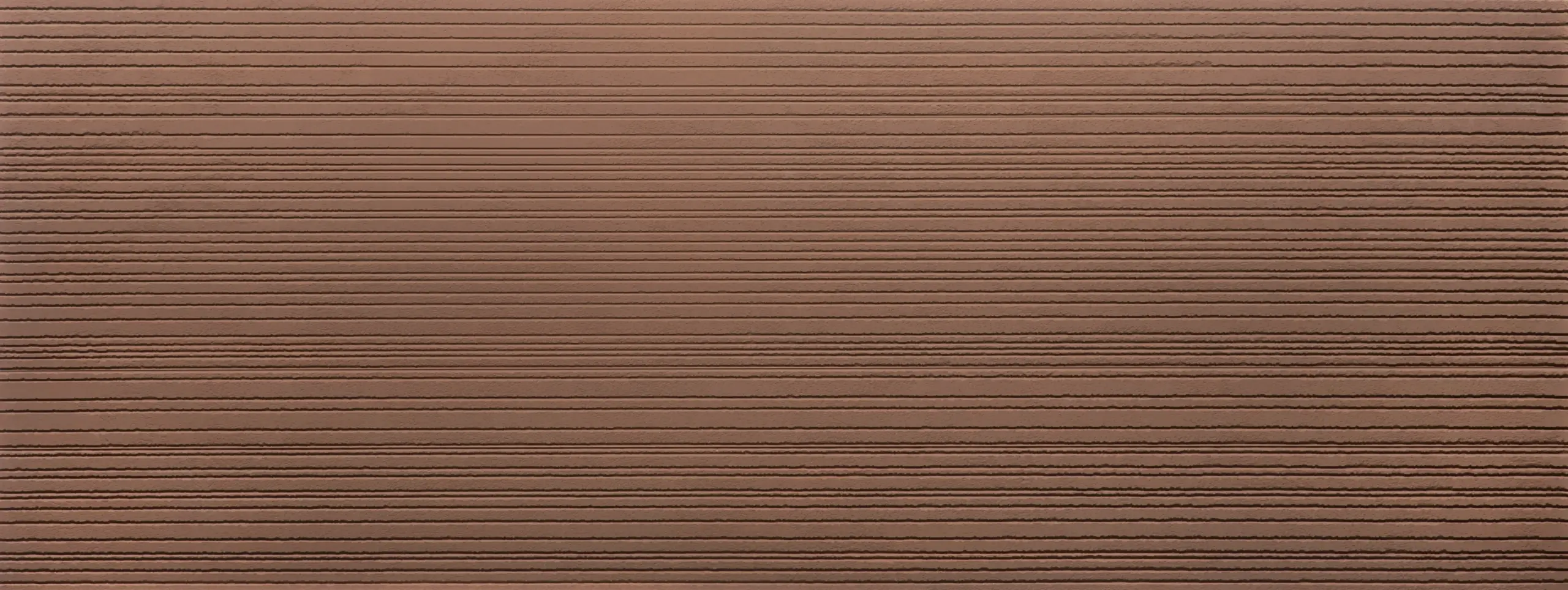
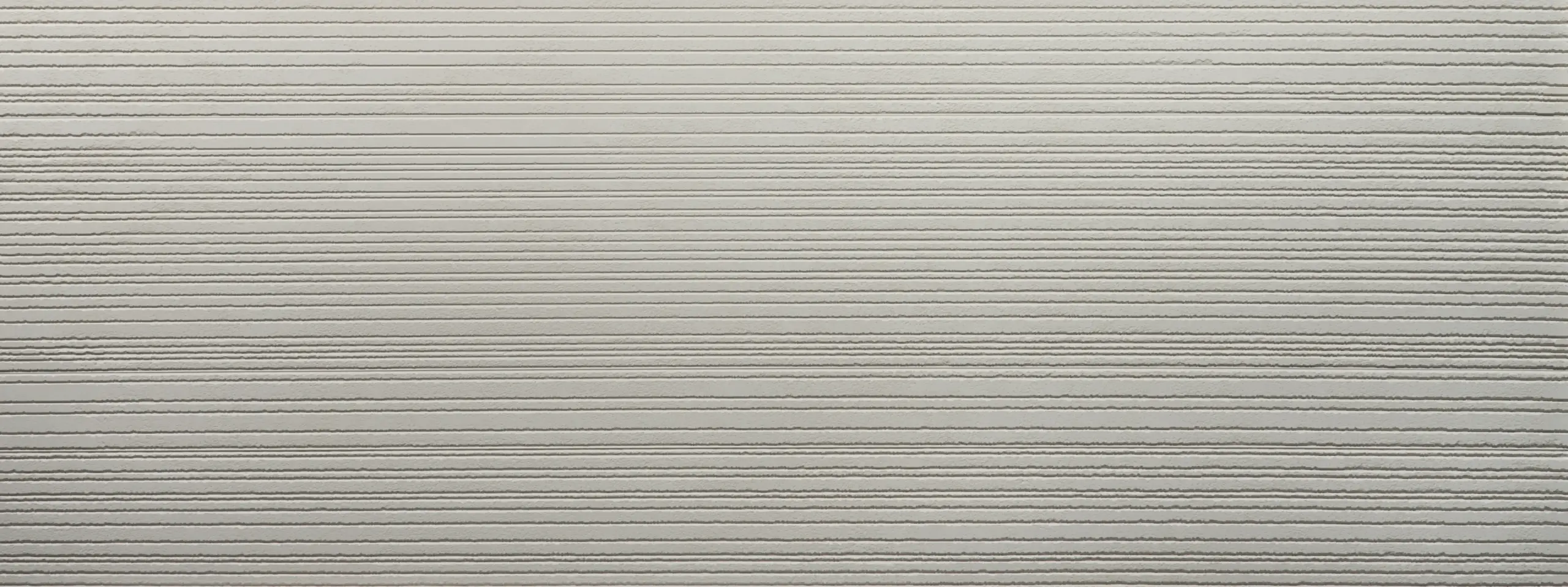
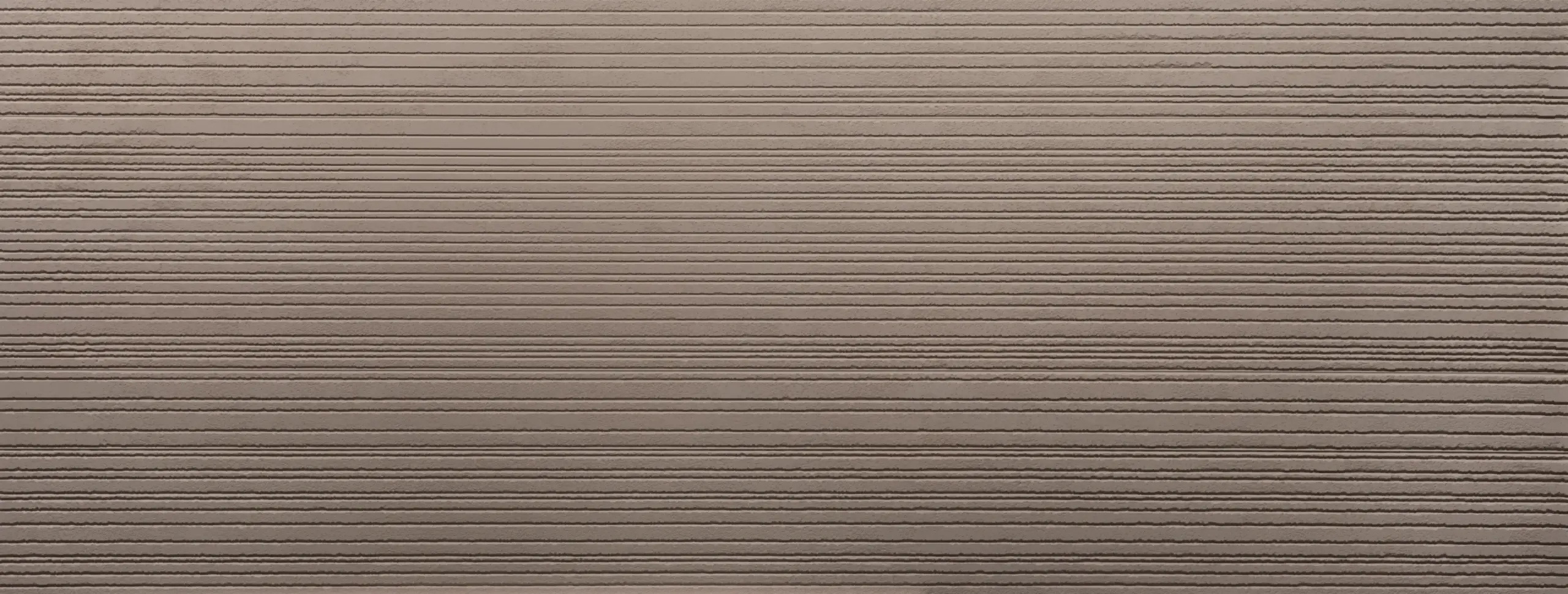
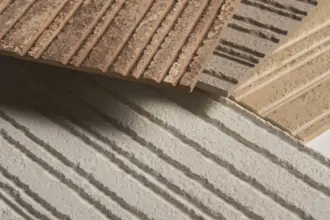
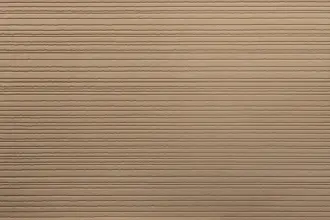

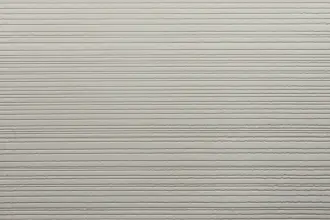

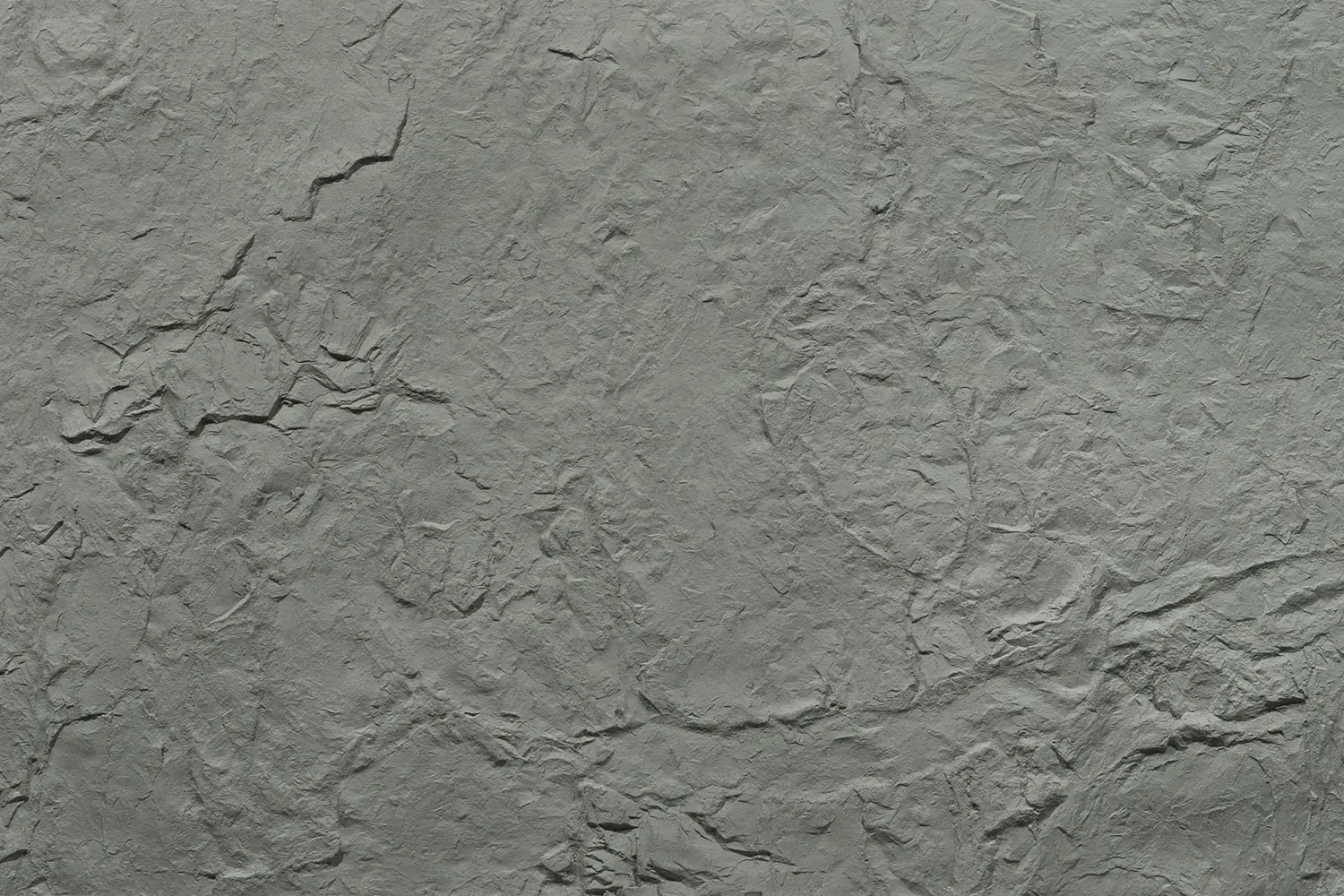
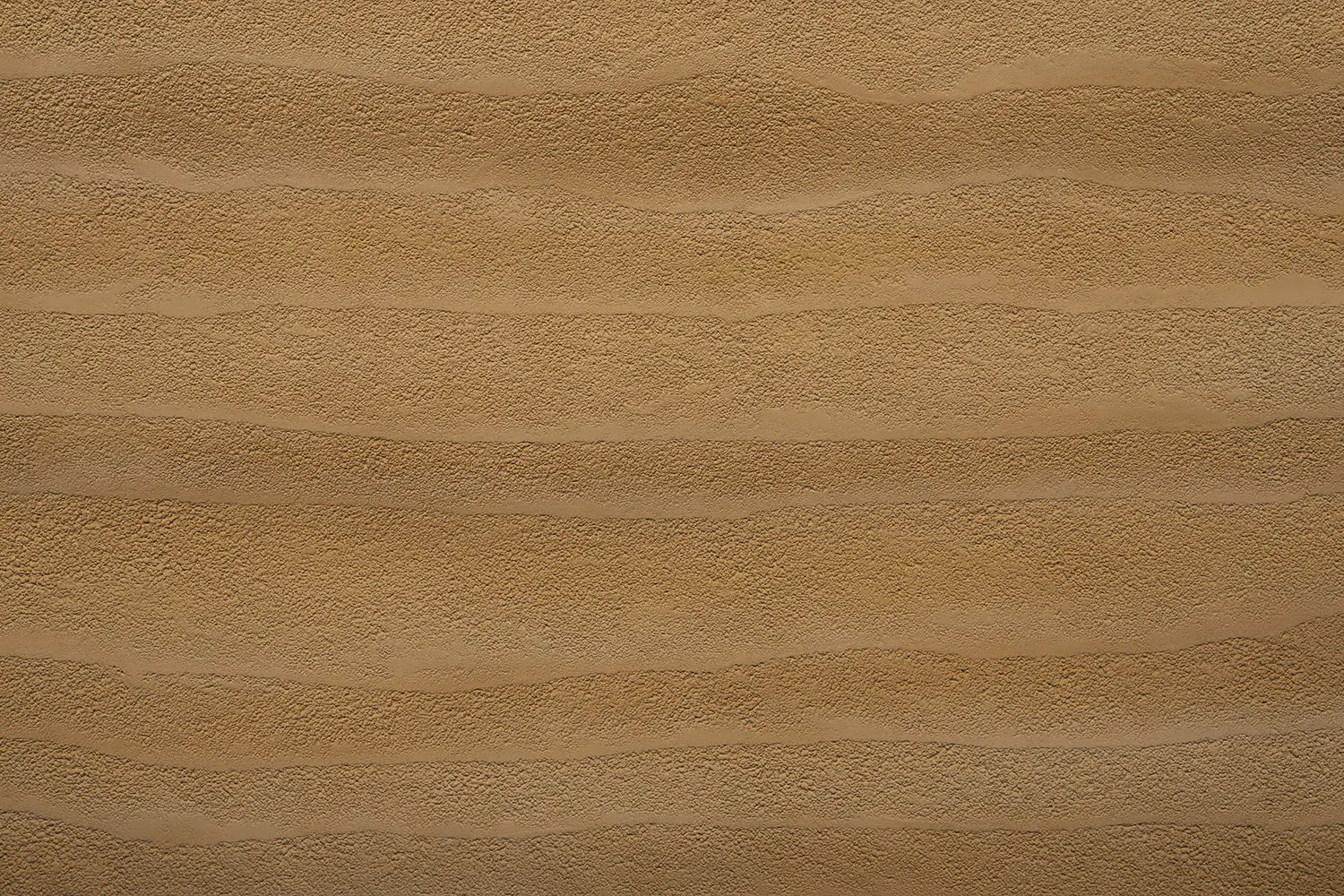
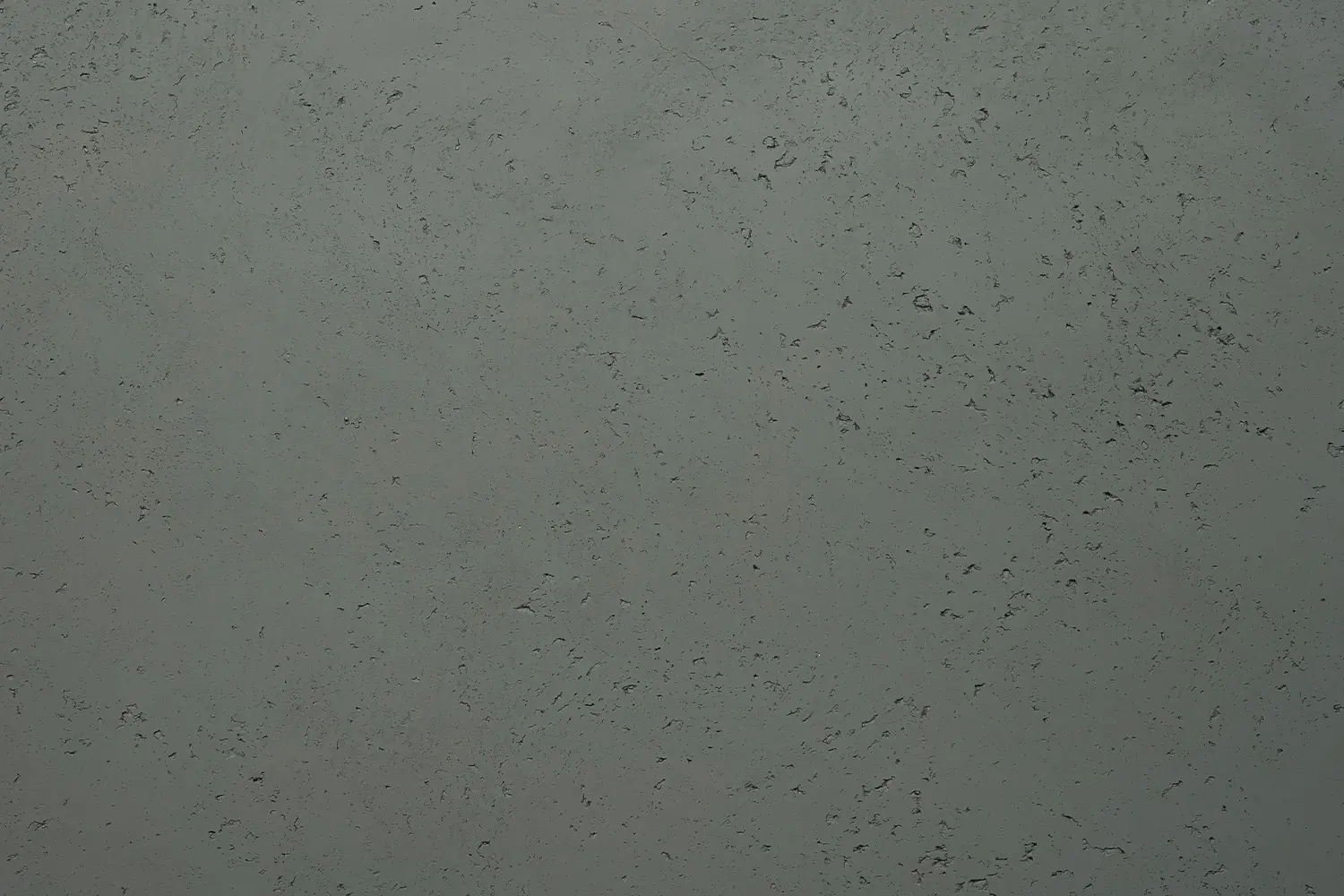
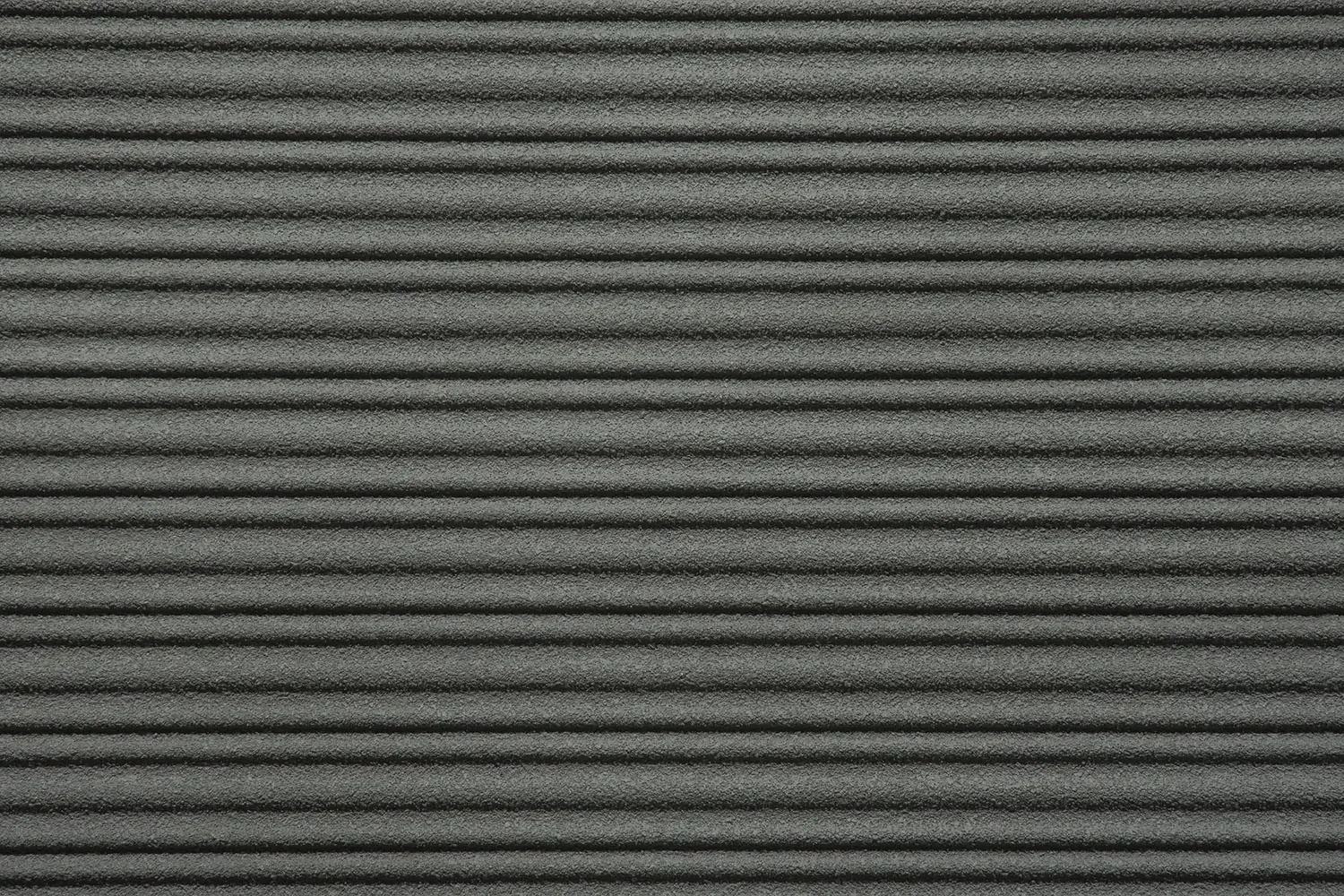
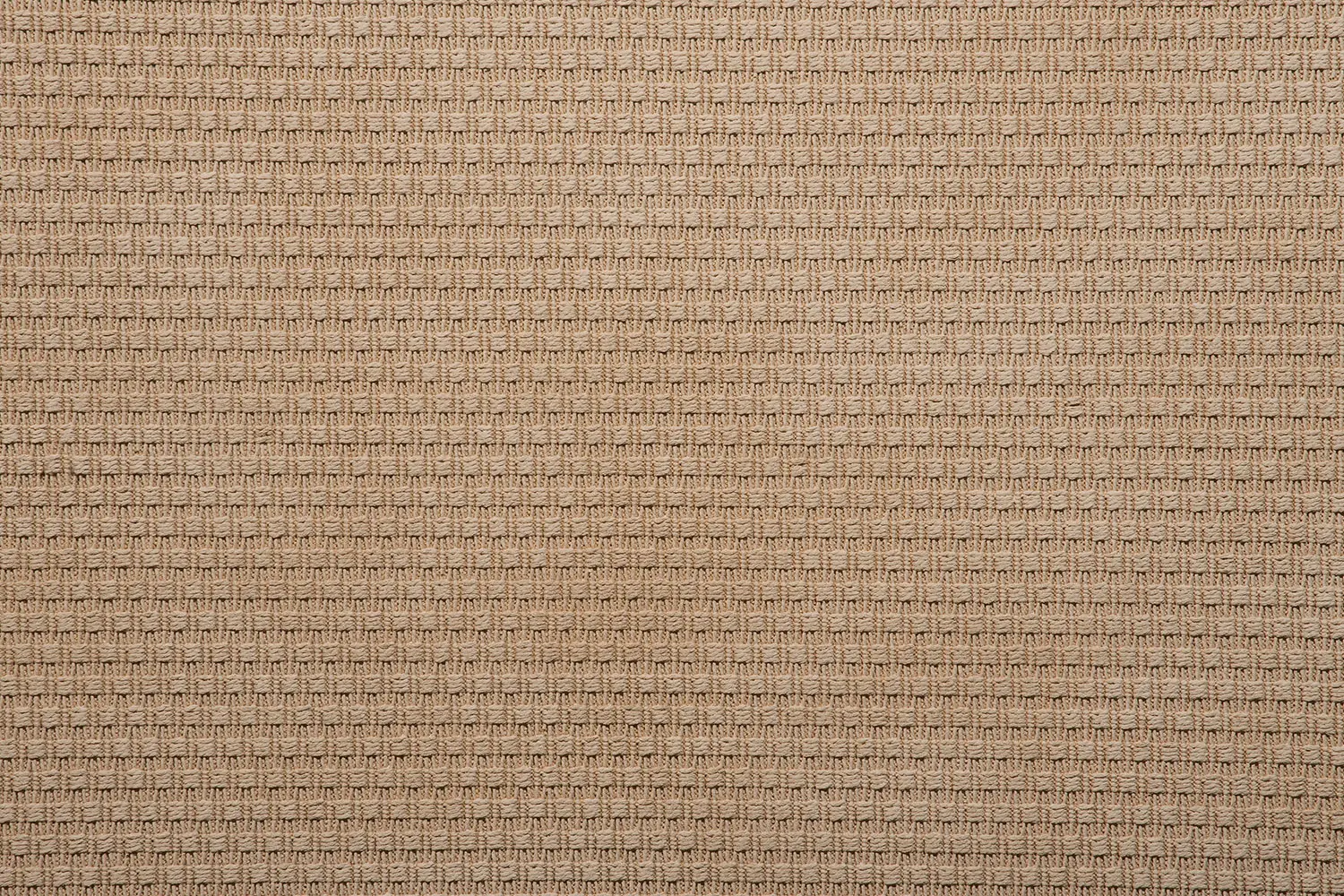
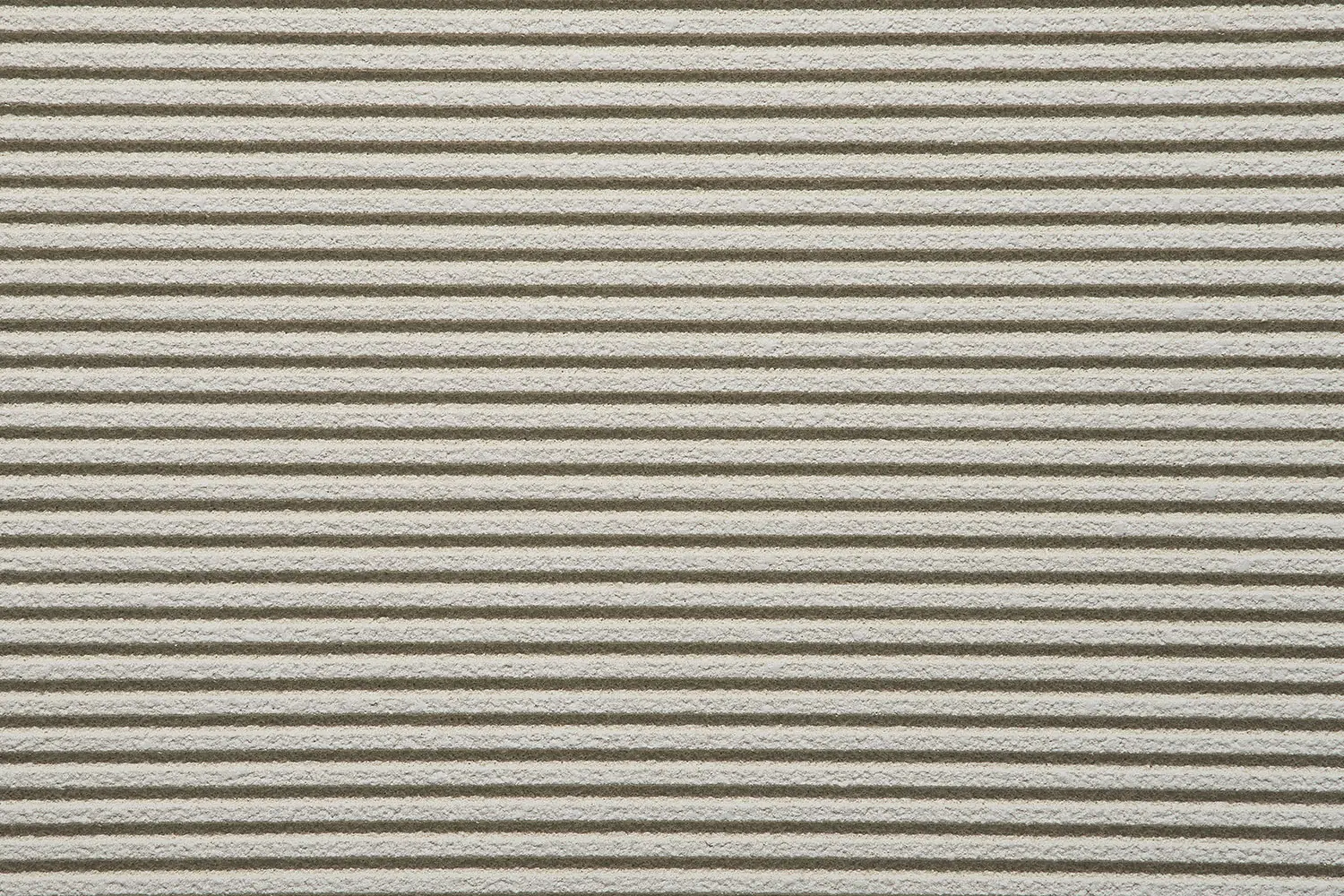
Volkorn wall panel brings the raw character of natural stone into contemporary interiors through a surface shaped by pronounced grooves, tactile roughness, and controlled three-dimensional depth. Its strong material identity creates architectural presence without relying on ornamental patterns or excessive visual detail.
The raw stone texture is one of the defining qualities of the design. Small irregularities across the surface contrast with the more structured linear grooves, creating a balance between naturally inspired texture and contemporary architectural order.
Light strengthens this relationship between roughness and form. Directional illumination highlights the projecting areas while recessed sections develop deeper shadows, making the surface appear more sculptural as lighting conditions change.
Under softer ambient light, the contrasts become less pronounced. The same grooved surface then appears calmer and more unified, allowing Volkorn to function as a refined background as well as a stronger feature wall.
Current technical documentation describes Volkorn as combining industrial aesthetics with the raw texture of natural stone. Its rough surface and linear grooves are specifically identified as the elements that create texture, depth, and a pronounced architectural character.
As a grooved stone wall panel, Volkorn works especially well in interiors where natural texture needs to coexist with clean contemporary lines. The grooves introduce structure, while the irregular stone-like surface prevents the overall composition from appearing overly mechanical.
This contrast becomes particularly effective beside smooth materials. Metal, glass, concrete, timber, and restrained painted surfaces make the physical depth of the panel more visible while maintaining a clear modern material palette.
In minimalist interiors, Volkorn can function as a strong focal surface without requiring additional decoration. Its dimensional form provides enough visual interest to define the wall independently.
In more industrial settings, the rough stone texture can be paired with metal details, dark finishes, concrete surfaces, and simple furniture. These combinations emphasize the stronger architectural character of the panel while preserving visual clarity.
Residential interiors can use Volkorn on living-area feature walls, entrance zones, or selected architectural surfaces where a more tactile stone presence is desired. The linear structure adds definition while the mineral texture keeps the surface connected to natural material references.
Hospitality projects can apply the same design in hotel interiors, restaurants, lounges, reception areas, and circulation spaces. Lighting can be used to increase or soften the depth of the grooves depending on the desired atmosphere.
Office, showroom, and retail environments can also benefit from this controlled contrast. The textured wall establishes a clear architectural identity without competing excessively with furniture, displays, lighting, or graphic elements.
Current product information lists cafés and restaurants, hotels and spas, houses, offices, showrooms and retail spaces, and sports and wellness environments among Volkorn’s application areas. Facades and ceilings are not included in the current classification.
Volkorn belongs to the Mineral Based Series and is classified as Stone. Its current style classifications include modern minimal and organic natural approaches.
The panel measures approximately 102 × 265 cm, has a thickness of 9 mm, and a listed weight of approximately 6.4–6.6 kg/m².
These large-format dimensions allow the linear stone surface to continue across broad interior walls with fewer interruptions. Rather than creating an absolutely joint-free surface, the panel design reduces joint requirements and supports a more cohesive architectural appearance.
The relatively slim profile allows the surface to introduce physical depth without creating an excessively projecting wall treatment. This supports modern interiors where material texture needs to remain integrated with clean architectural proportions.
Volkorn wall panel is also documented as lightweight and impact resistant. Its current technical information identifies a high proportion of recyclable mineral content together with environmental documentation developed for contemporary architectural projects.
Its certification information specifically lists DIN EN 16516:2020-10 Free VOC and an Environmental Product Declaration under ISO 14025 and EN 15804.
The EPD documentation may support projects evaluated through green building systems such as LEED, BREEAM, and WELL, depending on the requirements and assessment criteria of the individual project.
Installation can be carried out using recommended adhesives on appropriately prepared reinforced concrete and plastered surfaces. Current technical information also identifies gypsum board systems, fiber cement, MDF, and similar substrates as suitable application surfaces.
The large-format structure also helps reduce the number of joints required across wider walls. This allows the raw stone texture and linear grooves to remain the dominant visual elements rather than allowing panel divisions to interrupt the composition.
The grooved stone wall panel character becomes especially noticeable under grazing illumination. Light positioned across the surface produces stronger contrasts between projecting and recessed sections, emphasizing its three-dimensional structure.
A broader light source creates a softer result. The grooves remain visible, but their shadows become more subtle and the overall wall gains a quieter mineral appearance.
This gives architects and interior designers considerable control over the final visual intensity of the surface. The same Volkorn application can appear bold and sculptural or calm and understated depending on the lighting strategy.
The raw stone texture also changes with viewing distance. From farther away, the linear organization becomes the dominant feature; at closer range, smaller irregularities and surface roughness become more apparent.
This layered viewing experience makes Volkorn particularly suitable for circulation spaces or larger interiors where the wall is approached and viewed from different positions.
Among decorative wall panels, Volkorn stands out by combining a clearly structured surface with a more irregular natural material character. The architectural strength comes from the contrast between linear precision and raw stone-inspired texture.
Standard Volkorn should also be distinguished from Volkorn Travertine. The latter is separately classified within the Mineral Based Travertine Series, while Volkorn itself remains a Mineral Based Series stone product.
For this reason, Volkorn’s identity is better described through grooved stone, mineral texture, and raw surface character rather than through travertine terminology.
The grooved stone wall panel works particularly well where contemporary simplicity requires a stronger tactile element. Its surface provides depth and shadow while maintaining a clear, disciplined architectural form.
Among decorative wall panels, this balance allows Volkorn to support minimalist, industrial, and naturally inspired interiors without losing its own distinct material identity.
Volkorn wall panel ultimately combines raw stone texture, pronounced grooves, large-format continuity, and controlled three-dimensional depth within one interior architectural surface.
For projects seeking a grooved stone wall panel with a strong contemporary presence, Volkorn offers a distinctive mineral-based solution. Its tactile roughness, linear depth, changing interaction with light, and refined large-format character allow the wall to become an integral element of modern interior architecture.