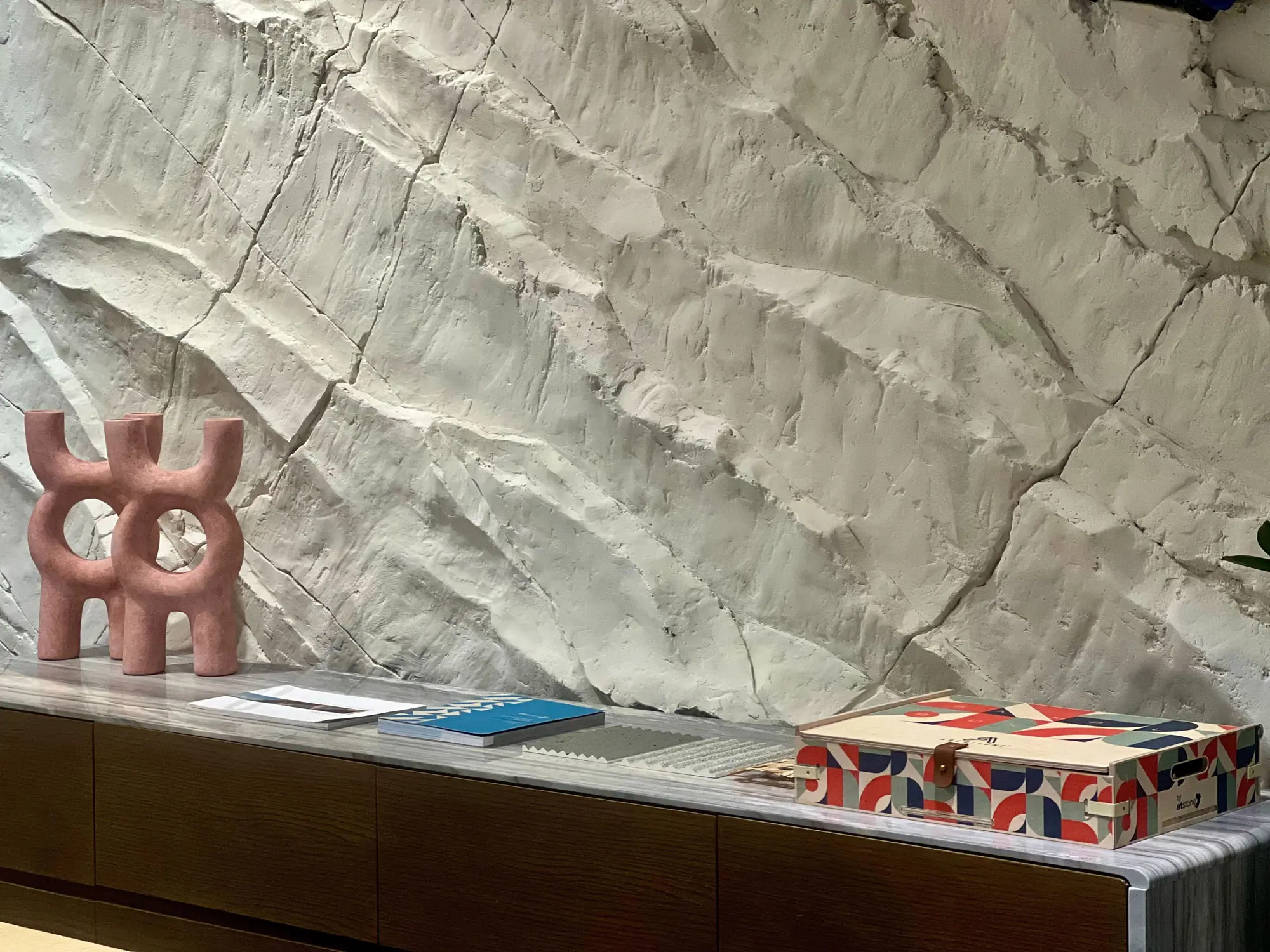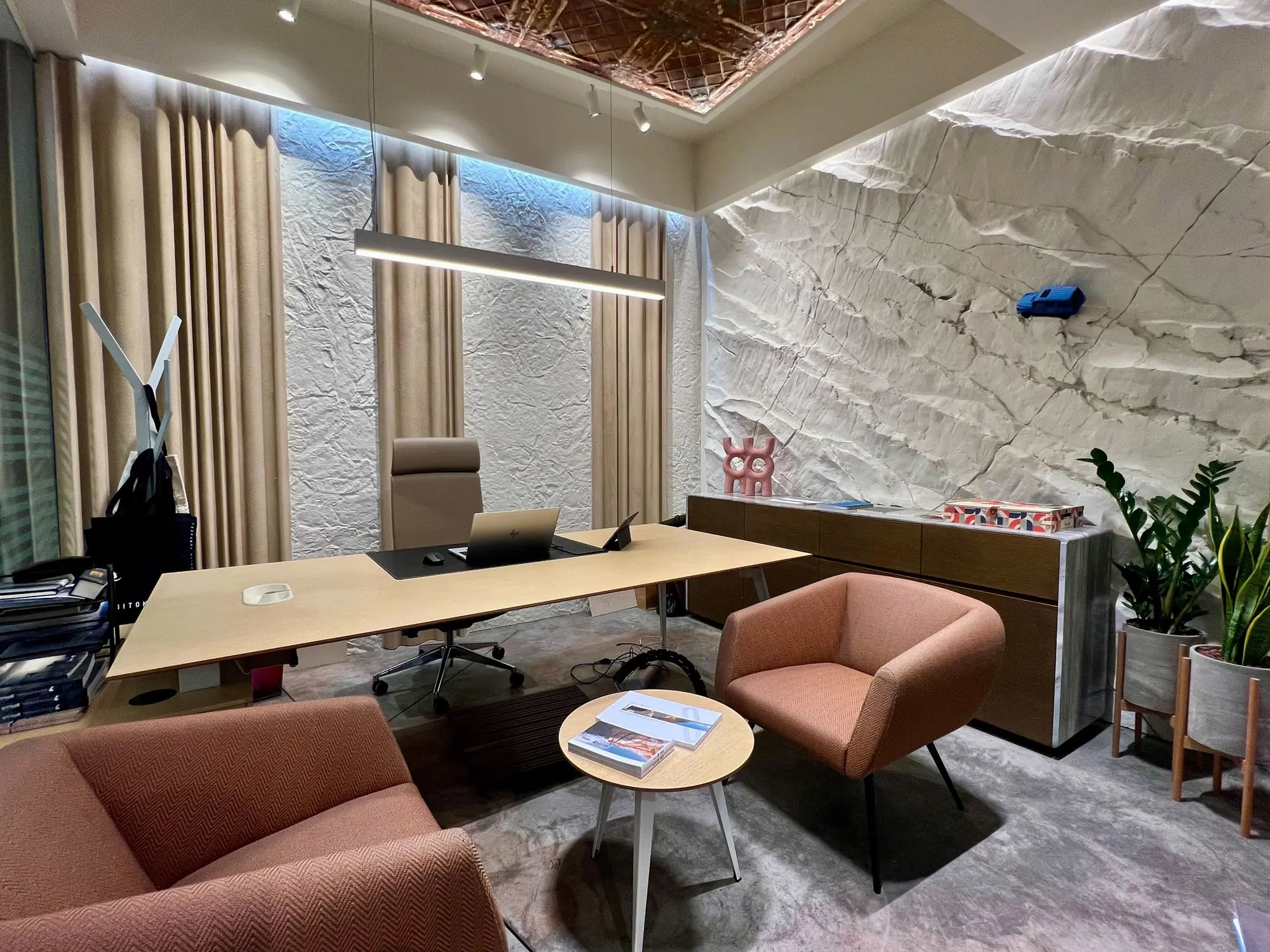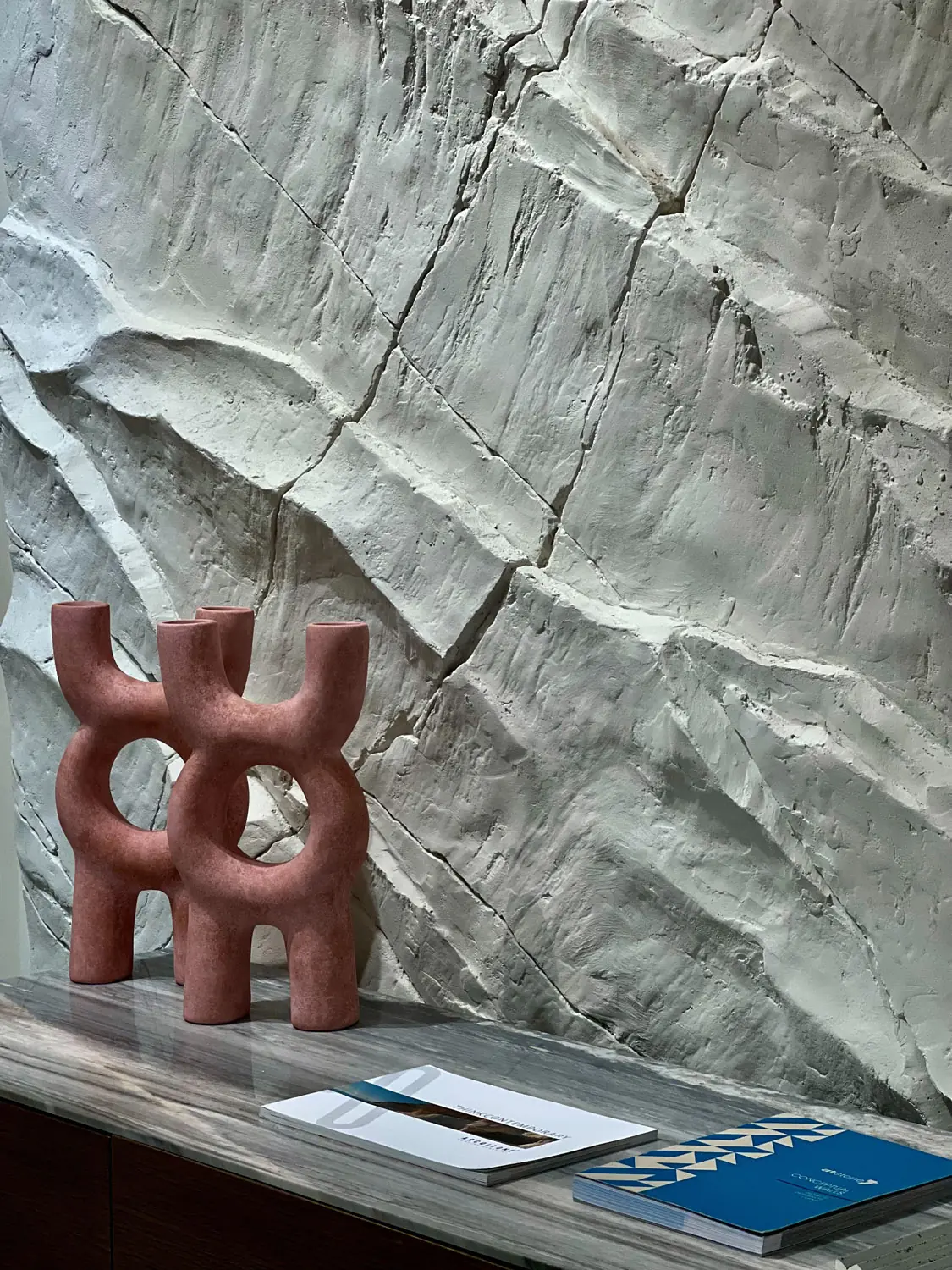
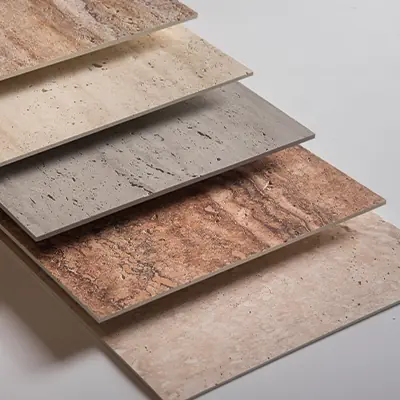
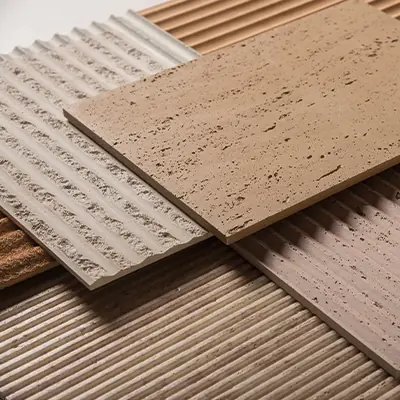
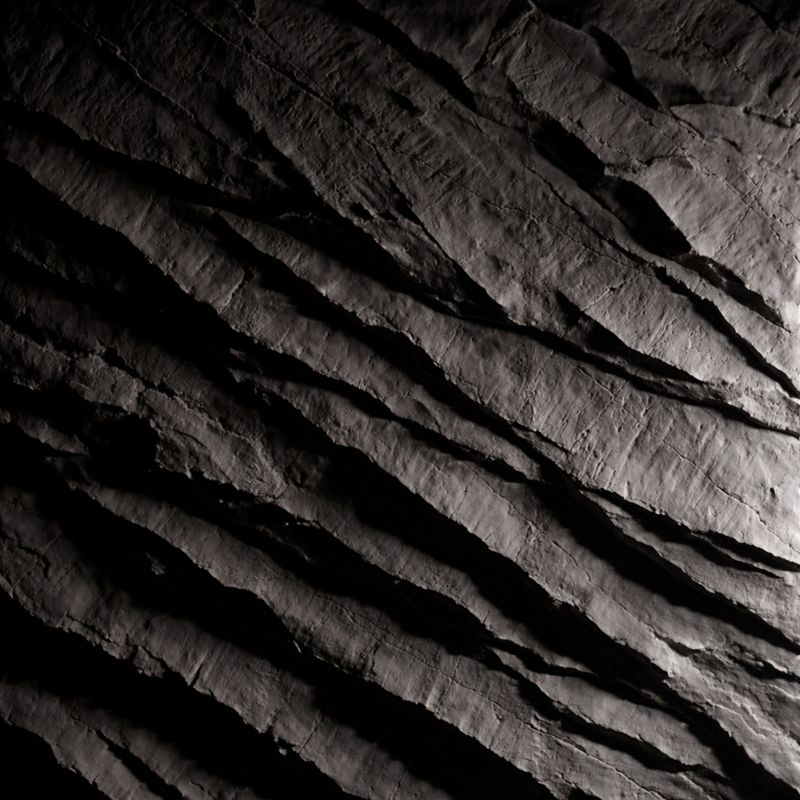
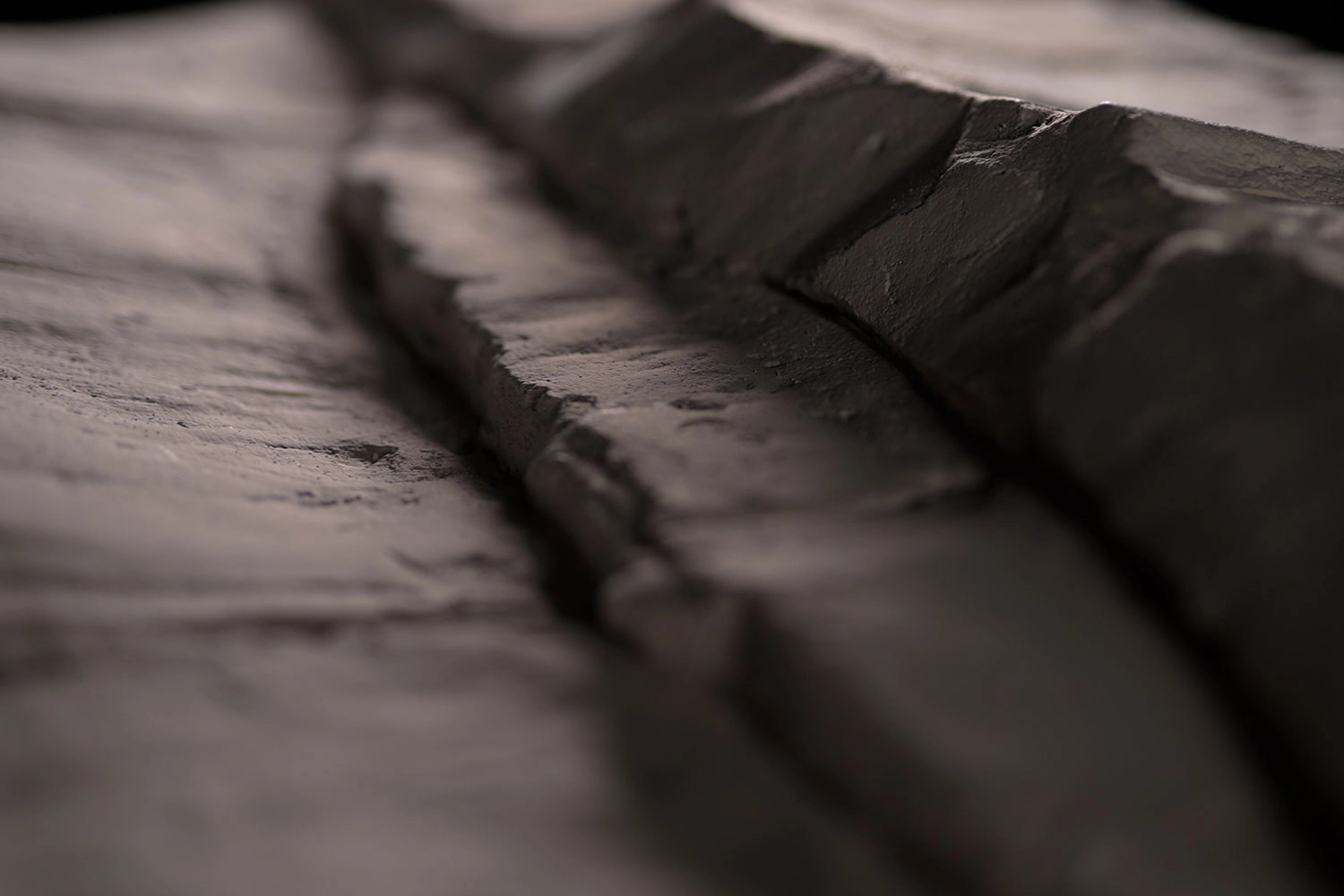
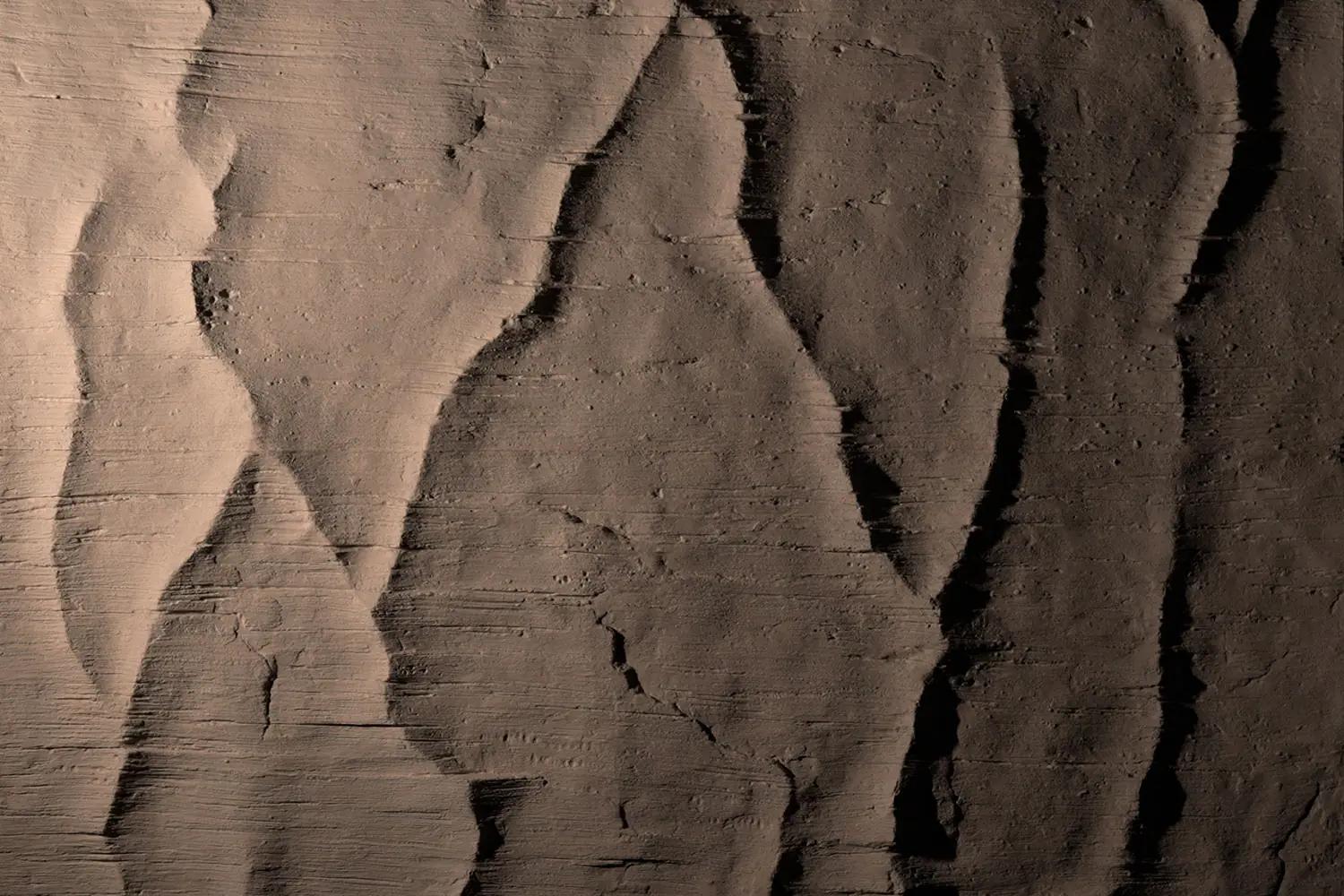
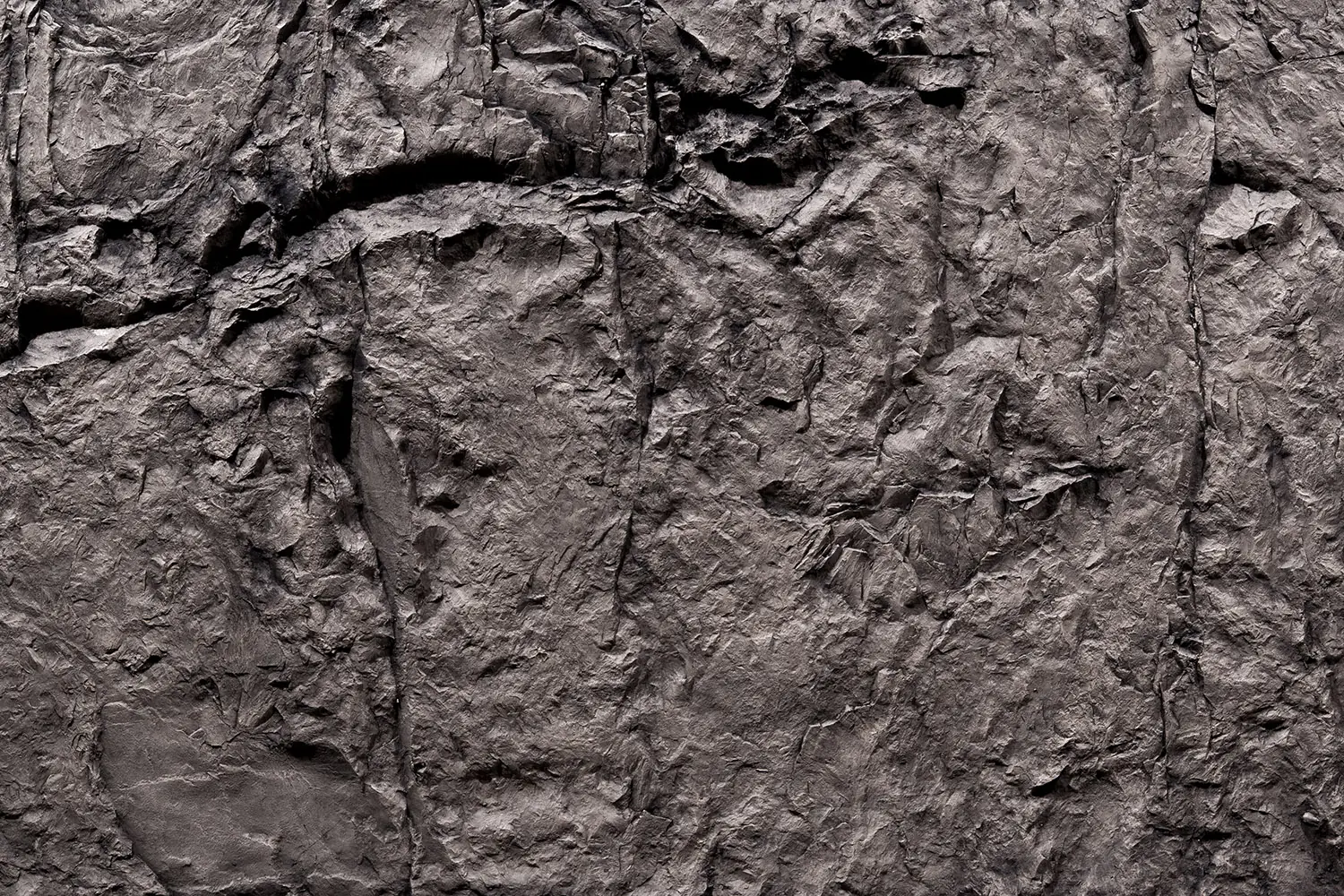
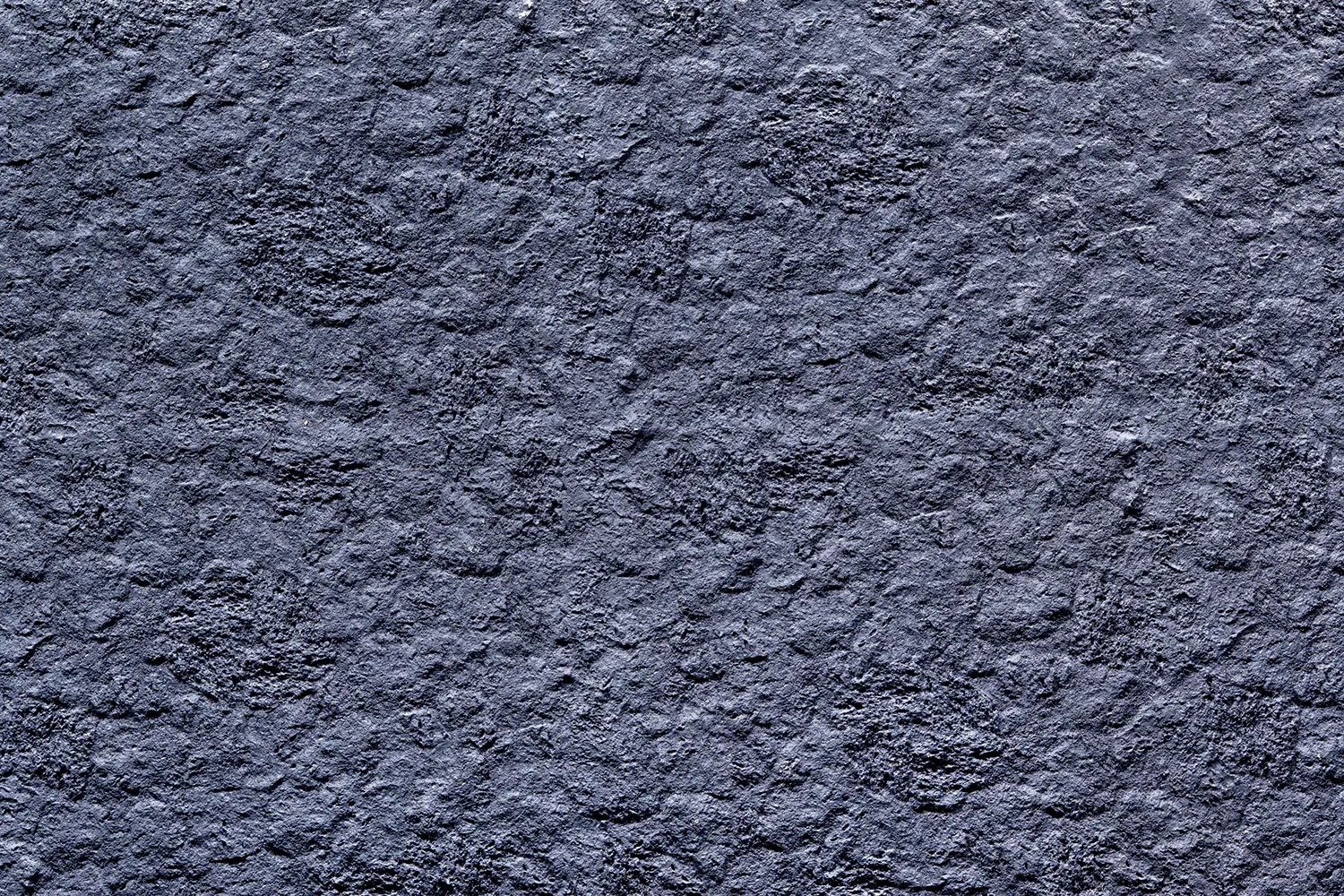
Artstone Colorado Rock wall panel celebrates the monumental character of natural geological formations through a deeply textured and sculptural surface. Inspired by the dramatic rocky landscapes of Colorado, its design reflects the fractured layers, carved ridges, mineral transitions, and irregular depth created by natural processes over millions of years. Designed specifically for Artstone by a contemporary artist, Colorado Rock translates this powerful geological identity into an architectural surface with remarkable visual realism and tactile depth.
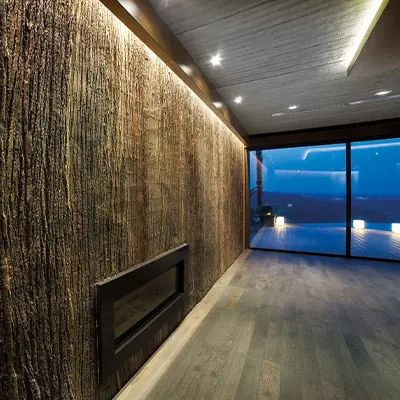
Within the rock effect wall panel category, Colorado Rock transforms the rugged character of natural cliffs into a refined architectural surface that is significantly lighter and easier to integrate than solid stone. Its layered 3D structure creates areas of projection and recession across the wall, allowing light to reveal different details throughout the day. Illuminated surfaces highlight the sculpted ridges, while deeper sections form shifting shadow lines that strengthen the perception of depth and give the wall a constantly changing architectural presence.
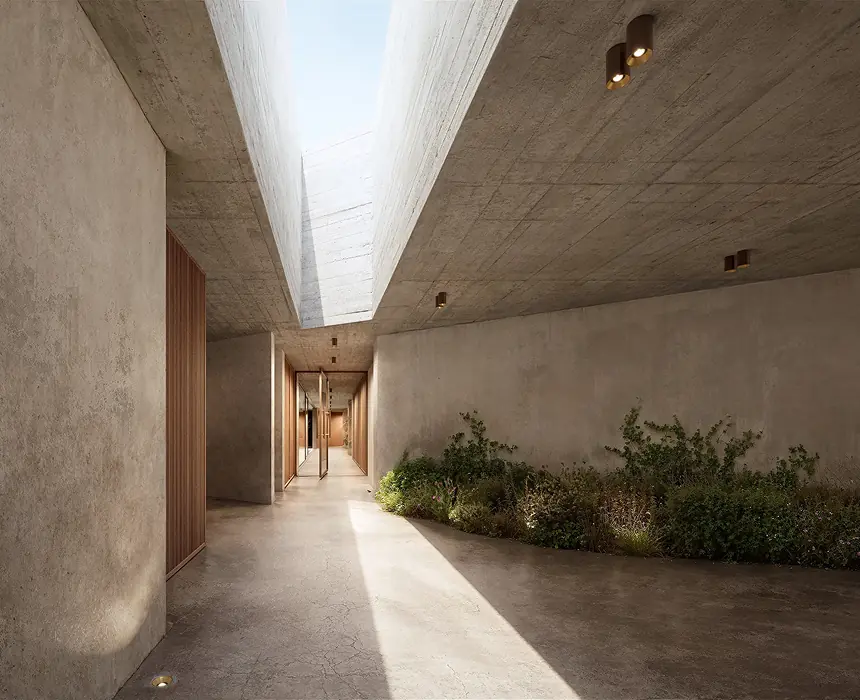
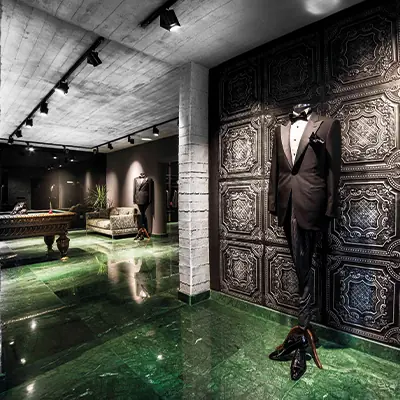
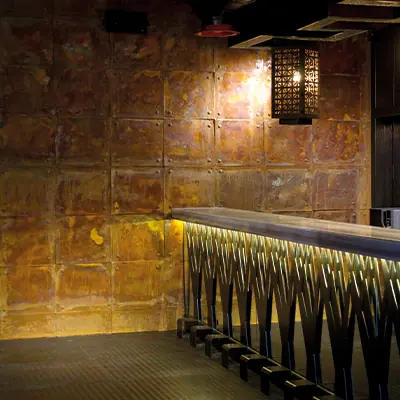
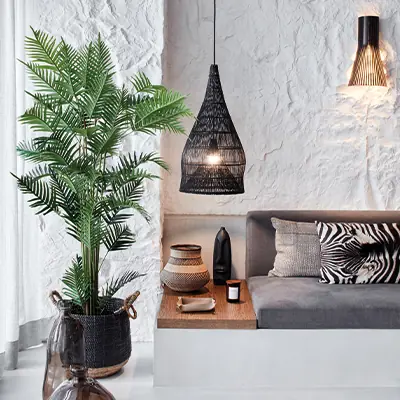
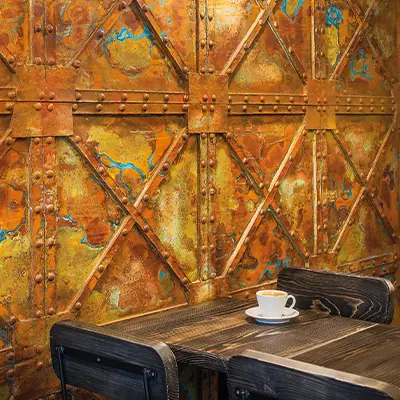
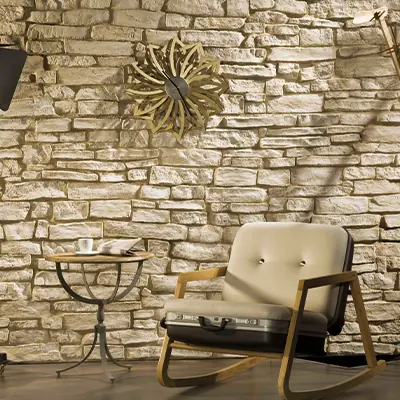
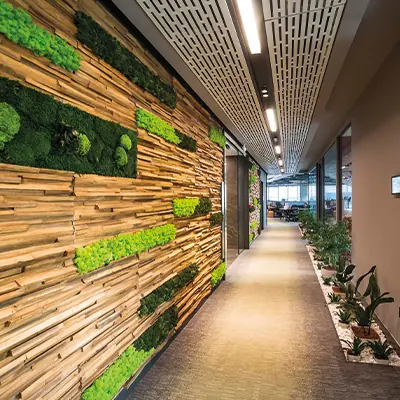
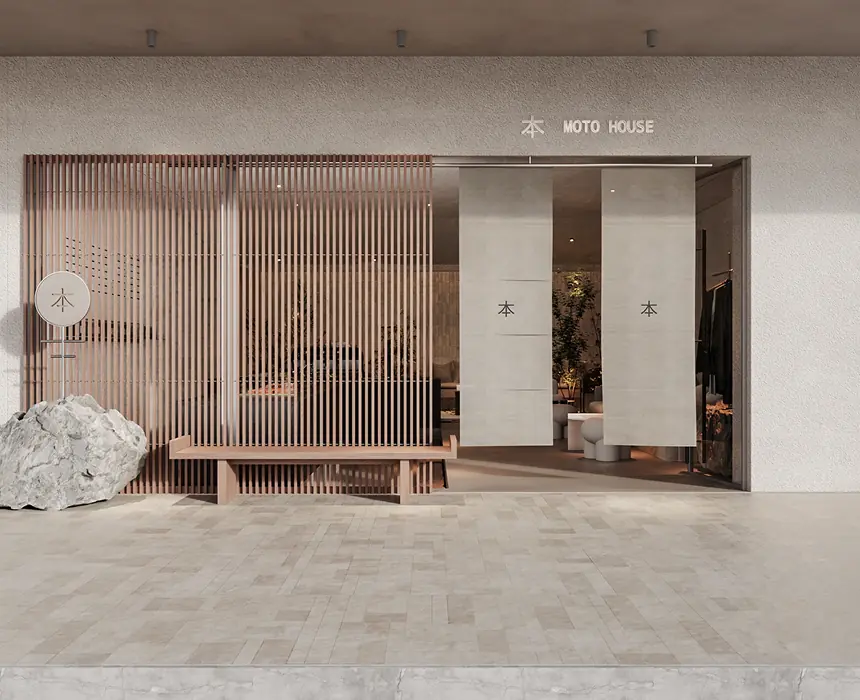
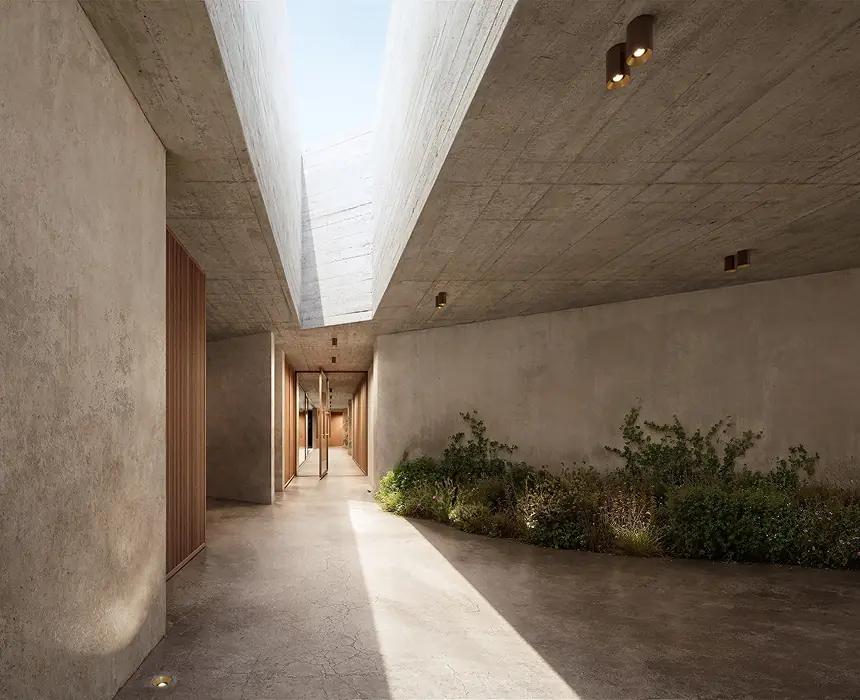
The Colorado Rock wall panel is particularly suited to spaces where natural texture is intended to become a defining element of the design. Its sculptural surface can introduce strong geological character into minimalist interiors while complementing the raw material language of industrial and contemporary projects. In hotels, restaurants, residences, offices, stores, showrooms, and other commercial environments, the panel can be used across large surfaces to create a monumental backdrop or on selected walls to establish a distinctive architectural focal point.
Colorado Rock combines its expressive natural appearance with a lightweight fiber-reinforced panel structure designed for architectural applications. Each panel measures 300 × 100 cm, while a complete three-panel set creates a total surface of 300 × 300 cm. With an approximate panel thickness of 6–13 mm and a weight of around 6.5–7 kg/m², the system delivers substantial visual depth without the structural weight associated with natural rock surfaces. Its large panel format also supports greater visual continuity across expansive wall applications.
The deeply textured surface of this decorative wall panel interacts especially well with architectural lighting. Directional light emphasizes fractured edges, recessed areas, and layered forms, making the three-dimensional character more visible. Under softer natural light, the same surface reveals more subtle mineral transitions and geological details. This relationship between texture and illumination allows Colorado Rock to create different visual impressions without changing the underlying material, making it suitable for environments where surface depth plays an important role in the overall spatial experience.
As part of Artstone’s Rock Series, Colorado Rock represents a design language defined by geological layering, raw natural formations, and sculptural depth. The product can be integrated with concrete, metal, glass, timber, and other architectural materials to create either contrast or a more natural material palette. Its strong rock texture gives contemporary spaces a grounded character while maintaining the visual refinement required for hospitality, residential, retail, and commercial architecture. Artstone’s current product classification places Colorado Rock within the Rock Series and lists it for a broad range of architectural applications.
Colorado Rock is suitable for interior applications as well as exterior surface accents. Its detailed rock-inspired structure allows the same geological character to continue from interior feature walls into selected exterior architectural surfaces. For locations exposed continuously to demanding weather conditions, project-specific technical evaluation is recommended to support long-term performance.
Colorado Rock redefines the experience of stone within contemporary decorative wall panel design. Rather than simply reproducing the appearance of natural rock, it interprets geological depth through carved forms, fractured layers, three-dimensional transitions, and changing shadow effects. The result is a rock effect wall panel that turns ordinary walls into expressive architectural surfaces, bringing strength, depth, and timeless geological character to modern spaces.